











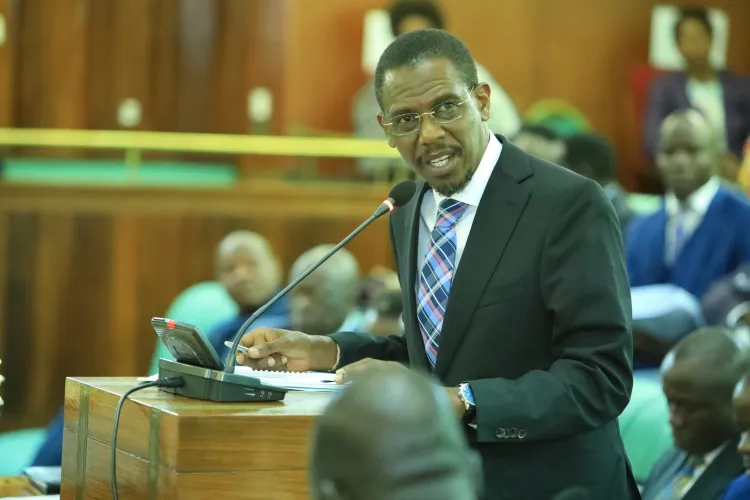
The Attorney General, Kiryowa Kiwanuka has directed an immediate halt to all arrests and prosecutions under contested provisions of the Computer Misuse law, following a landmark ruling by the Constitutional Court of Uganda.
In a directive dated March 18, 2026, the Attorney General instructed all investigative and prosecutorial agencies to cease enforcement of the affected sections, after the court declared parts of the Computer Misuse (Amendment) Act unconstitutional.
The ruling nullified Sections 23, 26, 27, and 29 of the Act, alongside Section 162 of the Penal Code Act. The court found the provisions to be vague and susceptible to abuse, particularly in limiting lawful expression.
Kiwanuka said the court’s decision renders the provisions “null and void,” citing Parliament’s failure to comply with procedural requirements during their enactment, including the lack of confirmation of quorum.
“The import of the orders of the Constitutional Court is that the enactment … was done without compliance with the Rules of Procedure of Parliament,” he stated.
He further directed that all ongoing criminal proceedings based on the invalidated provisions be discontinued immediately.
“All criminal proceedings emanating from the impugned provisions should be terminated,” Kiwanuka said, adding that no new arrests should be made under the affected sections in line with the court’s permanent injunction.
However, he clarified that individuals already convicted under the provisions and currently serving sentences would not be affected by the ruling.
He directed that the law be returned to Parliament for re-enactment.
Originally enacted to address cybercrimes such as hacking, electronic fraud, and online harassment, the Computer Misuse law was later expanded to include offences like offensive communication and the dissemination of “malicious” information.
Constitutional Court recently ruled that Parliament passed the amendments in the law without the required quorum.
The court therefore declared several provisions of the law null and void, including those criminalising offensive communication, sharing of unsolicited information, and misuse of social media.