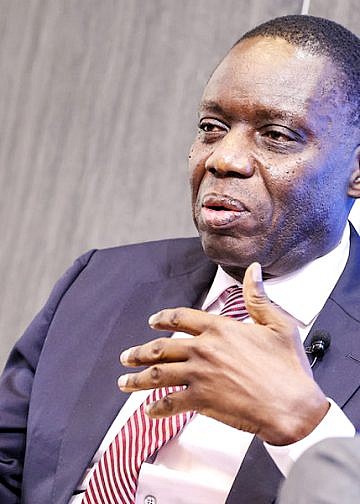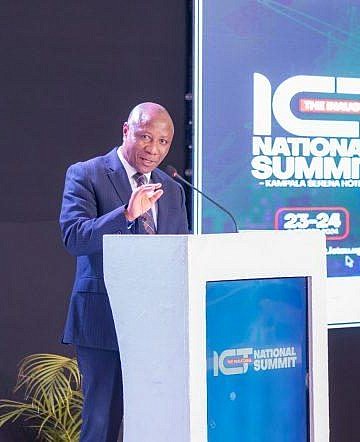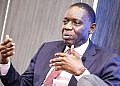






















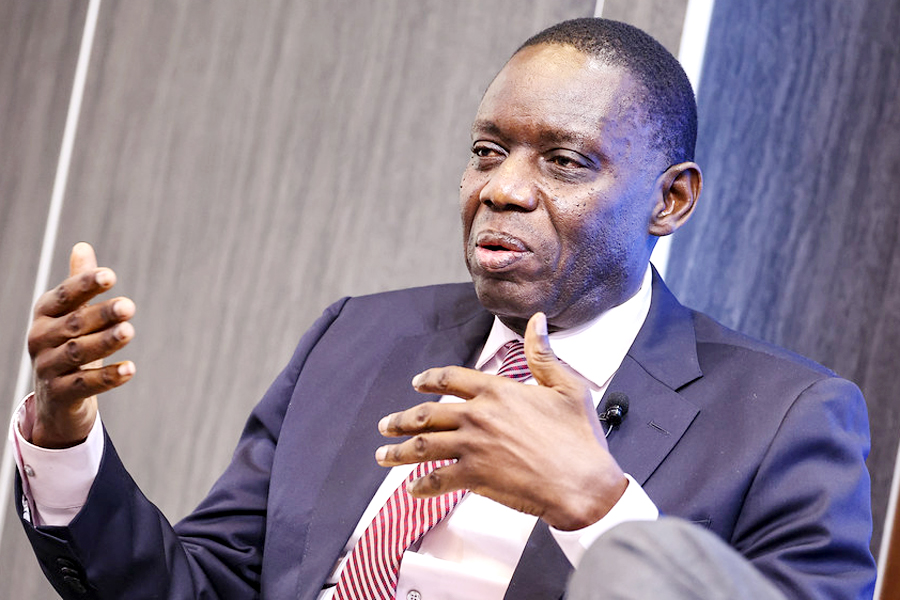
The Governor of the Bank of Uganda, Michael Atingi-Ego, has joined a growing list of stakeholders opposing the proposed Protection of Sovereignty Bill, 2026, warning that it could have serious economic consequences if passed in its current form.
Appearing before the joint committee of defence and internal affairs and the legal and parliamentary affairs committee of parliament on Tuesday, Atingi -Ego said BoU was never consulted by the agencies behind the drafting of the bill.
He said passing the bill in its current form will lead to economic sabotage through weakening of the Uganda shilling.
“A country without reserves is not sovereign. The potential of this Bill to destabilize Uganda’s balance of payments is our primary concern as a central bank. For example, last financial year the overall balance of payment surplus was USD 1.5 billion. That’s how we were able to increase our reserve coverage by USD 1.5 billion. Today as we speak our reserves are close to USD 6 billion. Why? Because these inflows have been coming in. The moment you tamper with these inflows here, we risk running down our reserves, and that is economic disaster for a country,” he told parliament.
“True national sovereignty is built on economic strength and financial independence. While the goal of protecting national interests is legitimate, The Protection of the Sovereign Bill 2026 as currently drafted risks reversing three decades of successful financial development through liberalisation that has sustained economic growth. By adopting these technical refinements, we believe that parliament can safeguard the nation without compromising the world-class financial architecture essential for Uganda’s journey to achieve the US500Bn economy.”
The BoU governor said passing the bill in its current form will have dire consequences for the economy.
“We are going to have a substantial depreciation of the currency because you need to make imports more expensive in order to equate imports to exports. So, this is the main risk of this bill, and also it means that our capacity to build reserves, because now the flows in the financial account are reducing, we won’t have any excess of financial flows in the financial account over the current account balance to build reserves.”
The BoU governor now joins several other groups of people including civil society organisations, NGOs, academia, lawyers, traders, religious leaders and political parties among others that have rejected the bill in its current form.
Ugandans in the diaspora also warned the bill has dire consequences, especially for remittances back home.
Government through the Attorney General Kiryowa Kiwanuka told Parliament recently that the bill aims to protect Uganda’s political independence from foreign interference.
Kiryowa said the law is intended to regulate political financing and prevent external actors from influencing Uganda’s internal political processes.
He said government has observed increasing levels of unidentified funding flows, particularly within political activities, which he said could potentially destabilise national programmes if left unchecked.
Kiryowa maintained that non-political activities would not be affected.
“If an NGO is supporting orphans, that is consistent with Uganda’s development policy and can be supported by anyone outside the country,” he said.
State Minister for Internal Affairs David Muhoozi said the Bill is intended to strengthen Uganda’s ability to guard against undue foreign influence in political processes and public administration.
“This is not an isolationist measure,” Muhoozi said. “It is a lawful assertion of Uganda’s right to self-govern and determine the terms of engagement with external actors.”
He added that the law aims to ensure that foreign involvement operates within a regulated and transparent framework, based on mutual respect and non-interference.
Attorney General Kiryowa Kiwanuka acknowledged concerns around definitions but maintained that the provisions are narrowly tailored to activities outlined in the Bill.
“The term ‘foreigner’ is used strictly within the context of the activities defined under the Bill,” he explained. “It applies only where actions are undertaken in the interest of foreign entities in Uganda’s political space.”
He also dismissed fears that the law would disrupt remittances or legitimate private transactions.
“This Bill does not target personal financial support between families,” Kiryowa said. “Its scope is limited to political activities conducted on behalf of foreign interests.”
Government insists the Bill will not prohibit Ugandans from engaging with foreign entities but will require such engagements, particularly those linked to political activities, to be formally registered and regulated.
- Fine tune, correct gramma, get keywords written horizontally and separated by commas