










Dei BioPharma’s cassava processing plant in Namasagali, Kamuli District, is nearing full-scale production after an electricity supply upgrade aimed at resolving a power shortage that had kept the facility largely idle.
The intervention followed a directive by Energy and Mineral Development Minister Dr Monica Musenero, who ordered the Uganda Electricity Distribution Company Limited (UEDCL) to address the plant’s power supply challenges.
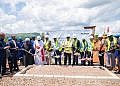
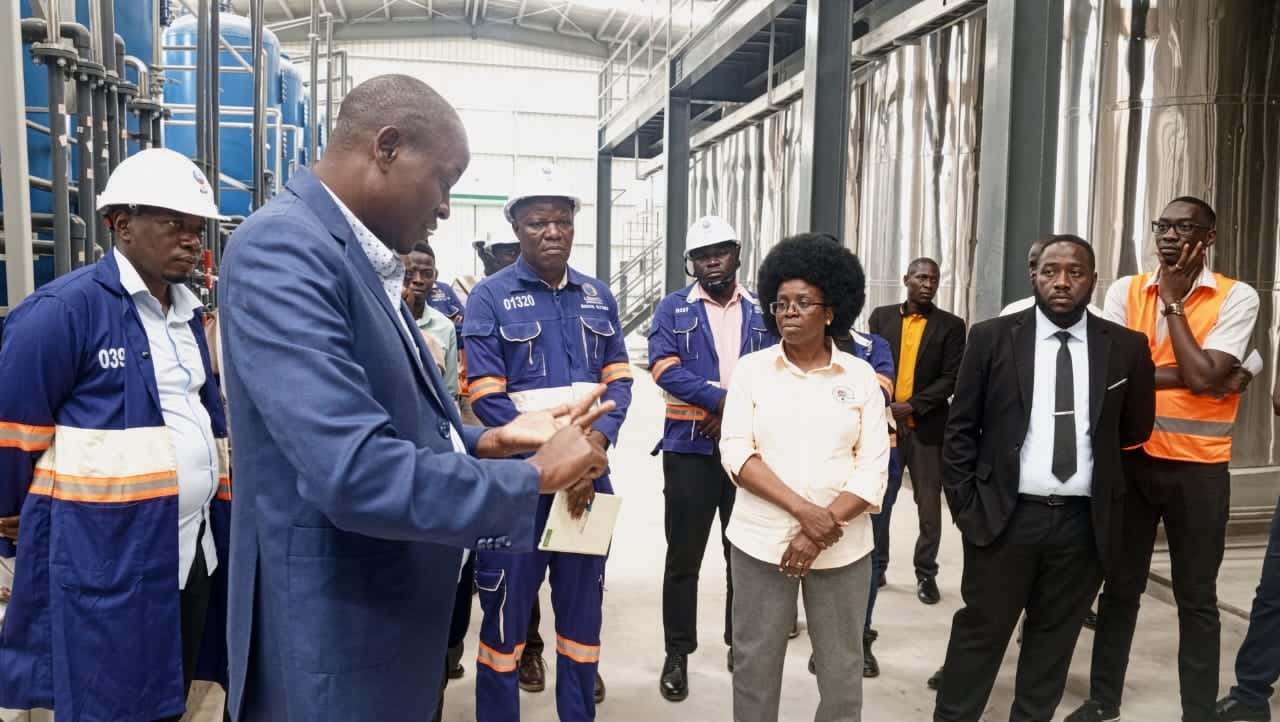
Dr Musenero returned to the facility on October 2, about two weeks after directing UEDCL to intervene. She said major works had been completed and the plant had entered the commissioning phase, although some technical adjustments were still being undertaken.
“We came here two weeks ago with my team from UEDCL to try and understand the issues with power connection to Dei BioPharma because it is a high-capacity plant,” Dr Musenero said.
The plant had operated below capacity since it was commissioned by President Yoweri Museveni late last year because the available electricity supply was insufficient to run its heavy machinery.
Dr Matthias Magoola, founder and managing director of Dei BioPharma Ltd, raised the power shortage with Dr Musenero in August after the problem disrupted operations.
He said the improved electricity supply would allow the company to redirect money previously spent on fuel towards buying cassava from farmers.
“People are going to see the boom of production. The price of cassava is also going to go up because the money we have been putting in fuel shall be used in buying cassava,” Dr Magoola said.
UEDCL’s manager for the North Eastern Region, Mr Paul Sempiira, said the utility had installed a separate transformer at the Kamuli substation to serve the Namasagali line.
The arrangement is intended to isolate Dei BioPharma from faults affecting other lines while improving the quality and reliability of its electricity supply.
“What we have done insulates Dei BioPharma from the other issues arising from the other line and also improves the quality of supply they get here,” Mr Sempiira said.
He said the two transformers serving the area have a combined capacity of about 7.5 megawatts, which UEDCL considers adequate for both the town and the plant.
Plant linked to vaccine manufacturing
The Namasagali facility produces pharmaceutical-grade starch and industrial sugars that are used as inputs at Dei BioPharma’s medicines and vaccines manufacturing facility in Matugga, Wakiso District.
Company officials say production of medicines and vaccines at the Matugga facility depends on the availability of these inputs.
Dr Magoola described the cassava processing plant as a critical component of the company’s plans to manufacture human vaccines and medicines locally.
He thanked President Museveni, Dr Musenero and UEDCL for intervening to address the electricity shortage.
“This is the miracle that has come to reality. I don’t know how many offices we went to over the issue of power shortage, but we thank the Minister for Energy who has solved this problem within two weeks,” he said.
He said the intervention had renewed the company’s prospects of moving into sustained production.
Dr Magoola also said the company aims to manufacture human vaccines and related products in Uganda, arguing that local production could reduce the government’s expenditure on imported pharmaceutical products.
The company has further outlined plans to develop vaccines and medicines for sickle-cell disease, establish a 1,000-bed hospital for people living with the condition and produce biofuel for vehicles.
The power upgrade is also expected to create a larger market for cassava farmers in the region.
Mr Richard Mutuuya, the Namasagali LC3 chairperson, said reliable electricity could increase the price paid for raw cassava supplied to the plant from about Shs300 to Shs700 per kilogramme.
He urged farmers to increase cassava production to take advantage of the market created by the processing facility.
Dr Michael Mugabira, the cassava project coordinator, said the venture could help move farming households in Busoga, Teso and Lango from subsistence agriculture into the cash economy.
He said cassava could also provide farmers with an alternative to sugarcane and that participating households could record a significant increase in income within two years.
The plant’s return to sustained operations is expected to strengthen the link between cassava farmers and industrial processing while supplying raw materials for pharmaceutical manufacturing.