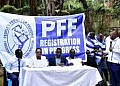









The National Identification and Registration Authority (NIRA) has announced that more than five million National Identification Cards (IDs) have been produced and dispatched to districts across Uganda, calling on citizens to collect their cards from their respective registration offices.
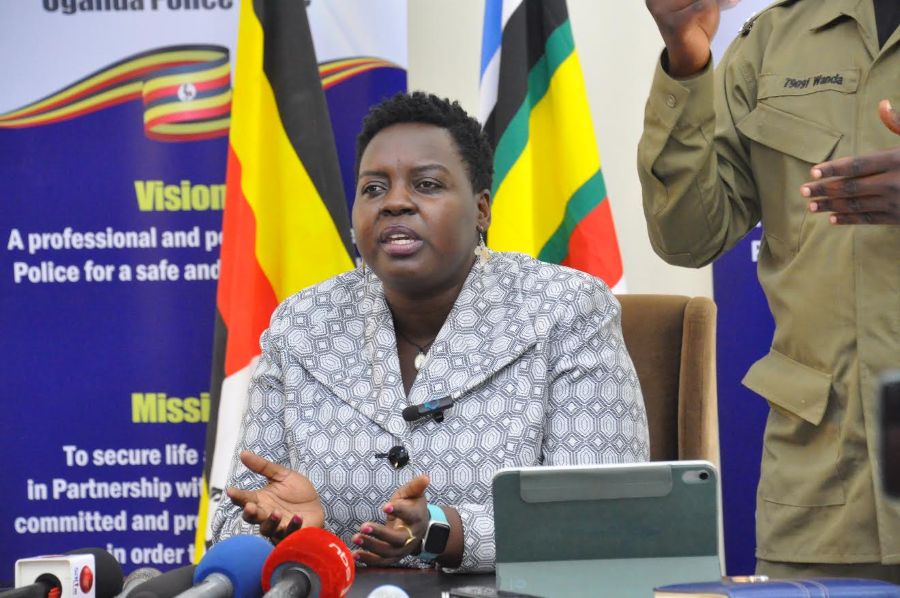
Addressing journalists at the Police Headquarters in Naguru on Monday, Claire Ollama, a registrar at NIRA, said they have made significant progress in the ongoing mass enrollment and card issuance exercise, with cards now available in almost every district.
“We have produced and dispatched over five million cards across the country. Many people have started to receive their national IDs. The pickup, however, remains very poor. We appeal to all Ugandans who registered to go to their nearest offices and collect their cards,” Ollama stated.
She explained that the production and dispatch process has been ongoing steadily and that all cards are distributed according to districts where citizens initially registered.
Ollama emphasized that failure to collect the cards should not be mistaken for a lack of production.
“It is very easy to ask, ‘Where is my card?’ because what has been produced may not include yours. But that does not mean production has stopped. We have thousands of cards waiting at district offices,” she added.
The newly produced National IDs have been dispatched to various districts across Uganda.
According to NIRA, 8,141 cards have been dispatched to Abim, Adjumani 27,000, Agago 11,800, Alebtong 25,000, Amolatar 14,000, Amudat 9,000, Amuria 13,000, Amuru 15,000, Apac 17,700, Arua 16,000, Arua City 43,500, Budaka 28,000, Bududa 13,000, Bukedea 17,000, Buikwe 60,600, Bukomansimbi 3,135, Bukwo 9,400, Bulambuli 9,400, Buliisa 2,300, Bundibugyo 24,800, Bunyangabu 3,596, Bushenyi 14,500.
Busia 29,400, Butaleja 16,733, Butambala 2,600, Butebo 2,700, Buvuma 7,302, Buyende 11,373, Dokolo 4,700, Fort Portal City 4,800, Gomba 20,236, Gulu 2,345, Gulu City 11,800, Hoima 4,108, Hoima City 3,124, Ibanda 11,463, Iganga 31,700, Isingiro 34,000, Jinja 12,000, Jinja City 30,852, Kaabong 4,565, Kabale 23,700, Kabarole 4,087, Kaberamaido 8,997, Kagadi 12,000, Kalaki 10,200, Kalangala 1,362, Kaliro 25,700, Kalungu 3,500.
Kampala 261,000, Kamuli 45,853, Kamwenge 15,937, Kanungu 17,000, Kapelebyong 1,411, Karenga 2,722, Kasese 69,000, Kasanda 13,197, Katakwi 3,788, Kayunga 43,000, Kazo 2,500, Kibaale 3,482, Kiboga 11,155, Kibuku 16,100, Kikuube 30,058, Kiruhura 2,802, Kiryandongo 3,565, Kisoro 3,196, Kitagwenda 2,674, Kitgum 17,000, Koboko 20,000, Kole 9,647, Kotido 9,000, Kumi 27,000, Kwania 3,380, Kween 9,812, Kyankwanzi 17,011.
Kyegegwa 28,000, Kyenjojo 30,000, Kyotera 17,000, Lamwo 8,827, Lira 9,144, Lira City 15,212, Luuka 18,165, Luwero 42,000, Lwengo 24,668, Lyantonde 2,454, Madi-Okollo 2,831, Manafwa 18,000, Maracha 3,419, Masaka 10,000, Masaka City 30,000, Masindi 10,000, Mayuge 29,000, Soroti 18,000, Soroti City 12,000, and Tororo 51,000.
Ollama said the newly designed national ID cards have enhanced security elements such as engraved images that cannot fade, ghost images, a barcode for authenticity verification, and raised lettering to help visually impaired persons identify their cards by touch.
“The new card is more secure. It has engraved and ghost images, a scannable barcode, and tactile features for the visually impaired. These improvements make it nearly impossible to forge,” she explained.
She further warned citizens against using middlemen in the registration process, emphasizing that all NIRA services are free of charge.
“Your citizenship does not require another person. The service is free. Please walk into your nearest NIRA office confidently our staff are paid to serve you. Do not pay anyone to get a form or card,” Ollama stressed.
Ollama encouraged all Ugandans who enrolled to visit their nearest district offices to collect their National IDs, which remain essential for accessing government services, banking, and employment opportunities.