











The Ministry of Foreign Affairs has directed Ugandan diplomatic missions abroad to stop measuring success by the number of trade meetings held and instead focus on the actual financial value generated from those engagements.
The directive follows an internal review of Uganda’s Economic and Commercial Diplomacy strategy, which revealed a gap between the country’s ambitions to expand its regional and global economic influence and the actual trade returns being realised.
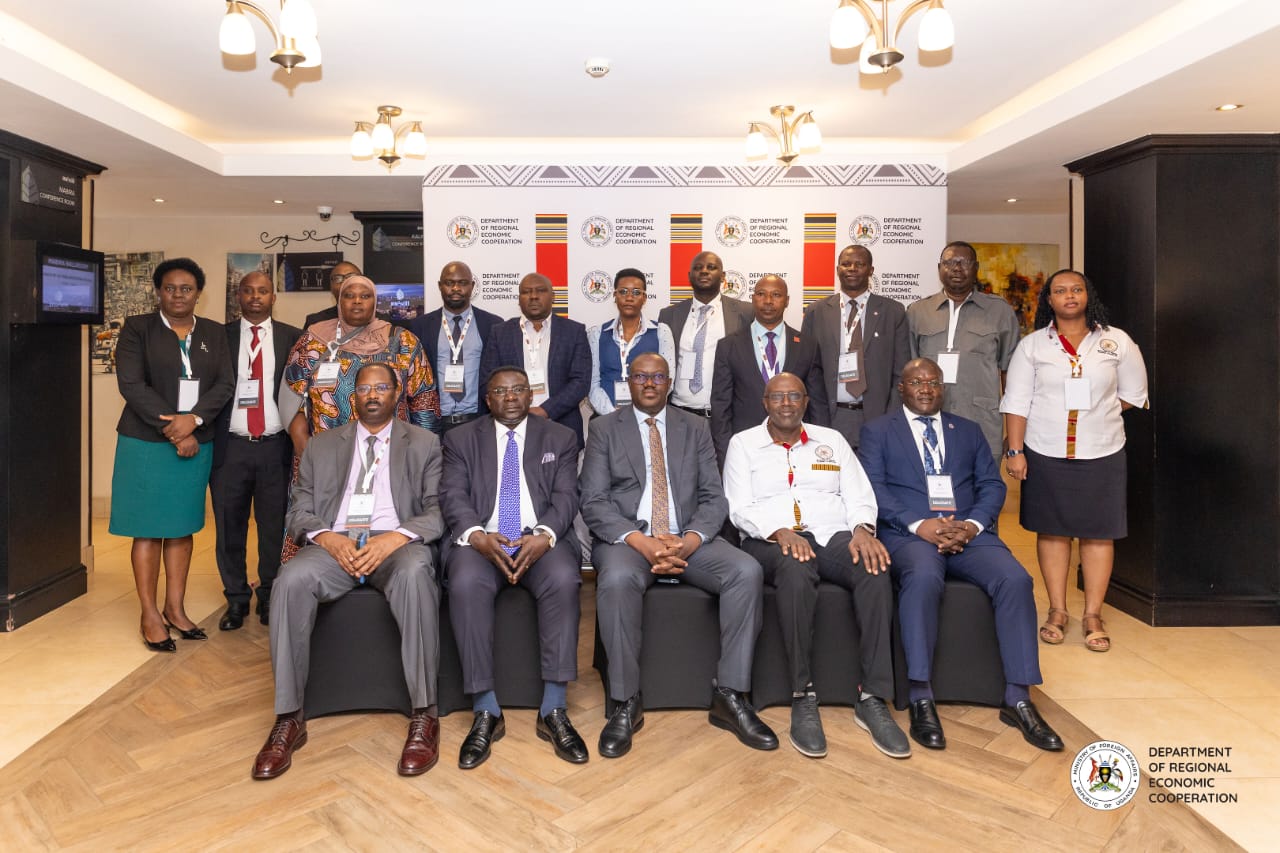
Foreign Affairs Permanent Secretary Vincent Bagiire Waiswa issued the directive during the opening of a four-day diplomatic retreat in Kampala, bringing together officials from the ministry, heads of Uganda’s missions abroad, government agencies, and the private sector.
The retreat is reviewing three years of implementation of the Economic and Commercial Diplomacy strategy, which focuses on promoting agriculture, tourism, manufacturing, and services as key drivers of exports and investment.
Bagiire said the government must move away from activity-based reporting and adopt an approach that measures tangible outcomes.
“We can no longer count meetings and events as achievements. What matters are the results, supported by evidence, statistics and clear documentation,” Bagiire told delegates.
He said Uganda’s diplomatic missions must demonstrate how their engagements translate into increased exports, investment flows, market access, and business opportunities for Ugandan companies.
To improve coordination, the ministry has established an Economic and Commercial Diplomacy Operations Hub, an automated platform intended to link Uganda’s missions abroad with headquarters in Kampala and relevant government departments.
The system is expected to improve information sharing, track commercial opportunities, and ensure missions align their activities with Uganda’s long-term development priorities, including Vision 2040 and the government’s target of expanding the economy tenfold.
Ambassador Richard Kabonero, head of the Department of Regional Economic Cooperation, said the review provides an opportunity to address challenges affecting the implementation of the strategy before the 2026/27 financial year.
“This retreat comes at a critical time when we must strengthen coordination among institutions responsible for promoting Uganda’s economic interests abroad,” Kabonero said.
Presentations at the retreat highlighted Uganda’s challenges in converting diplomatic influence into stronger trade performance.
Uganda’s mission in South Sudan noted that within the eight-member East African Community, Uganda ranks third in economic output, behind Kenya and Tanzania, whose economies stand at approximately $147 billion and $95 billion respectively.
The mission said the East African Community represents a combined market of about 355 million people and a regional economy valued at more than $435 billion.
However, officials pointed to a persistent mismatch between government commitments to investors and the capacity of Uganda’s private sector to supply regional markets.
The mission identified limited production capacity, logistics challenges, and weak coordination among agencies as key barriers preventing Uganda from fully exploiting regional opportunities.
Uganda’s mission in Switzerland presented a more targeted approach, focusing on attracting high-value tourism and expanding agricultural exports.
Deputy Permanent Representative Arthur Kafeero said Uganda is positioning itself to attract wealthy Swiss travellers through luxury tourism packages, including high-end safari experiences.
The mission noted that Switzerland has a concentration of high-net-worth individuals, with Geneva hosting thousands of millionaires and billionaires, while Swiss residents spend billions of dollars annually on international travel.
Uganda is targeting luxury tourism packages costing between $50,000 and $250,000 per visitor, with diplomats saying even a small share of this market could significantly increase tourism earnings.
The mission is also exploring promotional opportunities through Swiss public transport systems and sports platforms to increase Uganda’s visibility.
However, diplomats identified the lack of direct air connectivity as a major obstacle.
Uganda recorded only 107 Swiss visitors in 2024, with the mission suggesting that cooperation with neighbouring countries such as Kenya and Tanzania could help build enough passenger demand to support a direct route.
The Geneva mission also highlighted opportunities in Switzerland’s coffee market, noting the country’s role as a global coffee trading centre.
Uganda plans to use international coffee events and partnerships with organisations such as the International Trade Centre to help exporters meet European Union standards for products including coffee, cocoa, tea, spices, and avocados.
The mission is also supporting preparations for Uganda’s graduation from Least Developed Country status, which officials say could improve investor confidence and access to international financing.
Uganda’s trade performance in Nigeria was identified as another area requiring improvement.
Despite Nigeria’s economy being valued at about $334 billion and serving as a gateway to a wider West African market, Uganda’s exports to the country remain low at approximately $34.6 million.
Ugandan exports to Nigeria are mainly tobacco, pharmaceutical products, coffee, hides, powdered milk, palm oil, and fish.
Dr Omara Sam from the Abuja mission attributed the limited trade volumes to long shipping distances, currency restrictions, import quotas, foreign ownership limitations, and challenges affecting air cargo connectivity.
The mission recommended greater use of the African Continental Free Trade Area framework, bilateral trade agreements, free trade zones, and reciprocal business missions.
The Uganda Investment Authority presented investment opportunities worth billions of dollars across mining, energy, transport, and agro-processing.
The authority said Uganda’s investment pipeline includes proposed projects in mineral processing, hydropower, electricity expansion, transport infrastructure, and manufacturing.
Among the projects highlighted are mineral investments targeting gold, lithium, tin and rare earths, major hydropower developments, a proposed nuclear power project, and industrial projects including coffee processing, fruit processing, and textile manufacturing.
UIA said its one-stop business centre has allocated land to 514 companies across industrial parks, with 199 factories currently operational, employing more than 100,000 people.
The diplomatic retreat will continue with discussions on improving collaboration between foreign missions, government ministries, and private sector players to strengthen Uganda’s export promotion and investment attraction efforts.