










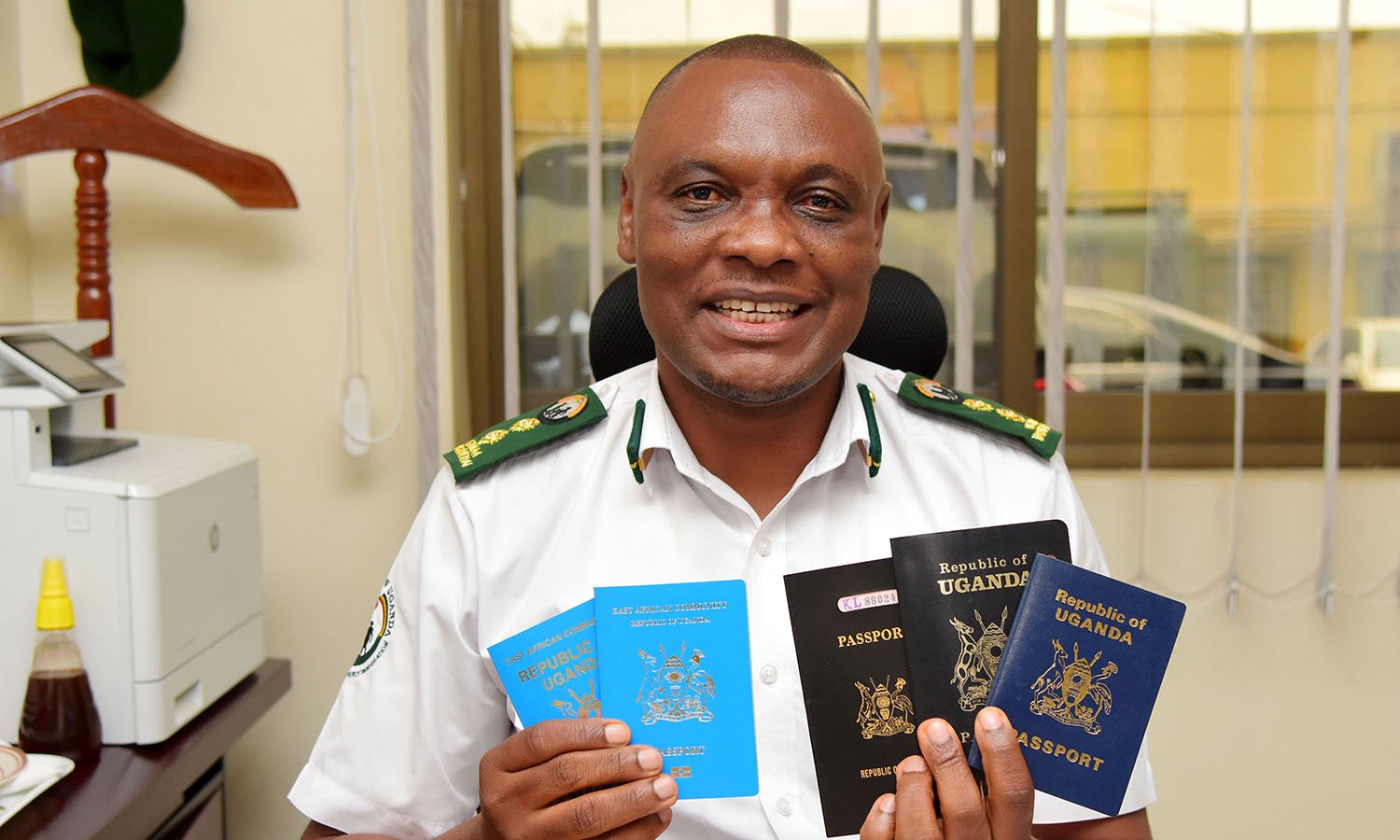
The Ministry of Internal Affairs has issued new, stringent guidelines for members of the Banyarwanda community applying for Ugandan passports and national identity cards, as part of efforts to streamline the citizenship verification process.
Addressing the press on Monday, Ministry spokesperson Simon Mundeyi said the directive follows a meeting between President Yoweri Museveni, the State Minister of Internal Affairs, and representatives of the Banyarwanda community. During the meeting, the president reiterated the constitutional basis for Ugandan citizenship and emphasized the need for proper documentation and verification to ensure fair access to national identification services.
“The president referred to Article 10 of the 1995 Constitution, which provides for citizenship by birth,” Mundeyi said. “This includes individuals born in Uganda with at least one parent or grandparent from an indigenous community residing within Uganda as of 1926. It also covers those born inside or outside Uganda to a parent or grandparent who was a citizen of Uganda by birth at the time of their birth.”
Mundeyi clarified that an individual does not have to be born within Uganda’s borders to qualify for citizenship, provided they have a Ugandan parent. He cited cases where even those with one foreign parent could still claim Ugandan citizenship through the other parent.
New Application Requirements for Banyarwanda
To ease the verification process, particularly for historically marginalized communities like the Banyarwanda, the Ministry has outlined several mandatory steps:
LC1 Letter:
Applicants must obtain a letter from the Local Council One (LC1) chairperson in the area where their parents or grandparents were born or buried. This letter must confirm ancestral links to that specific locality.Endorsements from LC2 and LC3:
The LC1 letter must be endorsed by both the LC2 and LC3 officials to validate the applicant’s claim to Ugandan roots.Verification by GISO:
A critical requirement is a verification letter from the Gombolola Internal Security Officer (GISO), including the GISO’s National Identification Number (NIN). The Ministry will crosscheck this NIN to confirm authenticity and follow up directly with the officer if needed.
Applicants are required to submit these documents to the Commissioner for Citizenship and Passport Control at the Ministry of Internal Affairs.
“This directive applies to over 8,000 Banyarwanda applicants who were previously denied passports,” Mundeyi noted. “Without fulfilling these conditions, applicants will not be issued passports or national ID cards.”
The Ministry says the new framework is designed to uphold Uganda’s constitutional citizenship criteria while eliminating document fraud and ensuring national integrity.