










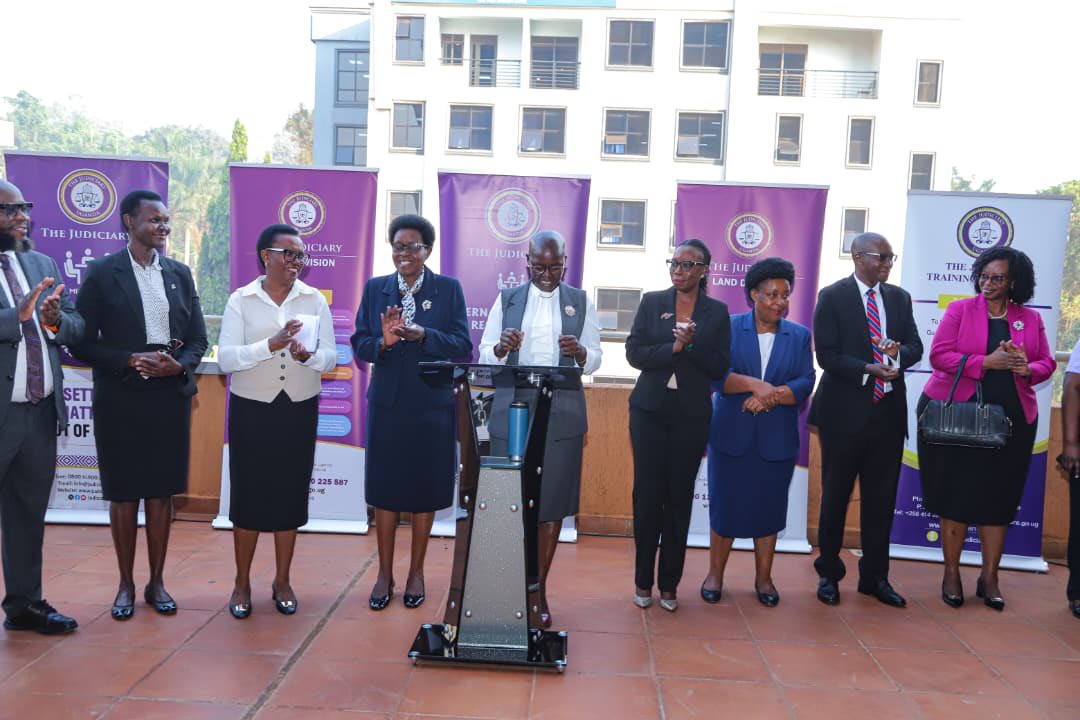
The Judiciary has launched a special two-week mediation exercise to resolve about 270 land disputes, as it steps up efforts to reduce a mounting backlog of cases that continue to clog the Land Division.
Dubbed the Land Settlement Fortnight, the initiative has lined up 519 land cases for court-annexed mediation between June 29 and July 10, with officials hoping that more than half will be settled without proceeding to full trial.
Launching the exercise at TWED Towers in Kampala, Principal Judge Lady Justice Jane Frances Abodo said the growing number of land disputes requires greater use of mediation to deliver timely justice.
“The figures demonstrate the urgent need to expand the use of mediation in resolving land disputes,” Lady Justice Abodo said.
The Land Division currently has 7,279 pending cases, according to Judiciary statistics for the third quarter of the 2025/26 financial year. Of these, 3,294 are classified as backlog, accounting for 45.2 percent of all pending matters.
During the same period, the Division registered 1,067 new cases and disposed of 1,363, including 58 that were successfully resolved through mediation.
Lady Justice Abodo said land disputes remain among the most difficult cases before the courts because they often involve multiple parties, extensive documentation and deep emotional, family and community interests.
“Delayed resolution of such disputes not only affects families and communities but also undermines economic development, discourages investment and weakens public confidence in the justice system,” she said.
She said the mediation exercise is being conducted under the Judicature (Court-Annexed Mediation) Rules, 2026, which require eligible disputes to be mediated within 60 days and make settlement agreements enforceable as court orders.
The Principal Judge called on judicial officers to identify more cases suitable for mediation, prioritise older files and weed out inactive cases that unnecessarily inflate the backlog. She also urged lawyers to encourage clients to pursue negotiated settlements instead of lengthy court battles.
“We all have a role to play in ensuring mediation succeeds and that justice is delivered more quickly to Ugandans,” she said.
Head of the Land Division Lady Justice Damalie Lwanga described mediation as a practical and affordable approach that allows parties to settle disputes while preserving relationships.
“Mediation is an effective, affordable and relationship-preserving mechanism that enables parties to resolve disputes without undergoing lengthy court proceedings,” Lady Justice Lwanga said.
She said the Division had prepared extensively for the exercise through an Alternative Dispute Resolution roundtable held in May and specialised mediation training conducted by the Judicial Training Institute.
Lady Justice Lwanga urged litigants and their lawyers to attend mediation sessions in person, participate in good faith and embrace dialogue to achieve lasting solutions.
The Judiciary hopes the initiative will significantly reduce the Land Division’s backlog while promoting mediation as a faster, cheaper and less adversarial means of resolving land conflicts, many of which involve families, neighbours and communities.