









Kampala Capital City Authority (KCCA) has asked Parliament for an additional shs 6.018 billion to fund a proposed salary increment for street cleaners, a move aimed at improving sanitation across the city.
Under the proposal, the cleaners’ daily wage would increase from shs 6,000 to shs 10,000.
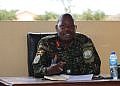
The request was presented by KCCA Executive Director Sharif Buzeki while appearing before Parliament’s Committee on Presidential Affairs on January 20, 2026, during the presentation of the Authority’s 2026/27 National Budget Framework Paper.
According to documents submitted to the committee, KCCA’s total budget is projected to rise from shs 950 billion in the 2025/26 financial year to shs 1.1 trillion in 2026/27. Of this amount, shs 12.983 billion has been allocated for street cleaners’ wages—an amount Buzeki said is insufficient to meet both staffing and salary requirements.
“Currently, a cleaner is paid a daily rate of shs 6,000. We propose to increase this to shs 10,000,” Buzeki told MPs. “The increasing number of roads being constructed will require an additional 432 cleaners. We anticipate adding about 81.87 kilometres of paved roads under the Greater Kampala Metropolitan Area.”
The proposal, however, attracted sharp scrutiny from legislators.
Ruhama County MP Benjamin Kamukama questioned the rationale for recruiting more cleaners at a time when KCCA is also seeking shs 1.5 billion to procure street-cleaning machines.
“In this document, you are asking for an extra 432 cleaners. A simple calculation shows that at shs 10,000 per day, these workers will cost over shs 1.5 billion annually,” Kamukama said. “Yet you are also proposing to procure machines for cleaning at shs 1.5 billion.”
He challenged KCCA to clarify its long-term strategy.
“What is the best option? If you procure these machines, are you going to phase out cleaners? The cost of hiring the extra 432 workers is the same as procuring machines. Why not opt for machines, which appear cheaper? And why can’t this activity be contracted out instead of KCCA paying workers daily?” Kamukama asked.
Responding to the concerns, Minister of State for KCCA and Metropolitan Affairs Kabuye Kyofatogabye said it would be impractical to lay off workers before the cleaning machines are procured and operational.
“At this moment, you cannot lay off workers because even the machines we are talking about might take up to a full year to arrive,” Kyofatogabye said. “Shall we leave the roads unattended until the machines are procured?”
He added that manual cleaning remains critical, particularly in flood prevention.
“We are adding to our stock of paved roads in terms of kilometres. While we shall eventually need mechanised cleaning, we must also maintain manual cleaning, especially when it comes to desilting to avoid floods,” Kyofatogabye said. “We cannot overnight lay off workers. We shall maintain them for at least the next five years.”
Meanwhile, Rubaga North MP Abubaker Kawalya criticised what he described as government inaction on waste management, particularly following last year’s tragedy at the Kiteezi landfill.
“We need to do something when it comes to waste management,” Kawalya said. “Last year, after the atrocity at Kiteezi, we discussed this matter during the budget process. Many of us thought government would take action.”
Kawalya noted that despite the urgency, no funding has been allocated.
“There is zero allocation for the shs 80.3 billion needed for the decommissioning, rehabilitation and repurposing of the Kiteezi landfill. There is also no funding for the shs 13.68 billion required to establish a new waste disposal facility in Buyala, nor the shs 4.355 billion needed to compensate Kiteezi victims,” he said.
“Government is not willing to fund this programme, and as a committee, we need to do something.”