










President Museveni has warned communities in the Albertine region against reckless fishing practices, cautioning that indiscipline on Uganda’s lakes could lead to the disappearance of fish stocks if urgent conservation measures are not observed.
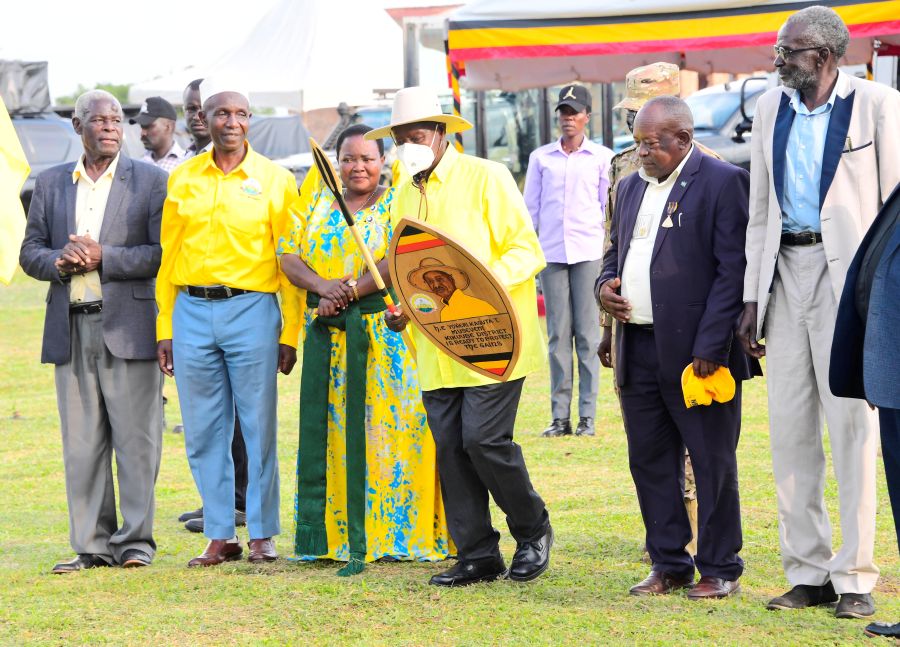
Speaking during his second campaign rally in Kikuube District on Saturday, the President urged fishermen to stop harvesting immature fish, protect breeding grounds, and regulate fishing activity to ensure sustainability.
“Stop catching young fish, protect breeding areas, and regulate the numbers on the lake. Even Namboole Stadium has a capacity. Without discipline, the fish will disappear,” Museveni said.
He cited traditional conservation practices among communities in Buliisa District, praising elders and clans such as the Abakonga for their role in preserving the lake ecosystem.
“Elders and clans like the Abakonga in Buliisa understand this very well and return young fish to the lake,” he noted.
Drawing a parallel with pastoral traditions, Museveni emphasized the importance of restraint and long-term thinking.
“Even me, a traditional cattle keeper, do not eat calves. It is taboo among cattle keepers. Likewise, it is not logical to catch and eat immature fish,” he said.
The President stressed that government efforts to modernize the fishing industry must go hand in hand with community discipline, warning that economic activities cannot thrive where natural resources are destroyed through short-term thinking.
Beyond fisheries, Museveni highlighted improvements in social service delivery in Kikuube District, particularly in electricity coverage and health infrastructure.
“Almost all sub-counties in Kikuube now have electricity, and all 19 sub-counties have either a Health Centre III or IV,” he said.
To further strengthen healthcare access, the President announced plans to upgrade Kikuube Health Centre IV into a fully fledged district hospital, a move expected to reduce patient referrals and improve service delivery.
The pledge comes as government continues to invest in health infrastructure across rural districts to support population growth, oil and gas activities, and broader regional development in the Albertine Graben.