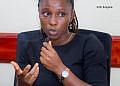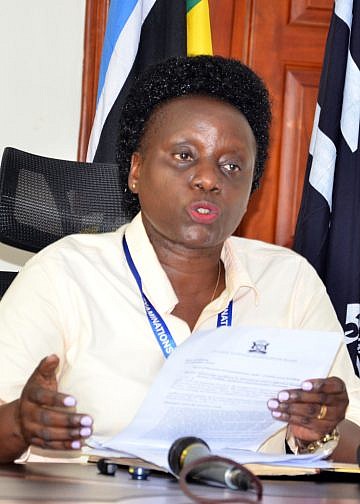









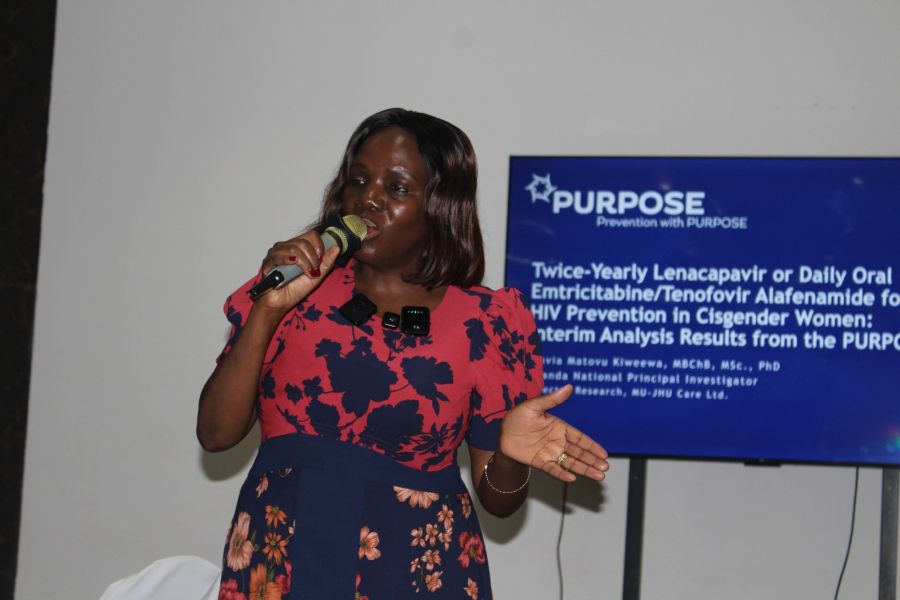
More than 70 percent of Ugandans accessing lenacapavir, the twice-yearly HIV prevention injection, are men, with a significant proportion coming from highly educated and financially empowered groups, according to Dr Flavia Matovu Kiweewa, the National Principal Investigator for lenacapavir.
Dr Kiweewa said the trend differs from the traditional pattern of HIV prevention services, in which women and other priority populations have often been among the main users of oral pre-exposure prophylaxis (PrEP).
She attributed the high uptake among men to their greater access to information about the new HIV prevention option, particularly through mainstream and social media.
“Men have gotten access to information. You read the paper, you watch mainstream media, you’re on social media websites and you’re able to get information quickly, more quickly than women,” Dr Kiweewa said.
She said many of the men seeking lenacapavir are not necessarily from traditionally prioritised HIV prevention groups, but include professionals and other financially empowered Ugandans who have learned about the drug and want to protect themselves against HIV.
“We are seeing that men, like over 70 percent, are men, and not any man, but men who are empowered—ambassadors, ministers, people who are driving those V8 cars, they even have bodyguards around—are accessing lenacapavir,” she said.
The National Principal Investigator for lenacapavir said demand for lenacapavir began rising even before Uganda formally expanded access to the drug, with some wealthy individuals expressing willingness to travel abroad to obtain it.
She said this demonstrated that HIV risk exists beyond the populations traditionally considered to be at highest risk.
“Someone whom you think is not at risk is actually at risk,” she said, citing men in senior positions, including ministers, Members of Parliament, professors, bankers and businesspeople, among those seeking the prevention injection.
Uganda has opened access to lenacapavir to anyone who believes they are at risk of acquiring HIV, rather than restricting it to specific groups such as sex workers, men who have sex with men, people who inject drugs, adolescent girls and young women, truck drivers or serodiscordant couples.
She said the decision was driven partly by the unexpectedly high demand for injectable PrEP.
“If you feel you are at risk, you can get lenacapavir, because everyone knows their risk,” she said.
Lenacapavir is administered as an injection every six months and is designed to maintain protective levels of the drug in the body for HIV prevention.
However, the National Principal Investigator for lenacapavir stressed that users must follow the initial dosing instructions, including taking the required oral lenacapavir tablets, to ensure the drug reaches protective levels quickly.
She said the injection takes longer to reach protective concentrations on its own, making adherence to the initial tablets important for people seeking immediate protection.
Currently, Uganda has 103 health facilities offering lenacapavir as part of the initial rollout, with the Ministry of Health planning to expand access to about 300 facilities.
The facilities are distributed across the country, including Kampala, Mityana, Mukono, Mbarara, Fort Portal and Lira.
Dr. Kiweewa said the broad geographical distribution is intended to ensure that people outside Kampala can also access the new prevention option.
However, she acknowledged that supplies remain limited because available doses are distributed across many facilities.
Uganda received about 19,200 doses in March, with additional doses subsequently arriving, but supplies remain insufficient to meet growing demand.
She estimated that between 4,000 and 6,000 people could currently be receiving lenacapavir, although she noted that the exact number remains subject to ongoing data collection.
Lenacapavir is currently being provided free of charge through the Ministry of Health, with the programme supported by the Global Fund.
Dr Kiweewa said generic versions are not yet widely available, but their anticipated entry into the market could eventually expand access through private pharmacies and clinics.
She said the manufacturer, Gilead Sciences, has also been exploring the use of lenacapavir for HIV prevention after the drug had already demonstrated its effectiveness as an HIV treatment for people with heavily treatment-experienced HIV.
The drug’s prevention potential has been demonstrated in clinical trials, including studies showing very high efficacy in preventing HIV infection.
Research is also underway to determine whether lenacapavir could eventually provide protection against HIV for an entire year through a single injection.
Dr Kiweewa said the PURPOSE 365 study is examining how long protective drug concentrations can be maintained after administration.
“If instead of the drug levels going down after six months, now they are sustained up to a whole year, then within the next one or two years, you should be able to have this lenacapavir drug for a whole year for protection,” she said.
She said longer-lasting protection could further simplify HIV prevention and potentially improve adherence among people who find taking daily or regular oral PrEP difficult.