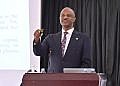





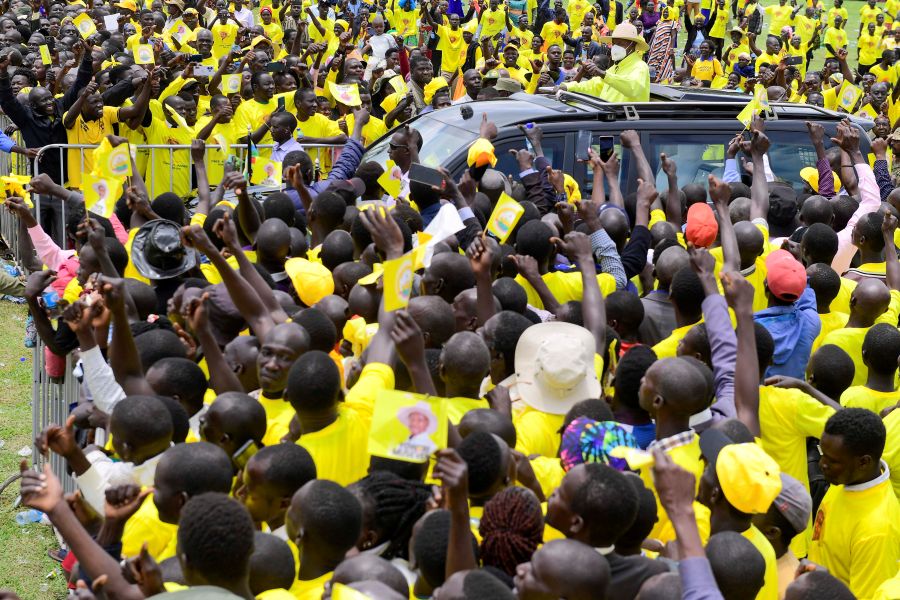
President Museveni on Friday addressed a large rally at Apac Booma Grounds, where he traced the origins of the National Resistance Movement (NRM), reviewed progress made under his leadership, and emphasized the need for household-level wealth creation as the next phase of Uganda’s transformation.
Speaking to thousands of residents, Museveni said what is today known as the NRM has been active in Uganda for over six decades, beginning with youth involvement in the Democratic Party, Uganda People’s Congress, and Kabaka Yekka in the 1960s.
As political instability worsened under Idi Amin, the group transitioned into an armed struggle under FRONASA, later evolving into the NRM that captured power in 1986.
Museveni emphasized three pillars at the core of the NRM’s mission: peace, development, and wealth.
On peace, the President said Uganda was once ungovernable due to sectarian divisions rooted in tribe, religion, and gender. He credited the NRM for rejecting identity-based politics in favor of unity, inclusivity, and patriotism. He said these values underpin Uganda’s stable governance and strong national army, which recruits from all regions.
Turning to development, Museveni highlighted improvements in infrastructure and social services. He cited the expansion of road networks, rural electrification, and increased access to schools and health facilities—particularly in the Lango sub-region—as indicators of the government’s commitment to equitable growth.
He also pointed to Uganda’s oil resources, expected to start generating revenue soon, as a future driver of infrastructure investment.
The President placed special emphasis on household wealth creation, describing it as the most personal and urgent of all priorities.
“Roads and schools are shared by all. But poverty is personal. At night, you don’t sleep on the road—you sleep in your house, and poverty will be waiting for you there,” he said.
Museveni encouraged citizens to fully embrace government initiatives such as the Parish Development Model (PDM), which allocates Shs 100 million annually to each parish to support income-generating activities.
He shared success stories from beneficiaries such as Apio from Lira, who turned a modest loan into a flourishing farming venture, and Rose Akoi from Kole, who invested in livestock and expanded her earnings.
“These examples show that the PDM can lift households out of poverty—if the funds are used wisely,” Museveni said.
“Life is not a game where some are players and others are spectators. Everyone must be a wealth creator,” he told the crowd.
Several government leaders joined the president at the rally. Vice President Jessica Alupo echoed his message, urging Apac residents to make full use of government programs like PDM and Emyooga. Speaker of Parliament Anita Among praised Museveni for the region’s transformation and pledged support for establishing a Skilling Hub in Apac to empower youth with vocational skills.
Government Chief Whip Hamson Obua affirmed that Apac fully backs Museveni’s continued leadership, citing his record of peace, unity, and development.
In closing, Museveni called on the people of Apac to vote for the NRM and its flag bearers in the upcoming election.
“Vote for the old man with a hat,” he said, reaffirming his commitment to sustaining peace, expanding development, and ensuring that every Ugandan household participates in the country’s prosperity.