









President Museveni has pledged to address persistent transport challenges on the Ssese Islands by restoring night ferry services, a move aimed at easing mobility and boosting trade in Kalangala District.
The President made the commitment on Tuesday while addressing a large crowd at a campaign rally held at Kibanga Primary School playground in Kalangala.
Museveni said he had been informed that ferries serving the islands are few in number, operate for limited hours and rarely run at night, a situation he described as unacceptable given the islands’ dependence on water transport.
“We are going to look into this issue seriously. I will ask why ferries do not operate at night,” Museveni said, recalling that night travel on Lake Victoria was once common and supported trade across the region.
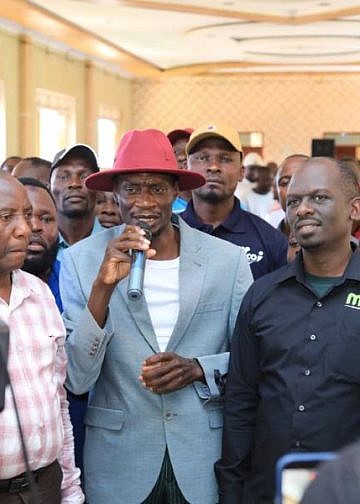
The remarks followed concerns raised by Haruna Kasolo Kyeyune, NRM Vice Chairperson for the Central Region, who said restricted ferry schedules continue to slow business, limit the movement of goods and increase costs for island residents.
Ferries remain a critical lifeline for the Ssese Islands, linking communities to the mainland and supporting fishing, trade and social services. The lack of night services has long been cited by residents as a major obstacle to economic growth.
On security, Museveni noted that the Ssese Islands have enjoyed relative peace for decades but acknowledged ongoing cases of theft and violent crime at some fishing islands.
“I am aware of these issues and we are going to handle them seriously,” he said.
The President also pointed to the need to upgrade key road infrastructure, including the Bugoma–Kalangala road, urging residents to elect leaders who actively advocate for local development priorities.
Museveni praised residents for embracing palm oil cultivation, describing it as a successful government intervention that has improved household incomes.
“When we introduced palm oil, you embraced it and now you are benefiting,” he said, encouraging farmers to diversify into livestock and poultry farming.
He also cautioned fishermen against overfishing and the harvesting of immature fish, stressing the need for sustainable fishing practices. The government, he added, would review the issue of cage fishing.
Kalangala District currently has 23 government primary schools and four government secondary schools across seven sub-counties. Museveni urged authorities to prioritise equitable distribution of schools, noting that some parishes and sub-counties remain underserved.
“We want every sub-county to have a government secondary school,” he said.
On water access, the President reported that 79 out of 97 villages in the district now have access to safe water, with several piped water systems under construction or rehabilitation, including Dajje, Kisujju and Buziga.
Museveni urged residents, particularly the youth, to focus on improving their livelihoods through commercial agriculture, livestock rearing and small businesses.
“Do not despair when you see the rich. Learn how to benefit from opportunities and change your lives,” he said.
The President later handed over NRM flags to party candidates in Kalangala, formally endorsing them ahead of the upcoming elections.
Kasolo welcomed the President and praised local NRM structures for their mobilisation efforts. He also commended the Uganda People’s Defence Forces Fisheries Protection Unit for improving cooperation with fishing communities and enhancing security at landing sites.
He called for stronger enforcement against crime on the islands, expansion of ferry services to operate at night, and support for the construction of the Bukakata–Bulala road.
NRM Chairperson for Kalangala District Gerald Kayita credited improved security deployments for reducing crime at ferry docks and fishing landing sites, while acknowledging that isolated cases of theft and murder persist.
Kayita also praised the palm oil project, describing it as a key driver of economic transformation on the islands.
District Snapshot
Kalangala District has a population of 74,411, according to the 2024 national census. It comprises seven sub-counties and town councils, 17 parishes and 97 villages.
Under the Parish Development Model, the district has received over Shs 6.07 billion, with 86 per cent already disbursed to more than 5,000 households. Through the Emyooga programme, Shs 1.6 billion has been released to 34 SACCOs supporting nearly 12,000 members.
The district has two HCIVs and six HCIIIs, while access to safe water stands at 81 per cent. Kalangala is connected to the national electricity grid, with plans to extend power to the remaining sub-counties of Bufumira, Kyamuswa and Bubeke.
Leaders said the progress recorded in security, infrastructure, social services and wealth creation demonstrates sustained government investment in island communities, while calling for continued efforts to address remaining gaps.
The rally was attended by NRM Central Executive Committee members, Members of Parliament, religious and cultural leaders, and thousands of supporters.