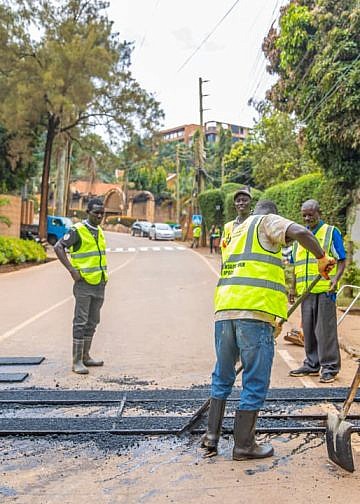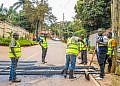










President Museveni has pledged continued investment in road infrastructure in Mukono District and surrounding areas as part of a broader strategy to decongest Kampala City, improve the movement of people and goods, and support economic transformation under the National Resistance Movement (NRM) government.
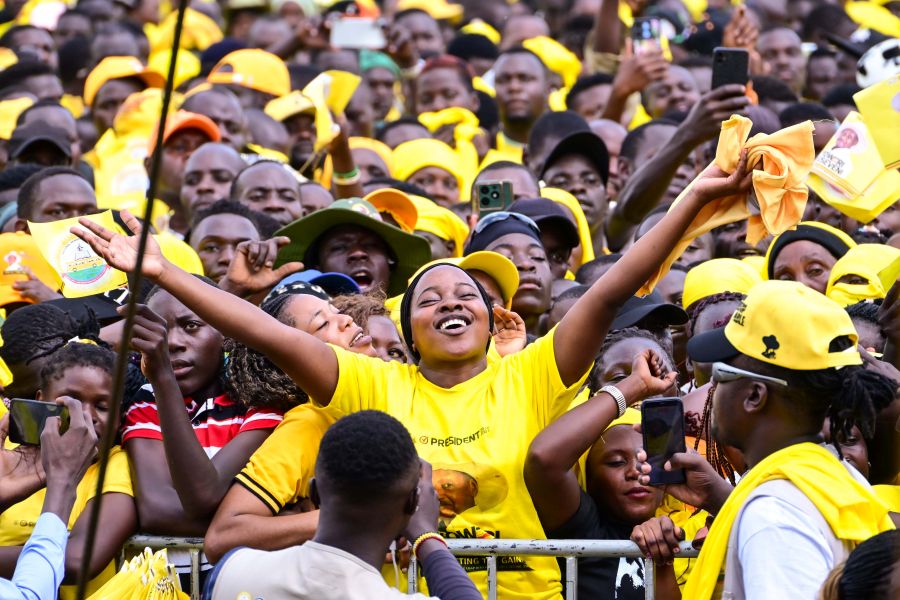
Addressing a large campaign rally at St. Joseph’s Secondary School, Naggalama Grounds in Mukono District on Friday, Museveni said the government is prioritising the construction of alternative road corridors that bypass Kampala to ease chronic traffic congestion in the capital.
The President, who is also the NRM flag bearer in the 2026 presidential election, was accompanied by the First Lady and Minister of Education and Sports, Janet Museveni, senior party leaders, Cabinet ministers and party mobilisers from the Buganda region.
Museveni said the heavy traffic flowing into Kampala from Mukono, Wakiso and other neighbouring districts has forced a shift in infrastructure planning, with increased focus on outer ring roads and inter-district connectors.
“We need roads that allow vehicles to avoid Kampala city altogether,” Museveni said.
“Because of the heavy traffic, we want most vehicles to pass on roads outside Kampala instead of all traffic being forced through the city.”
He said government has already invested heavily in major highways and will continue upgrading strategic road links connecting Mukono to neighbouring districts.
“We started with major roads like Kampala–Jinja, which has been repaired several times and is being worked on again. We have completed the Mukono–Kampala section and shall finish the remaining stretch from Mukono to Jinja,” he said.
The President also cited completed and ongoing roads aimed at improving regional connectivity, including the Kayunga–Kangulumira–Jinja road, Mukono–Katosi (Bakunja) road, and the Kayunga–Baale–Galiraya road.
“These roads are part of our wider plan to improve transport and trade while reducing pressure on Kampala,” Museveni added.
Earlier, Mukono District NRM chairperson Haruna Ssemakula raised concerns over persistent congestion along the Mukono–Kampala corridor and appealed for additional feeder and connecting roads. He specifically mentioned the Misindye–Kiyunga–Naggalama–Zirobwe road as a critical alternative route.
In response, Museveni assured residents that the road is already included in the government’s infrastructure plans.
“We need roads connecting Mukono to places like Zirobwe, Seeta, Namugongo and Nansana so that traffic does not have to pass through Kampala,” he said.
The President also reflected on the changing role of the Northern Bypass, noting that urban expansion has overtaken earlier planning assumptions.
“We thought Kampala would remain south of the Northern Bypass, but the city expanded beyond it. The Northern Bypass has now become the central bypass,” he said.
Concerns Over PDM Funds
Beyond infrastructure, Museveni expressed concern over complaints of mismanagement and alleged theft of Parish Development Model (PDM) funds in Mukono District, reportedly involving some parish officials and SACCO committee members.
“The money is there. I am sending it and it is reaching the villages, but some people are diverting it,” he said.
He urged residents to actively participate in parish SACCO meetings and hold their leaders accountable, warning that illegally constituted committees would be investigated.
Official figures show that Mukono District and Municipality, comprising 97 parishes, have received a combined Shs34.59 billion under the PDM programme, with Shs28.52 billion disbursed to 31,248 beneficiary households.
Museveni criticised political apathy among sections of the youth, urging them to engage more actively in leadership and development processes.
“I also enjoy leisure, but first I work, study and defend the country,” he said, drawing applause from the crowd.
NRM Manifesto and Service Delivery
Using the rally to outline key elements of the NRM manifesto, Museveni said peace remains the ruling party’s foundational contribution to Uganda’s development, anchored in non-sectarian politics.
On education, he noted that Mukono District and Municipality currently have 220 government primary schools, 962 private primary schools, 25 government secondary schools and 270 private secondary schools.
In health, the district’s 18 sub-counties host one hospital, one Health Centre IV and 17 Health Centre IIIs. Museveni announced plans to upgrade several Health Centre IIs and construct new Health Centre IIIs in Katosi and Namataba town councils.
He added that access to clean water in Mukono stands at 96 percent, with major projects such as the Kabembe–Kalagi–Naggalama Water Supply Project benefiting about 130,000 people.
The President cautioned residents against focusing solely on public infrastructure without improving household incomes.
“Do not be blindfolded by development. Look into your home and assess how you stand economically,” he said.
Museveni reiterated the Four-Acre Model as a pathway out of poverty and dismissed claims that government should be the main employer, noting that Uganda has only about 480,000 public service jobs.
“Jobs are in commercial agriculture, manufacturing, services and ICT,” he said, citing industrial parks and successful agribusiness ventures as examples.
Janet Museveni urged residents to support NRM candidates in the January 15, 2026 polls, saying their votes would contribute to building a stronger Uganda.
Mukono District and Municipality have a combined population of 929,224, according to the 2024 census. By 2025, registered voters had risen to 442,422, with polling stations increasing from 619 to 960. NRM leaders described Mukono as a strategic battleground and expressed confidence of improved performance in the 2026 elections.