









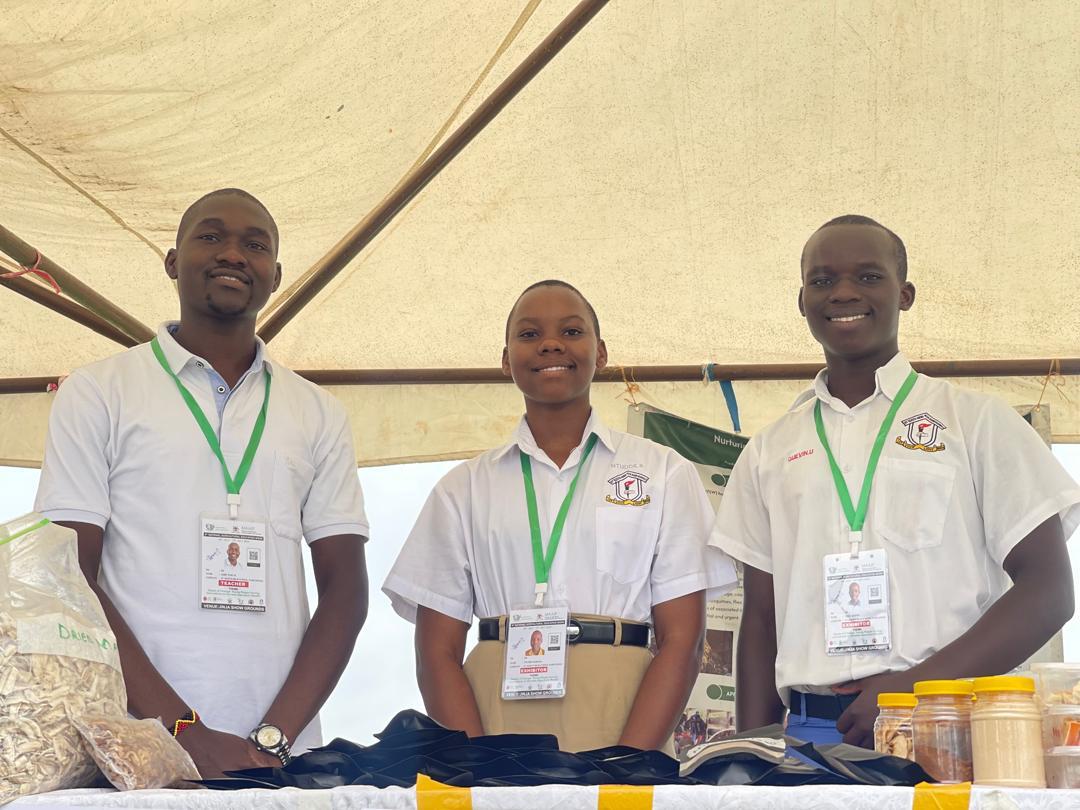
St. Kizito High School Namugongo has once again demonstrated its leadership in innovation and education, emerging among the top exhibitors at the fourth National Agricultural Education Show (NAES) 2025.
The event, held from July 6th to 12th at the Jinja National Agricultural Showgrounds, attracted an estimated 200,000 participants, including over 100 exhibiting schools, and high-level representatives from government, academia, and the private sector.
Organized by the Ministry of Education and Sports (MOES) in collaboration with the Uganda National Farmers Federation (UNFFE) and the Ministry of Agriculture, Animal Industry and Fisheries (MAAIF), the show serves as a platform for institutions to showcase innovations, research, and practical solutions in agriculture and education.
This year’s edition of NAES was closely aligned with the Ministry’s Competency-Based Lower Secondary Curriculum, which champions Project-Based Learning (PBL) and 21st-century skills such as critical thinking, creativity, digital literacy, and problem-solving.
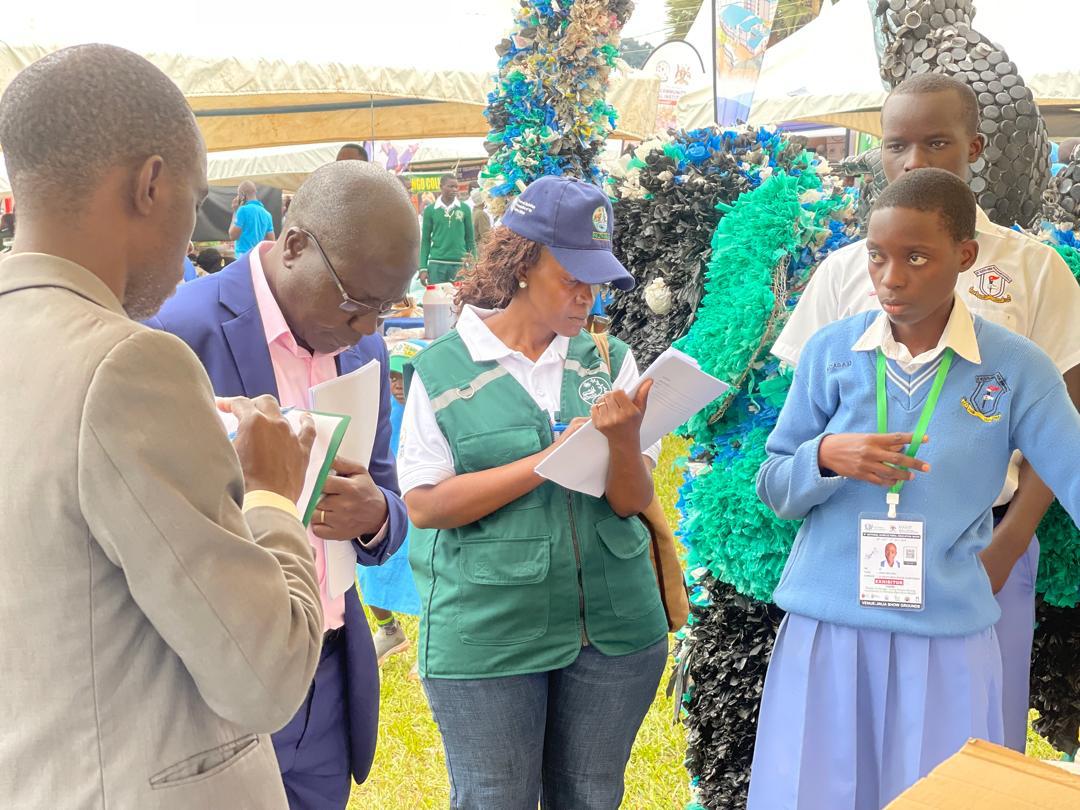
St. Kizito made a strong impression with a variety of groundbreaking projects designed to address critical local and global challenges, particularly in the areas of environmental health, food security, and sustainable agriculture.
These projects exemplified the school’s mission to translate classroom learning into practical, community-centered innovations.
Led by Florence Nambejja, the school’s delegation brought energy, ingenuity, and resilience to the week-long exhibition.
“The exhibition offered a learning experience for all participants as our children showcased exceptional skills and innovations. Institutions at all levels—from primary to tertiary—experienced high levels of innovation exhibited by St. Kizito High School,” said Nambejja.
“The display of practical, income-generating innovations reinforced the importance of commercializing research and encouraged the schools to accelerate their own technology transfer and incubation strategies.”
The school’s booth attracted significant attention for its emphasis on sustainable development and its creative approach to problem-solving. Visitors engaged with student-led demonstrations that highlighted eco-friendly practices, low-cost innovations, and scalable agricultural solutions.
The experience sparked meaningful reflection on the role of schools in technology transfer and commercialization, particularly how education institutions can nurture prototypes and innovations from ideation to market readiness.
“The team worked diligently to prepare exhibition materials, brand the school’s booth, and provide engaging presentations to guests, visitors, and students from across the country,” added Nambejja.
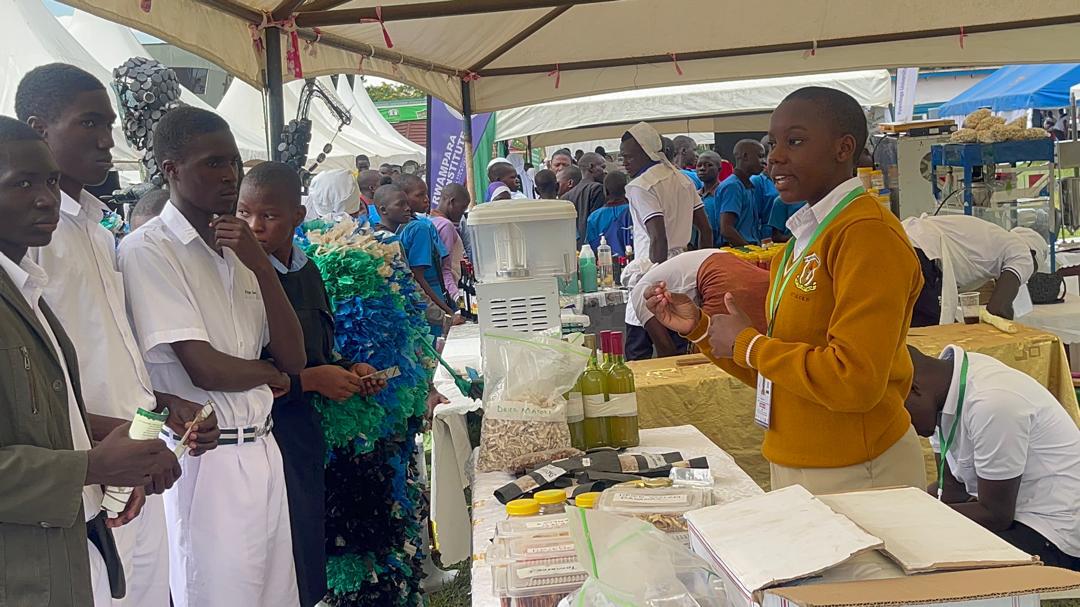
“One of the most notable contributions came from our students. Their knowledge of the setup and logistics ensured that the school’s team received proper support and representation throughout the event.”
This is far from St. Kizito High School Namugongo’s first time making national headlines for its innovation-driven approach to education.
Just last month, during the National Science Week 2025, Minister for Science, Technology, and Innovation Dr. Monica Musenero commended the school for promoting science and innovation, emphasizing how its projects are helping to cultivate a strong culture of STEM (Science, Technology, Engineering, and Mathematics) learning across the country.
The school also garnered international recognition in 2024, when it was named a finalist for the prestigious Zayed Sustainability Prize.
The awards ceremony, held in the presence of President Museveni and hosted by UAE President Sheikh Mohamed Bin Zayed, placed the school among the continent’s top institutions driving sustainable development.
As Uganda continues to invest in skills-based education and technological advancement, St. Kizito High School Namugongo stands as a beacon of what’s possible when commitment, creativity, and community engagement converge.
Their participation at the 2025 National Agricultural Education Show not only reinforced their growing reputation but also set a high standard for other institutions aiming to merge learning with real-world impact.