










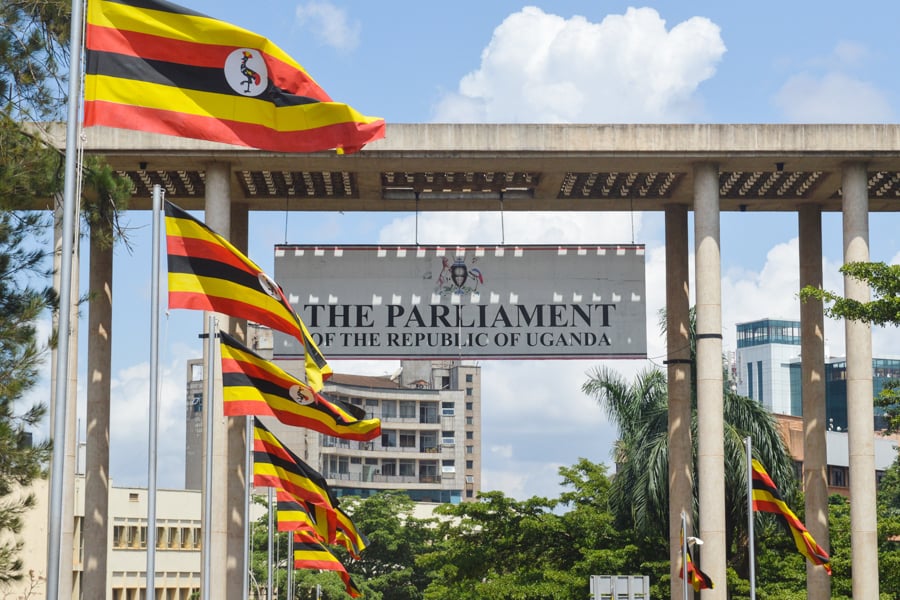
Parliament has approved government’s request to borrow €183.3 million (approximately Shs751.5 billion) from Standard Chartered Bank, alongside Shs120.4 billion from the domestic market through a six-month Treasury bill, to finance the second phase of the Strategic Towns Water Supply and Sanitation Project.
The decision was taken during the plenary session of Wednesday, September 17, 2025, presided over by Deputy Speaker Thomas Tayebwa.
According to the Ministry of Finance, the funds will support the expansion of clean water access and sanitation services in rapidly growing towns.
The project is aligned with Uganda’s goal of ensuring universal access to safe water and improved sanitation in urban areas by 2030.
State Minister for Finance, Henry Musasizi, told MPs the project will significantly strengthen infrastructure, enhance service delivery, and improve management systems in the targeted areas.
“It will contribute to improved health and productivity, provide employment during construction, and empower women and youths through skills development,” he said.
However, the loan package has raised concern in the House. The Committee on National Economy noted that while the principal amounts to €183.3 million, total repayment obligations will climb to €311.5 million (about Shs1.28 trillion) over a 14-year period.
Committee Chairperson John Bosco Ikojo cautioned that the debt burden would be steep, pointing to high borrowing terms.
“The loan is highly commercial, with a grant element of only seven percent — far below the 35 percent concessionality threshold recommended by the IMF and World Bank,” he explained.
Lawmakers also questioned the 12.1 percent interest rate attached to the Treasury bill and the €15.7 million (Shs64.4 billion) insurance premium payable to SINOSURE.
The Ministry of Water and Environment has earmarked four implementation clusters under Phase II — Nakasongola District, Kasambira in Kamuli District, Bugadde in Mayuge District, Idudi–Buseesa in Bugweri District, and Alebtong District. In total, 51 towns across 115 parishes are expected to benefit.
Projections indicate the scheme will reach at least 740,000 residents by 2030 and one million by 2050.
It will also provide water for industrial activities, including the cassava processing plant in Nakasongola and the proposed industrial park at Kakooge.