

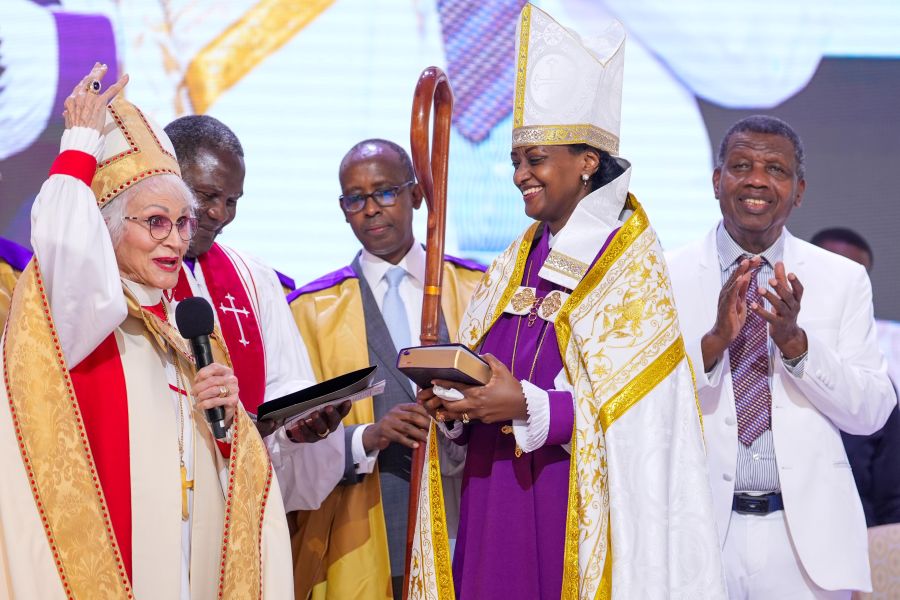
Pastor Patience Kokundeka Museveni Rwabwogo, daughter of President Yoweri Kaguta Museveni, has been consecrated as an Episcopal Bishop of Covenant Nations Church in Uganda and beyond, 20 years after founding the ministry as a small house fellowship.
Rwabwogo was consecrated on Monday during celebrations marking two decades of Covenant Nations Church at Covenant Hill in Maya.
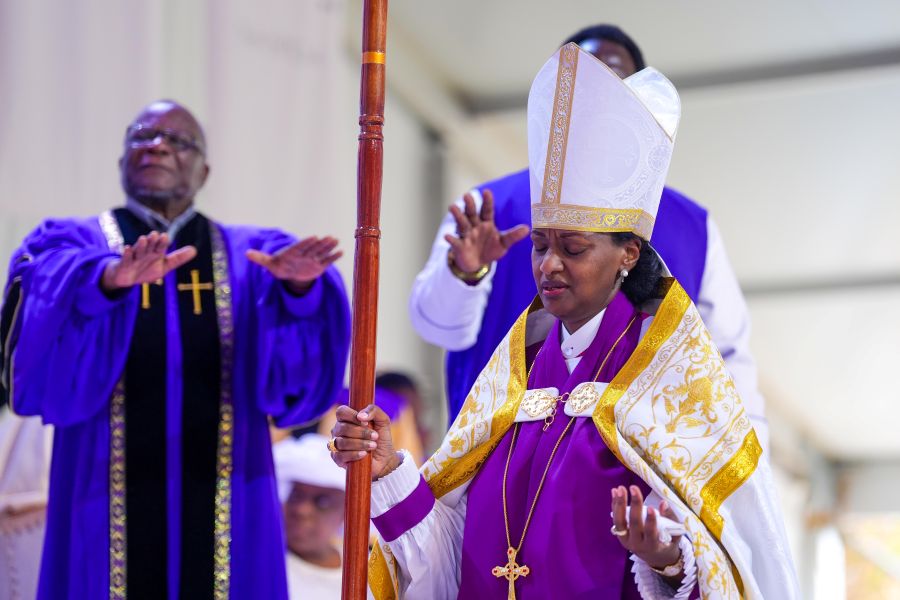
The ceremony was led by Bishop Dr. LaDonna Osborn, the Chief Consecrator, who presided over the consecration and presented Rwabwogo with her certificate and Bible. Archbishop Moses Odongo and Bishop Joshua Lwere served as co-consecrators.
Church leaders at the ceremony described Rwabwogo’s elevation as a significant milestone in Uganda’s Christian history, with her becoming the first woman to be ordained as a bishop in Uganda.
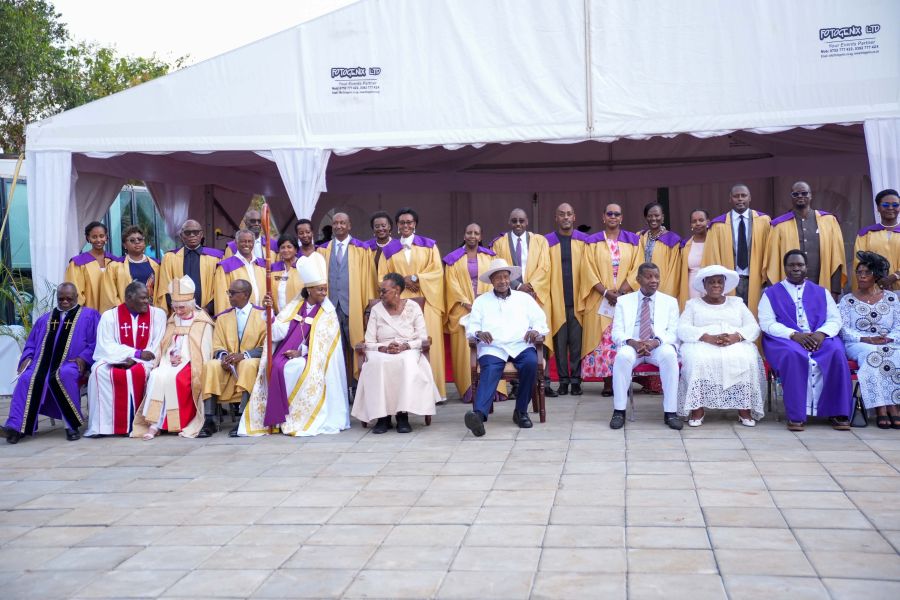
The ceremony brought together senior Christian leaders, government officials, family members, believers and other guests.
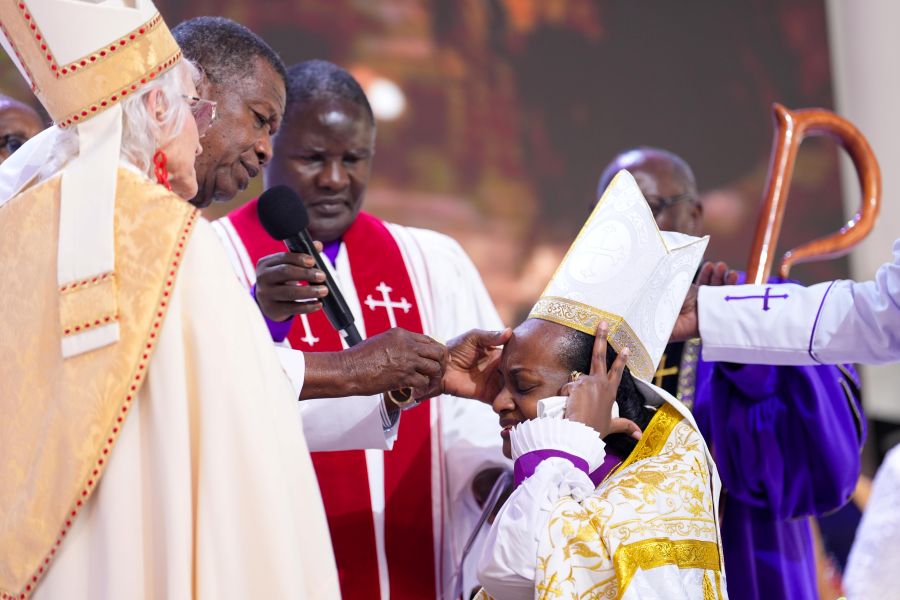
Among those in attendance were Pastor Enoch Adejare Adeboye and his wife, Pastor (Mrs.) Folu Adeboye, global leaders of the Redeemed Christian Church of God (RCCG). Adeboye, who was recognised for his role in Rwabwogo’s spiritual journey, participated directly in the consecration by leading the anointing with oil and prayers for the newly consecrated bishop.
Presenting Rwabwogo on behalf of the elders of Covenant Nations Church, Mrs. Allen Kagina said her journey to the episcopal office had been shaped by two decades of ministry, service, leadership and commitment to the Christian faith.
Kagina said the elders had considered Rwabwogo’s character, conduct, doctrine, leadership and ministry before presenting her for consecration.
“Twenty years ago, God planted within her heart a vision that began humbly as a small house fellowship. What appeared small in the eyes of men carried within it the seed of a much greater work,” Kagina said.
She said the fellowship grew through prayer, obedience and perseverance into Covenant Nations Church, which now serves believers seeking to live out their faith in their families, professions, communities and the nation.
According to Kagina, Rwabwogo’s ministry has extended beyond spiritual teaching to areas including leadership development, professional excellence, entrepreneurship, economic empowerment and responsible stewardship.
“She has consistently proclaimed that the Gospel must transform the whole person,” she said.
Kagina said Rwabwogo had also maintained a particular focus on young people, students and young professionals, encouraging them to discover their purpose, build their lives on the Word of God and use their education, gifts and opportunities for the good of society.
Through Bible teaching, mentorship, conferences, leadership seminars and evangelistic missions, she said Rwabwogo had encouraged believers to become witnesses of Christ in education, leadership, family life, business, public service and national development.
She also highlighted Rwabwogo’s efforts to promote unity among Christian denominations, noting that she had worked with her husband, Odrek Rwabwogo, to bring together Pentecostal pastors, Anglican bishops and other Christian leaders for prayer, revival and evangelism.
Kagina cited the Light Up Uganda for Jesus Gospel Convention as an example of this effort, bringing together Christians and leaders from different denominations to worship, pray and proclaim the Gospel.
The elders described Rwabwogo’s consecration not as a personal promotion but as a call to greater responsibility and service to God and the Church.
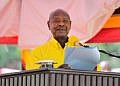
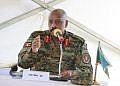
President Museveni congratulated his daughter on her consecration, describing the occasion as significant both for the family and for the history of Christianity in Uganda.
The President also thanked God for the recovery of his wife and commended the medical personnel who cared for her, as well as his children for supporting her during the period.
He then reflected on the significance of Rwabwogo becoming a bishop, placing her consecration within the broader history of Christianity in Uganda.
“Secondly, I thank God for making Patience become a Bishop. We are the ancient people of this area. We have been here for four and a half million years,” he said.
Museveni recalled that Muslims arrived in Uganda in 1841, followed by Anglicans in 1877 and Catholics in 1879. He noted that several generations of his family lived through those developments without joining the Church.
“My great fathers were alive; they never joined the Church. My grandparents were also alive; they never joined the Church. It was Mzee Kaguta who joined the Church for the first time in 1947. But in all these years, I had never even heard of a catechist. Today, I have a whole Bishop,” he said.
The President also said Rwabwogo’s Bible studies had challenged some of his own understanding of Scripture.
“I was not paying attention to Patience’s church things, but I had spent 12 years studying the Bible day by day from 1953. We would start the whole book of Genesis, finish it, go to Exodus, finish it, then Leviticus, Deuteronomy and the others. I thought I knew the Bible,” he said.
Museveni said he was surprised by some of the historical and biblical perspectives he encountered in documents prepared by his daughter.
“I was surprised when I learned from Patience about the descendants of Lot and Esau, who were not Jews. I had never heard anyone talking about it. But when I read Patience’s documents, they informed me about it. I surrendered because she had read the Bible,” he said.
He said the new bishop would bring new energy to the Church and thanked Adeboye and Osborn for attending the ceremony.
Museveni also challenged religious leaders to ensure that Christianity responds to the practical needs of society, citing Jesus Christ’s example of healing the sick, feeding the hungry and freeing people from bondage.
The President disclosed that he and his wife had given Rwabwogo 50 cows as part of their traditional family practice.
“In our traditional way, I gave Patience 50 cows, and the cows are from [my wife] and myself,” he said.
Bishop Dr. LaDonna Osborn commended President Museveni and his family for maintaining their faith despite their public responsibilities.
She stressed the importance of unity within the Christian community, saying Christians did not have to agree on every form or interpretation of faith but should remain united through their common faith in God.
Osborn said the office of a bishop carries a responsibility to extend Christ’s ministry, promote justice and lift people up.
“A Bishop is supposed to lift people up and give them a new beginning,” she said.
She challenged the Church to move beyond simply preserving institutions and instead become an instrument for transforming society.
“The Church doesn’t need leaders who preserve the institutions, but one that heals nations,” she said.
Osborn urged Rwabwogo to embrace the responsibility entrusted to her and use her new position to extend the reach of the Gospel.
Odrek Rwabwogo reflected on Uganda’s Christian history, saying his wife’s consecration was part of a longer story of faith, revival and service.
He traced the Christian revival in Ankole and recalled the contribution of early converts, including Mariam Kakyibara, whom he described as the first woman to be baptised in 1902.
He said the sacrifices of early Christians helped prepare the ground for the East African Christian revival.
“Today, the Lord has chosen our own Patience to be the first woman to be ordained Bishop in Uganda,” he said.
Rwabwogo said the story demonstrated that God often chooses people whom society may consider unlikely candidates to fulfil significant purposes.
He said his wife’s calling came after years of quiet service and that her new role would require her to shepherd, inspire and challenge the next generation.
He warned against a generation that places greater emphasis on intellectualism, political power and material wealth than on faith and godliness.
“God is the God of history,” he said.
He also said Rwabwogo had influenced their family through her emphasis on repentance, love, discipline and careful speech.
The consecration included the laying on of hands, anointing with oil and prayers for the newly consecrated bishop.
Rwabwogo was also formally presented with key episcopal symbols representing aspects of her new office.
Apostle Alex Mitala presented the chemere, while Bishop Simon Peter Emiau presented the scarf, or tippet.
Archbishop Moses Odongo presented the cross, while Adeboye presented the ring.
Bishop Joshua Lwere presented the cope, while Osborn presented the mitre.
Adeboye also presented the staff, completing the presentation of the episcopal symbols.
The ceremony marked the culmination of 20 years of Covenant Nations Church ministry and the beginning of a new chapter in Rwabwogo’s service to the Church.
From a small house fellowship two decades ago to a wider ministry and now the episcopal office, church leaders described her consecration as a call to greater responsibility rather than prominence.
The ceremony was also attended by Vice President Jessica Alupo, NRM First National Vice Chairperson Al-Hajji Moses Kigongo, Cabinet ministers, religious and cultural leaders, family members and other guests.