











Uganda’s growing poultry industry is facing a shortage of key animal-feed raw materials, with the Poultry Association of Uganda (PAU) calling on farmers and the government to increase production of maize and soya to meet rising demand.
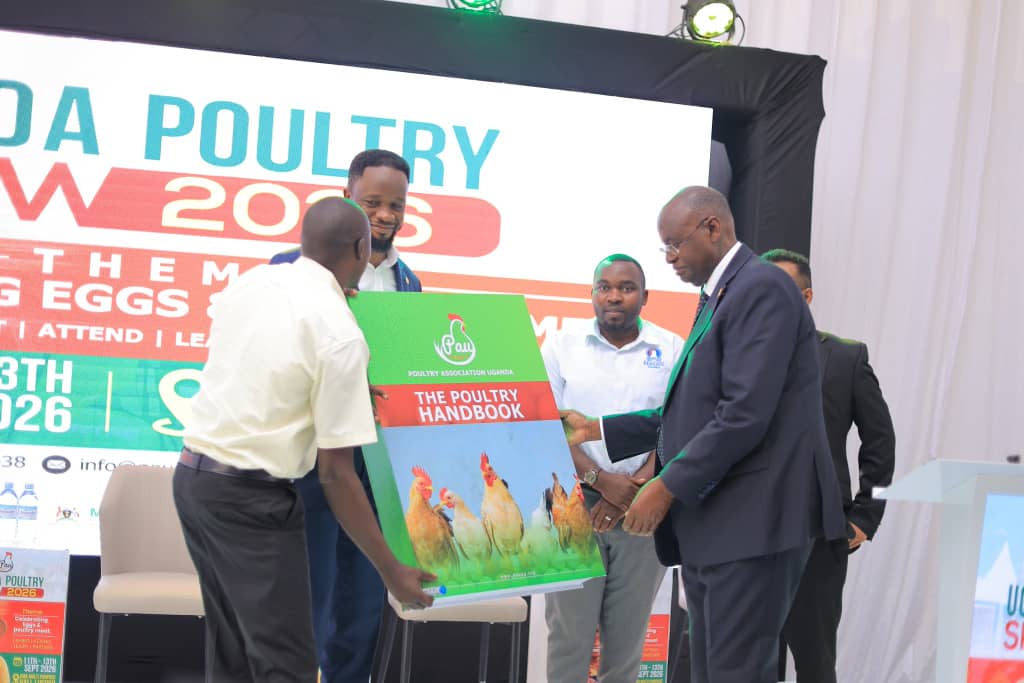
The call was made during the launch of the inaugural Uganda Poultry Show 2026 at the Uganda Manufacturers Association (UMA) Multipurpose Hall in Lugogo, Kampala, under the theme “Celebration of Eggs and Poultry Meat.”
Peter Ssenkungu, Chairman of PAU, said the poultry industry is expanding faster than the supply of raw materials required to produce feed, pushing up production costs for farmers.
He said maize is a major source of energy in poultry feed, while soya provides essential protein for the growth and productivity of birds.
Ssenkungu said the slow growth in production of the two crops has resulted in undersupply and higher prices, increasing the cost of poultry production.
He urged the government to support increased production of maize and soya, arguing that the poultry industry now provides a ready and growing market for farmers who invest in the two crops.
Ssenkungu said inadequate domestic supplies have forced feed manufacturers to source maize and soya from other countries, exposing the industry to additional price and quality challenges.
He encouraged Ugandans to take advantage of the growing demand for animal-feed raw materials by investing in maize and soya production.
He said increased local production would not only provide farmers with a reliable market but also strengthen the poultry value chain and reduce dependence on imported raw materials.
The call comes as Uganda seeks to position itself as a competitive regional poultry hub, with the government recognising the sector’s potential to create jobs, increase household incomes and contribute to food and nutritional security.
Minister of State for Animal Industry Bright Rwamirama said Uganda has an estimated 100 million to 120 million poultry, combining commercial and backyard birds.
He said the large poultry population demonstrates the sector’s importance to employment, household incomes and national food security.
Rwamirama said the government remains committed to creating a conducive environment for investment in poultry production and related industries.
He also said Uganda has made progress in reducing its dependence on imported poultry feeds, with feed imports having declined significantly.
However, industry players say expanding domestic production of maize and soya remains critical to sustaining that progress and reducing the cost of poultry production.
Ssenkungu said the shortage of feed ingredients highlights the need to develop the entire poultry value chain rather than focusing solely on the production of birds and eggs.
He said increased local production of maize and soya would benefit both crop farmers and poultry producers by creating a reliable domestic market while reducing exposure to international supply and price fluctuations.
Meanwhile, Wesley Ruto, Chairperson of Kukuchic and Chairman of the PAU Technical Committee, said the poultry show is also providing farmers with practical knowledge aimed at improving productivity.
The training sessions cover areas including brooding, feed management, poultry housing, disease prevention and flock management.
Ruto said improving Uganda’s poultry industry should focus not only on increasing the number of birds but also on improving the quality of poultry products.
The inaugural Uganda Poultry Show 2026, which started on Friday, September 11, will run until Sunday, September 13, at the UMA Multipurpose Hall in Lugogo.
The three-day event has brought together farmers, feed manufacturers, breeders, researchers, policymakers, businesses and other stakeholders across the poultry value chain.
The show features exhibitions, technical training sessions, business linkages and stakeholder engagements aimed at strengthening Uganda’s poultry industry.
The Uganda Poultry Handbook was also launched during the event.
The organisers say the exhibition is intended to promote knowledge-sharing, innovation and stronger linkages across the poultry value chain as Uganda seeks to expand production and improve the competitiveness of the sector.