








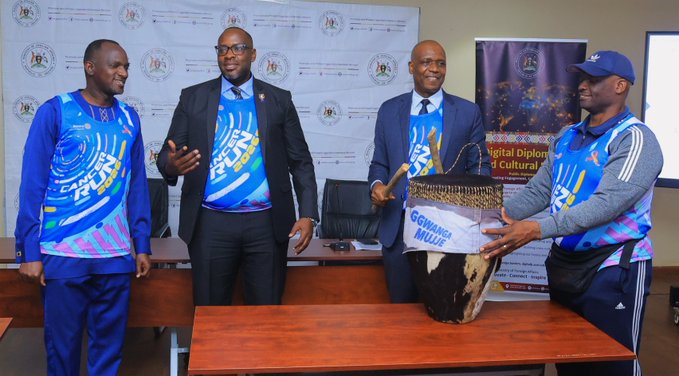
The Ministry of Foreign Affairs has contributed Shs10 million towards this year’s Rotary Cancer Run, as organisers target Shs5 billion to strengthen cancer care and treatment in Uganda.
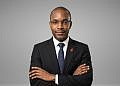
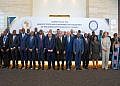
The contribution was announced by Ambassador Charles Ssentongo, Head of Protocol at the Ministry of Foreign Affairs, who represented the Permanent Secretary during a meeting with Rotary Cancer Run officials.
Ssentongo said the ministry’s support was part of its commitment to advancing health and other social causes while raising awareness about cancer.
“This partnership reflects our broader commitment to be part of advancing various social causes, notably health causes, which are aimed at raising awareness and funding for the various health challenges our country faces,” Ssentongo said.
He said the ministry would also mobilise Uganda’s diplomatic missions abroad to participate in the run and create awareness about cancer.
According to Ssentongo, missions in Nairobi, Kuala Lumpur, New York, Guangzhou, Beijing, Paris, Tehran and Cairo had already responded positively, with several procuring running kits for their staff.
He said the participation of the missions would give the cancer awareness campaign a global reach, with Ugandan diplomatic staff running from their respective duty stations.
Ssentongo said the ministry would continue working with Rotary, its staff, the diplomatic community and other stakeholders to support the cancer campaign.
He also commended Rotary for its contribution to addressing social challenges in Uganda, saying the organisation had become an important partner in supporting communities and complementing government efforts.
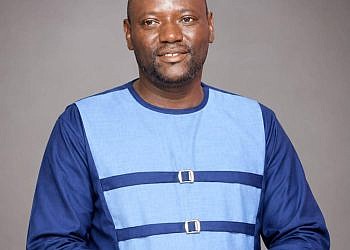
Meddie Lutaaya, Chairperson of the Rotary Cancer Run, thanked the Ministry of Foreign Affairs for its continued support and said the annual event had evolved into a major investment in Uganda’s health sector.
Lutaaya said Uganda records about 36,000 new cancer diagnoses every year, with late diagnosis contributing significantly to deaths.
“On average, annually, we receive 36,000 cases of new diagnosis. Thirty-six thousand Ugandans are diagnosed with cancer, newly diagnosed with cancer every year,” Lutaaya said.
He said about 80 per cent of those diagnosed die within the first year, which he attributed largely to patients presenting for treatment when the disease is already advanced.
“What that means is that, in essence, the cancer diagnosis is close to a death sentence. And the reason is because of late diagnosis,” he said.
Lutaaya urged Ugandans to embrace early testing and used the Cancer Run as a platform for increasing public awareness.
“We come out to amplify awareness creation. So, even just coming here to talk about the Cancer Run is a very big step into creating awareness,” he said.
He said the run, which is entering its 13th year, had already contributed to major cancer and blood-care infrastructure.
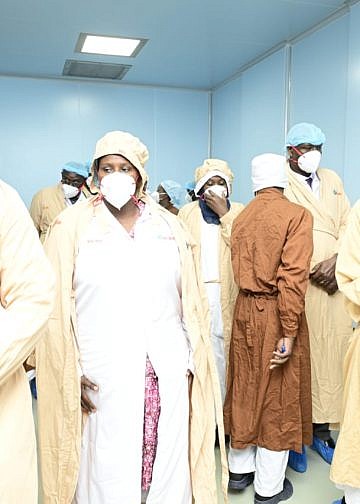
Among the projects supported through the initiative is the Rotary Centenary Cancer Ward at Nsambya Hospital, a 36-bed facility providing cancer diagnosis and treatment, including surgery and chemotherapy.
Lutaaya said the ward, however, does not currently offer radiotherapy, which is among the more advanced forms of cancer treatment.
The Rotary Cancer Run has also supported the Rotary Centenary Blood Bank at Mengo Hospital, which continues to provide blood to cancer patients and other people in need.
Lutaaya said Rotary in 2016 embarked on the construction of a one-stop cancer treatment centre at Nsambya Hospital to expand access to comprehensive cancer care, including radiotherapy.
He said civil works on the facility had been completed, with Shs8 billion raised out of the estimated Shs14 billion required investment.
Lutaaya said this year’s Cancer Run is targeting a net collection of Shs5 billion, with organisers aiming to attract 100,000 participants across Uganda.
“The Cancer Run is not just a run, but a very significant investment in healthcare and cancer in this country,” he said.
He said the participation of Uganda’s diplomatic missions abroad would further increase the number of people taking part in the campaign.
The organisers are also using the run to encourage Ugandans to take cancer screening seriously, arguing that early detection can improve the chances of timely treatment and survival.
Lutaaya said a healthy population was essential to Uganda’s development because national growth depends on a healthy and productive population.
“Nations grow because they have a healthy population, and nations grow because they have a formidable human capital,” he said.