











Stanbic Bank Uganda and Rotary Mama Toto Care Uganda have launched a three-year Shs600 million partnership aimed at strengthening public health facilities and reducing preventable maternal and newborn deaths across Uganda.
The initiative will focus on upgrading health facilities, training frontline health workers, improving referral systems and mobilising communities to encourage safe motherhood practices.
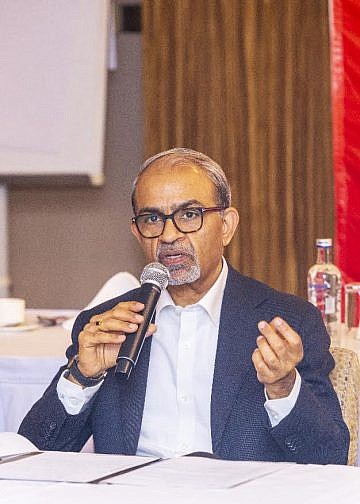
Speaking at the signing ceremony held at Stanbic Bank’s Learning and Development Centre in Kampala, Stanbic Bank Executive Director Paul Muganwa said improving maternal health is essential for Uganda’s economic future.
“Uganda has set itself an ambitious goal of growing its economy to USD 500 billion by 2040. We cannot achieve that vision if women, who are the backbone of our families, communities and future workforce, continue to face preventable risks during childbirth,” Muganwa said.
He added that maternal deaths affect not only families but also the country’s productivity.
“We cannot talk meaningfully about inclusive growth while mothers continue to risk their lives simply by bringing forth the next generation. A healthy mother is the cornerstone of a productive workforce and a prosperous nation,” he said.
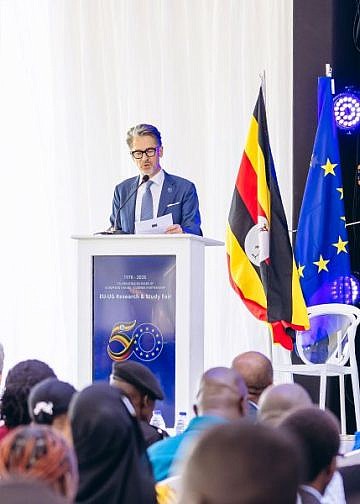
Rotary District 9213 Governor Dr Gerald Obai said the partnership demonstrates the importance of collaboration in tackling maternal mortality.
“This partnership shows what is possible when organisations come together around a shared purpose. Maternal mortality is not a challenge that government or Rotary can solve alone. It requires businesses, communities and development partners working together to save lives,” Dr Obai said.
Speaking on behalf of Rotary Mama Toto Care Uganda, Magezi Ndamira said the programme supports mothers and health workers by strengthening existing government health facilities rather than creating parallel systems.
“We stand with the mother who begins labour many kilometres from a health facility. We stand with the mother who arrives hoping there is equipment and skilled healthcare workers to help her deliver safely. We also stand with the midwife, the nurse and the doctor who want to save lives but need the right tools to do so,” Ndamira said.
He said the programme will train healthcare workers, provide essential maternal and newborn equipment, improve community awareness on antenatal care and strengthen referral systems.
“We strengthen government health facilities and equip healthcare workers who are already serving within the Ministry of Health. Our guiding principle is simple: where is the greatest need, and where can our intervention make the biggest difference?” he said.
Dr Charles Olaro, the Ministry of Health’s Director General of Health Services, welcomed the partnership, saying improving maternal health requires collective action.
“Maternal health is not the responsibility of the Ministry of Health alone. It requires government, the private sector, communities and development partners working together to remove barriers that prevent women from accessing quality care,” Olaro said.
The partnership will also implement an adopt-a-health-centre model as part of efforts to improve access to quality maternal and newborn care in underserved communities.