










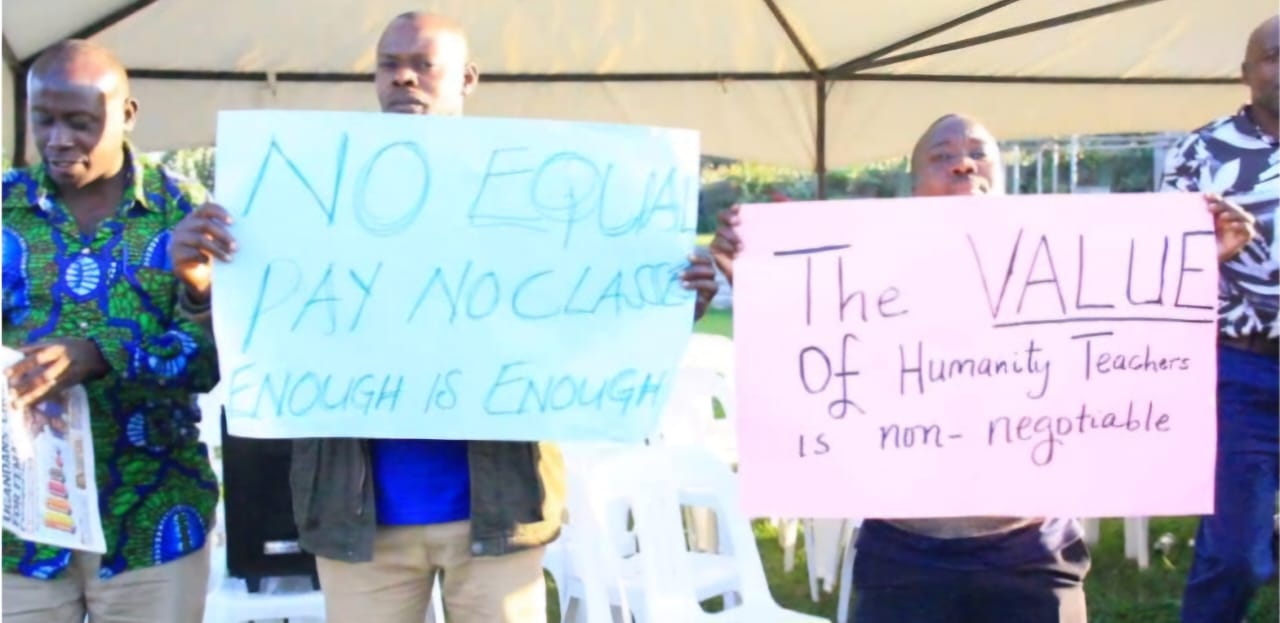
Humanities teachers in the Greater Masaka sub-region have stood their ground, defiantly rejecting an appeal by the Minister of Education and Sports, Janet Kataaha Museveni, to end their ongoing strike over pay disparities with their science counterparts.
Despite high-level discussions and fresh government proposals, the teachers under the Uganda Professional Humanities Teachers Union (UPHTU) have maintained that they will not return to the classroom until their salaries are increased by 30% in the 2025/26 financial year.
The deadlock follows an inter-ministerial meeting held on June 19, 2025, at State House Nakasero, where education stakeholders and union representatives convened to explore solutions.
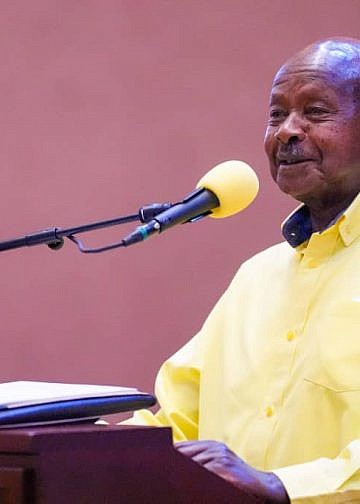
During the meeting, Minister Museveni urged the union’s National Executive Committee to put the learners’ interests first and suspend the industrial action, warning of the damage to education and national development.
Two proposals were tabled: one, a four-year phased salary enhancement beginning in FY 2026/27, at a cost of Shs 363.7 billion per year; the other, a more aggressive three-year plan starting with a 50% increment in the first year, totaling Shs 727.4 billion annually.
The increments would benefit an estimated 148,487 education personnel across the country.
But humanities teachers in Greater Masaka are having none of it.
In a resolute meeting on June 23 in Masaka City, UPHTU leaders and members unanimously rejected both government offers.
They reiterated their demand for a 300% pay rise, effective in the next budget cycle.
“We have outrightly rejected the Minister’s proposal. We are not returning to class,” said Robert Bwanika, Chairperson of UPHTU in Greater Masaka.
Their frustration stems from long-standing grievances dating back to 2018, when science teachers were granted significant pay increases.
Many humanities teachers still earn as little as Shs 600,000, a figure they say is not only inadequate but insulting given the rising cost of living.
“They increased salary for science teachers and discriminated against us, yet we perform the same tasks,” Bwanika added.
He questioned the government’s claim of limited resources, calling out what he described as double standards.
“What is good for the goose is good for the gander. If science teachers received it, why not us? Why is money suddenly unavailable when it comes to humanities teachers? We have unanimously rejected the First Lady’s proposals and we shall not call off the strike,” Bwanika insisted.
The anger and disillusionment among arts teachers in the region are palpable.
Asia Nassuuna Kamulali, a humanities teacher at Kyotera Central Secondary School, did not mince words.
“The government last reviewed our pay over ten years ago, yet the cost of living continues to soar. As a Christian, I remind the First Lady that this inequality is against both constitutional principles and biblical teachings,” Kamulali said, invoking Article 40 (1b) of the Constitution, which ensures equal pay for equal work.
She added that the disparity has taken a toll on teachers’ mental health, with many feeling demoralized and disrespected.
“We are tired of being degraded, dehumanized, and discriminated against in front of our students,” she said.
As the strike persists, many government schools have been left scrambling, relying on intern and student teachers to handle arts subjects a temporary fix that education experts warn could compromise quality, especially as students prepare for national exams.