







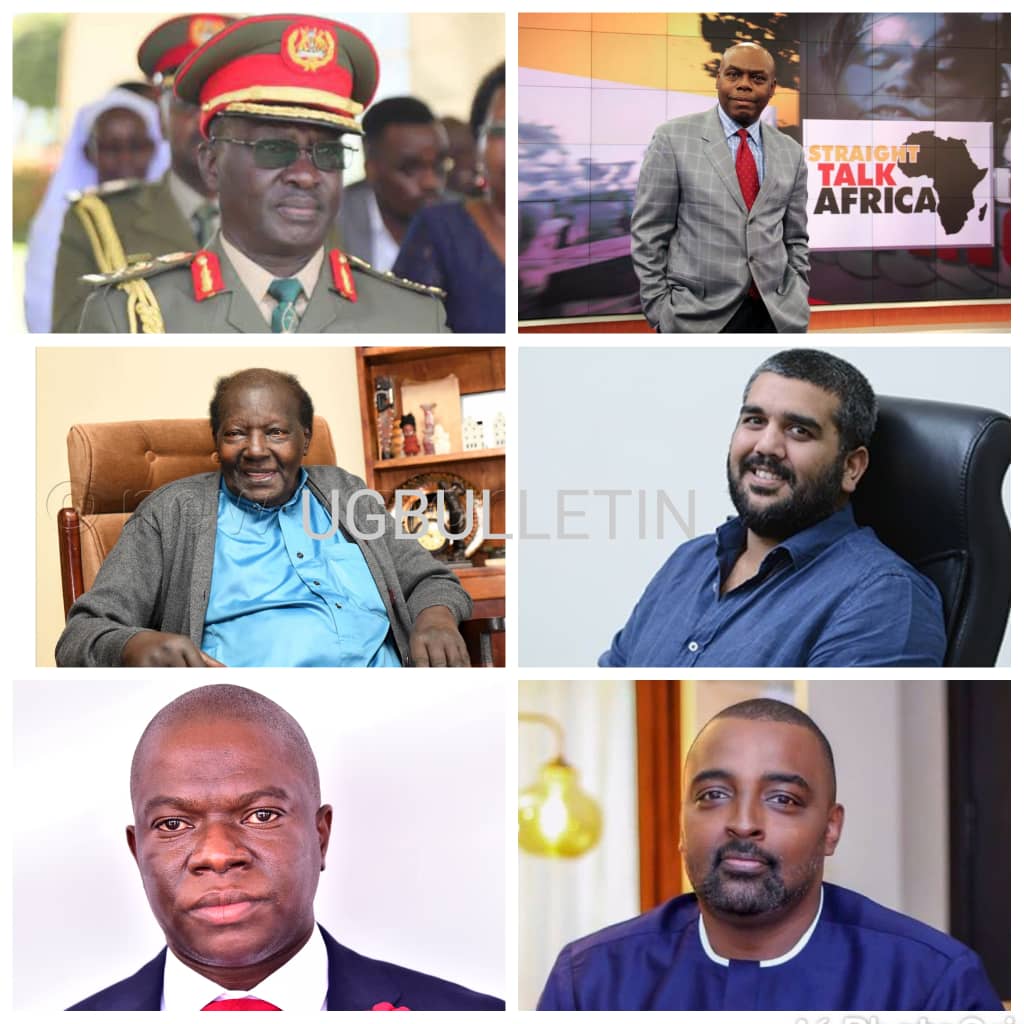
As 2025 draws to a close, the year leaves behind memories of lives that shaped Uganda’s politics, media, security, business, and civic life.
From outspoken politicians and celebrated journalists to security chiefs, scholars, and entrepreneurs, the country bid farewell to men and women whose influence stretched far beyond their immediate circles.
We reflect on some of the prominent personalities who passed on in 2025—and the legacies they leave behind.
Prof. George William Kanyeihamba
One of Uganda’s most respected legal minds, Prof. George Kanyeihamba, died at the age of 86 after a prolonged illness.
He was instrumental in shaping Uganda’s constitutional discourse, particularly during the post-1986 transition.
Educated at Cambridge University, Kanyeihamba served as Attorney General, Minister of Justice, and later as a Justice of the Supreme Court.
Known for his fearless dissenting opinions, Kanyeihamba often ruled against executive overreach, earning admiration from civil society and young lawyers alike. Even in retirement, he remained an influential public intellectual, writing extensively on governance, history, and law.
Shaka Ssali
Celebrated journalist Shaka Ssali, fondly known as the “Kabale Kid,” died aged 71 in the United States. Ssali was the long-time host of Voice of America’s flagship programme Straight Talk Africa, where for over two decades he interrogated Africa’s leaders, thinkers, and citizens on democracy, governance, and development.
His calm but probing interview style earned him continental respect, while his commitment to press freedom made him a mentor to generations of African journalists.
Few Ugandans carried the country’s voice to the world like Shaka Ssali.
Rising from humble beginnings in Kabale, Ssali became one of Africa’s most recognisable broadcast journalists.
As host of Straight Talk Africa on Voice of America, he interviewed presidents, rebels, diplomats, and activists with equal firmness and respect.
His programme became a civic classroom for millions of Africans, especially during the continent’s democratic transitions of the 1990s and 2000s. Ssali’s death marked the end of an era in African broadcast journalism.
Karooro Okurut
Former minister, senior presidential adviser, and acclaimed author Mary Karooro Okurut died in August in Nairobi, Kenya. A towering figure in Uganda’s literary and political spheres, Karooro was a fierce advocate for gender equality, education, and the promotion of African literature.
As a writer, her novels such as The Invisible Weevil remain staples in Ugandan classrooms, celebrated for their exploration of gender, power, and tradition.
Her novels and short stories remain part of Uganda’s literary canon, while her public service reflected a commitment to empowering women and nurturing culture.
In public service, she served as Minister for Gender, Labour and Social Development, and later as Senior Presidential Adviser. Karooro was a consistent advocate for women’s empowerment, literacy, and cultural preservation. Her death robbed Uganda of one of its most articulate female voices.
Brig. Henry Oluka
Brigadier Henry Oluka, the Director General of the Internal Security Organisation (ISO), died on January 29 after battling heart complications. Appointed in 2020, Oluka was credited with reforming ISO’s image and operations following years of controversy under previous leadership.
Though largely operating behind the scenes, his leadership was credited with restoring discipline and improving ISO’s public image.
His death came at a time when he was still consolidating these reforms.
His death marked the loss of a key figure in Uganda’s security establishment at a time of heightened regional and domestic security concerns.
Rajiv Ruparelia
Businessman Rajiv Ruparelia, Managing Director of the Ruparelia Group, died in a tragic road accident at the Busabala Flyover junction. Young, charismatic, and forward-looking, Rajiv represented a new generation of Ugandan business leadership.
As Managing Director, he expanded the group’s footprint in real estate, hospitality, education, and finance. His tragic death in a road accident sparked renewed debate about road safety, urban planning, and accountability in public infrastructure development.
His death sparked national outrage over poor road signage and unsafe construction sites, with many Ugandans calling for accountability and improved road safety standards.
Cedric Babu Ndilima
Media personality, former national tennis star, talent manager, and political aspirant Cedric Babu Ndilima died aged 46 after suffering heart complications in Nairobi.
The son of Capt. Francis Babu and Olive Kigongo, Cedric carved his own path across sports, entertainment, business, and politics. His energy, charisma, and belief in youth talent development left a lasting imprint on Uganda’s creative and sporting industries.
Sam Omalla
Retired Assistant Commissioner of Police Sam Omalla died at 65 after a battle with colon cancer. Omalla was one of the most recognisable police commanders during the Walk-to-Work protests led by opposition figure Dr. Kizza Besigye.
Often deployed on the frontlines, he became a lightning rod for public anger toward the police, a role that defined his controversial but significant career.
While critics accused him of heavy-handedness, supporters argued he was executing difficult orders in a volatile political climate. In retirement, Omalla remained unapologetic about his service, embodying the complexity of Uganda’s security narrative.
Muhammad Ssegirinya
Kawempe North MP Muhammad Ssegirinya died aged 37, cutting short one of the most emotionally charged political careers of his generation. Nicknamed “Eddoboozi Ly’eKyebando” (Kyebando’s voice), Ssegirinya embodied grassroots politics and youthful defiance.
Despite spending much of his tenure battling legal and health challenges, his rise from humble beginnings inspired many young Ugandans.
His career was marked by activism, controversy, detention, and illness. Though his time in Parliament was short, his story resonated deeply with urban youth who saw in him a symbol of resilience and political defiance.
Maj. John Kazoora
Former Kashari MP and bush war veteran Maj. John Kazoora died at 69 after a long illness. Once a close ally of President Museveni, Kazoora later became one of his fiercest critics.
His memoir, Betrayed by My Leader, remains one of Uganda’s most influential political books, offering a rare insider account of the bush war and its aftermath.
Kazoora’s life mirrored the contradictions of Uganda’s revolutionary history.
James Garuga Musinguzi
Businessman, philanthropist, and political activist James Garuga Musinguzi died at 72. He is remembered for defeating then Defence Minister Amama Mbabazi in a landmark 2002 court case and for being a founding pillar of the Forum for Democratic Change (FDC), including hosting the party headquarters at Najjanankumbi.
As a founding member of the Forum for Democratic Change, Garuga provided both ideological and material support to the opposition, earning him respect across political divides.
AIGP Charles Kataratambi
Assistant Inspector General of Police Charles Kataratambi, Director of Human Rights and Legal Services, died in October after a long illness. His career spanned criminal investigations, media crimes, land protection, and special investigations.
After years of professional stagnation, his 2024 promotion was seen as a redemption moment—making his death barely a year later particularly poignant.
His death shortly after left many reflecting on the personal cost of public service.
Risdel Kasasira (1980–2025)
The year began on a sombre note with the death of veteran journalist Risdel Kasasira, formerly of the Daily Monitor. He died in a road accident along Masaka Road on January 4.
Respected across the media and security sectors, the military-style honours accorded at his burial spoke volumes about his professionalism and integrity. His death in a road accident was not just a loss to journalism, but to public accountability.