











Uganda Electricity Distribution Company Limited (UEDCL) Managing Director Rwabwogo has acknowledged growing customer frustration over persistent power outages, saying the utility must move beyond explaining the challenges facing the electricity network to delivering lasting improvements.
Addressing the concerns on Thursday, October 22, Rwabwogo said the company understood that customers who repeatedly experience electricity interruptions want reliable supply rather than explanations about the causes of the disruptions.
“I know that for someone who has spent hours without electricity, explanations about ageing infrastructure and investment requirements offer little comfort. What that customer wants is for the power to return and for the interruption not to happen again. That is the standard against which we must be measured,” Rwabwogo said.
UEDCL has attributed the unreliable electricity supply partly to the condition of the distribution network it inherited from Umeme following the expiry of the latter’s 20-year concession in March 2025.
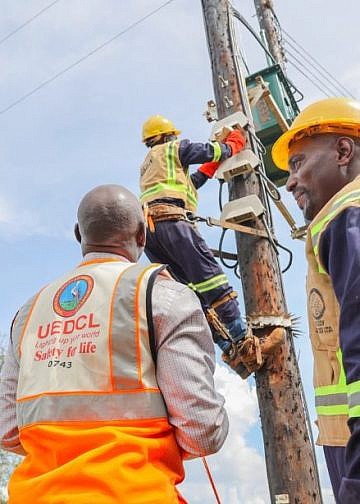
According to the company, utility, ageing infrastructure, overloaded lines, deteriorated electricity poles and vandalism have contributed to power interruptions, while rising electricity consumption has placed additional pressure on the existing network.
The company recently said that investment was needed to address gaps in the distribution network following years of limited reinvestment before the concession ended.
According to UEDCL, more than 47,000 electricity poles across the country were due for replacement, with some collapsing during storms and heavy rains and contributing to supply interruptions.
The state of the distribution network presents a significant challenge for the utility as it seeks to accommodate growing electricity consumption while maintaining a stable supply to households, businesses and industries. Damaged or overloaded equipment can require extensive repairs and infrastructure upgrades beyond routine maintenance.
Rwabwogo acknowledged that some of the improvements needed to address the challenges would take time, particularly where substantial investment in infrastructure is required. She said UEDCL was working with the government and other electricity sector partners to accelerate projects aimed at strengthening the distribution network.
She also recognised the importance of keeping customers informed when electricity supply is interrupted, noting that consumers should not have to repeatedly seek updates about when power will be restored.
Beyond household needs, Rwabwogo said reliable electricity was essential for industrial growth, emphasising the importance of developing a distribution network capable of meeting the country’s expanding energy requirements.
She said the utility’s responsibility extended beyond explaining the challenges inherited from the previous distributor to demonstrating measurable progress in resolving them.
“Our responsibility is not simply to explain the challenges but to resolve them, communicate openly about our progress and deliver improvements that customers can experience,” Rwabwogo said.
The persistent complaints over power interruptions continue to put UEDCL under pressure to demonstrate that the challenges affecting the distribution network can be addressed through effective maintenance, infrastructure rehabilitation and investment.
For consumers, particularly in urban centres such as Kampala, the ultimate measure of progress will be whether electricity supply becomes more reliable, restoration times improve and outages become less frequent and disruptive.
While the utility has pointed to ageing infrastructure and rising demand as key contributing factors, customers will ultimately judge its performance by the improvements they experience in their homes, businesses and workplaces.