










Uganda has confirmed three new Ebola cases, according to the Ministry of Health.
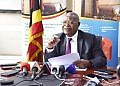
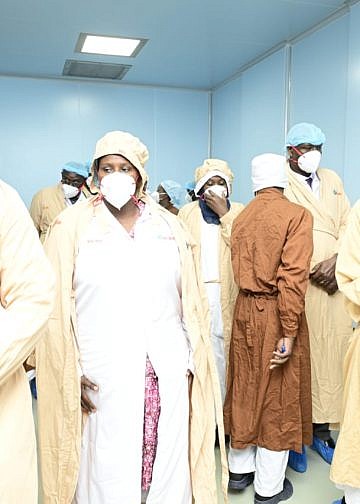
In a statement on Saturday, the Director General of Health Services in the ministry, Prof. Charles Olaro said the three cases include a Ugandan driver who transported the country’s first confirmed case. He is currently receiving treatment and a Ugandan health worker who was exposed to the virus while taking care of the country’s first confirmed case. She is also currently receiving treatment.
“The two cases were identified from known contacts under follow up,” he said.
Prof. Olaro added that the third case is a Congolese woman.
“The patient entered Uganda from the DRC presenting with mild abdominal symptoms. Upon arrival, she traveled from Arua to Entebbe via a chartered flight and sought medical care on May,10, 2026 at a private hospital in Kampala. She was initially treated and discharged in good condition on May,14, 2026, after which she traveled back to the DRC.”
“ Subsequently, the Ministry of Health received a tip-off from the pilot who had airlifted her, prompting further follow-up by surveillance teams. A sample was retrieved and tested for Ebola Virus Disease, with results later returning positive.”
The ministry said all contacts linked to the confirmed cases have since been identified and are being closely monitored and followed up by response teams.
Government urged all members of the public to remain calm, vigilant, and continue observing all recommended preventive measures.
“Report any suspected Ebola symptoms immediately to the nearest health facility. Early treatment greatly improves chances of survival. The Ministry continues to strengthen surveillance, case management, contact tracing, and public awareness efforts to contain the outbreak and protect the health and safety of all Ugandans.”
President Museveni recently allayed Ebola fears, noting that the virus is easy to contain, unlike Covid.
“I was watching CNN spreading fear through ignorance. Ebola is much easier to control than Covid. Covid was one of the biggest problems in the world. It was one of the most dangerous pandemics because it was spreading through breathing,” he said.
“We sit in the same bus, even if I am some metres away you can infect me. We sit in the same room, you can infect me with Covid. And it is why it was very dangerous.”
Museveni said Uganda’s handling of the coronavirus pandemic demonstrated the country’s ability to effectively manage public health emergencies.
“Uganda was the most successful country in the whole world in controlling Corona. We lost very few people, about 200. You can check what other countries lost. Here we controlled it with few losses,” he said.
He stressed that Ebola spreads differently and can be contained through preventive measures and early medical intervention.
“Therefore Ebola is nothing compared to Corona. It spreads by intimate contact. Intimate contact is how Ebola spreads,” Museveni said.
“Somebody infected by Ebola is not infective all the time. It is only when symptoms show that they can infect, and it is after five or 10 days.”
The President noted that Ebola has an incubation period of up to 21 days and urged the public to avoid unnecessary physical contact, particularly handshakes.
Museveni also emphasized that Ebola patients can survive if they seek treatment early.
“If you report Ebola early, it is treatable because you counter the damage it causes to you. It kills by high fever which damages your organs, and doctors can control it if reported in time. Vomiting and so on causes dehydration. Early intervention, you rehydrate. Somebody infected can be treated.”