








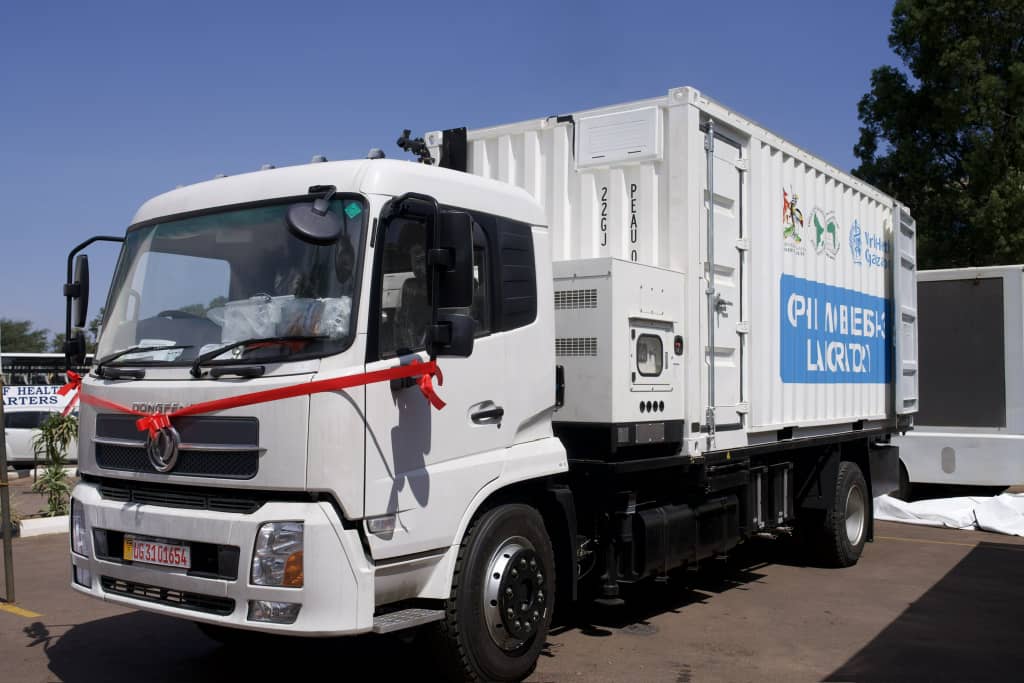
Uganda has received a truck-mounted Mobile Biosafety Level 3 Laboratory from the World Health Organization (WHO) to strengthen the country’s capacity to detect, diagnose and respond to Ebola and other infectious disease outbreaks.
The mobile laboratory, worth more than Shs1.87 billion (USD500,000), was procured with funding from the African Development Bank (AfDB) and handed over to the Ministry of Health at its headquarters in Kampala.
The laboratory can be transported to outbreak hotspots and set up within hours, eliminating the need to construct permanent laboratory infrastructure before testing can begin.
Ministry of Health Permanent Secretary Dr Diana Atwine said the facility will provide Uganda with greater flexibility during disease outbreaks.
“Today we are receiving a mobile lab. The mobile lab is on wheels. It means you can transport it from one place to another and set it up in just a matter of a few hours and you’ll be able to test,” Atwine said.
She explained that Ebola testing requires highly specialised containment facilities to protect laboratory personnel and prevent the spread of the virus.
Atwine said establishing a permanent laboratory with similar capabilities could take more than a year, while the mobile unit can be deployed within hours.
“It means a lot to us because it gives us flexibility to set up wherever there is a problem. We can set up in real time and we are able to test without going through so many processes of setting up a lab,” she said.
The Ministry said the mobile laboratory will be deployed depending on the location and scale of an outbreak, including in neighbouring countries where Uganda is supporting response efforts.
Atwine said Uganda’s experience supporting the Ebola response in the Democratic Republic of Congo (DRC) demonstrated the importance of mobile laboratory capacity.
She said Uganda’s teams have established treatment facilities in the DRC and are working with local authorities to expand response capacity, including in North Kivu.
The WHO said the laboratory will support rapid field-based testing, helping health authorities detect outbreaks earlier and accelerate response efforts.
Atwine said Uganda’s outbreak preparedness efforts are supported by partners including WHO and Africa CDC, which have provided supplies, transportation and other logistical support.
The new laboratory is expected to strengthen Uganda’s health security by bringing advanced diagnostic capacity closer to communities affected by disease outbreaks and reducing delays in establishing testing facilities.