










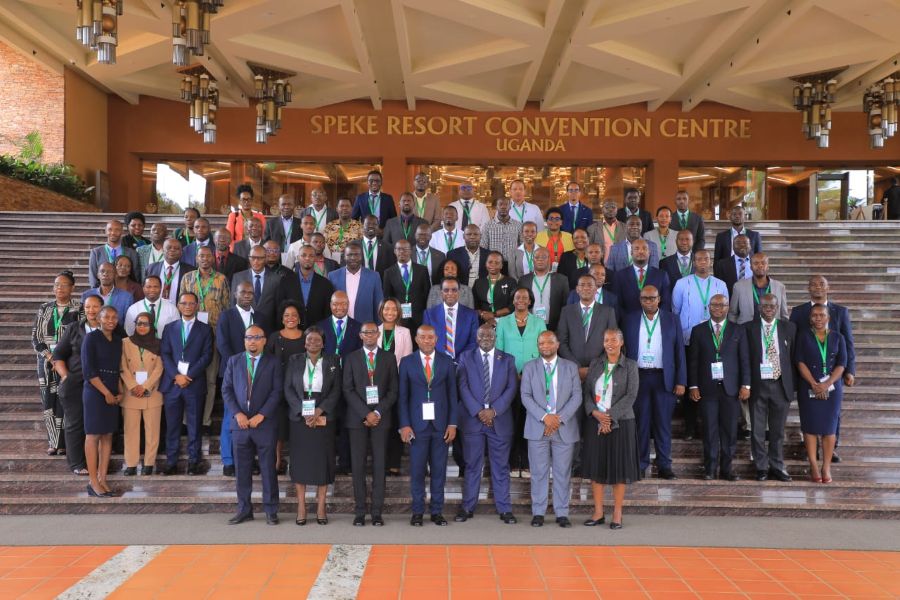
Uganda has reaffirmed its ambition to become a leading aviation hub in East Africa as it hosted the 48th East African Consultative Meeting on Facilitation of Air Transport (EAC-FAL) at Speke Resort Munyonyo from 26th to 28th November 2025.
The three day conference brought together delegates from the East African Community, the International Civil Aviation Organisation (ICAO), the Civil Aviation Safety and Security Oversight Agency (CASSOA), the African Union Commission, and several regional aviation bodies.
It comes at a time when Uganda is registering notable growth in both passenger traffic and national carrier expansion.
Uganda’s aviation sector continues to experience sustained upward momentum. Entebbe International Airport handled more than 243,000 international passengers in August 2025, signalling a robust post-pandemic recovery and expanding regional connectivity.
Uganda Airlines has similarly widened its footprint, operating 17 routes across Africa and the Middle East, strengthening the country’s presence in the regional aviation market.
During the meeting, Uganda underscored the need for stronger regional alignment in passenger facilitation, cargo processing, and aircraft handling.
Ms. Olive B. Lumonya, the Deputy Director General UCAA stressed the importance of harmonising standards in line with ICAO’s Annex 9, pointing to seamless regional travel as a key driver of tourism, trade, and economic integration.
Delegates also reviewed progress on ICAO compliance within the region and assessed operational efficiencies at Entebbe International Airport following an inspection conducted earlier in the week.
Their findings are expected to guide improvements in facilitation services, particularly as Uganda continues to modernise its aviation infrastructure.
Ongoing investments in the expansion of Entebbe’s passenger terminal, rehabilitation of major runways, and the development of Hoima International Airport highlight Uganda’s long-term strategy to enhance capacity and improve service delivery.
These developments form part of a broader effort to position the country as a competitive, reliable, and regionally connected aviation gateway.
The EAC-FAL meeting concluded with renewed commitment from partner states to deepen cooperation, streamline facilitation processes, and strengthen the region’s aviation ecosystem—an agenda Uganda has embraced as central to its economic transformation and integration into global air transport networks.