











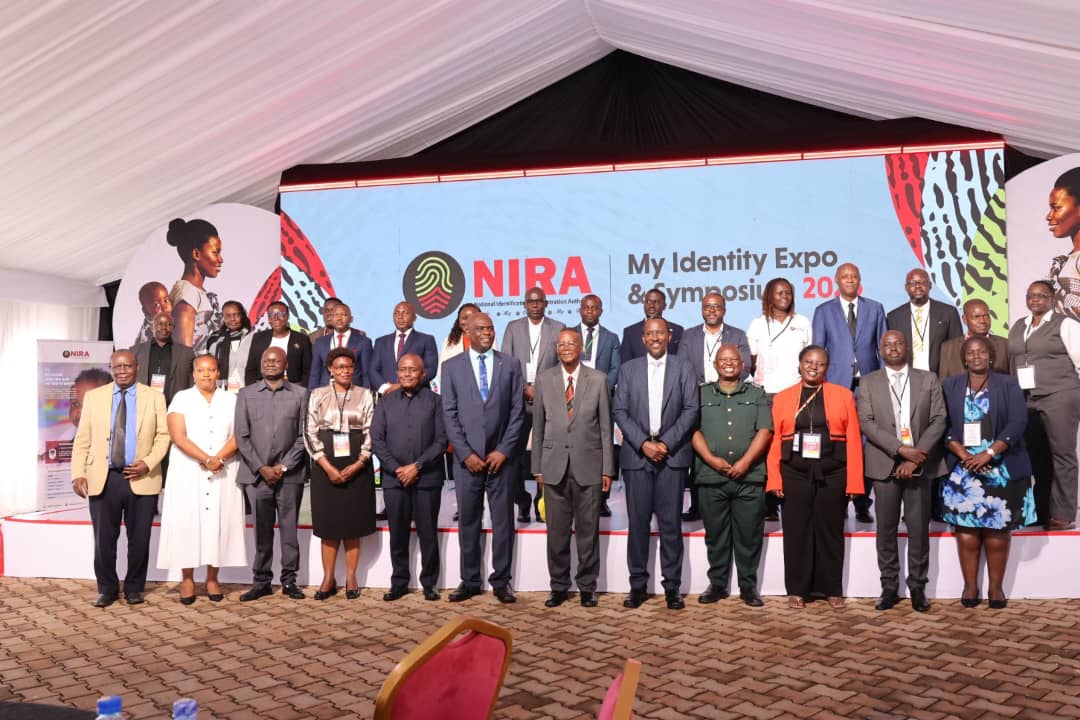
The National Identification and Registration Authority (NIRA) has opened the first-ever My Identity Expo and Symposium 2026, bringing together government institutions, private-sector players, development partners and citizens to highlight the importance of legal identity in Uganda.
The expo, held as Uganda marks 100 years since its boundaries were officially defined in 1926, focuses on the role of identification and civil registration in national security, service delivery, economic transformation and citizens’ access to opportunities.
Speaking at the opening of the expo, Minister for Internal Affairs Ephraim Kamuntu described NIRA as a critical institution within the ministry, saying its mandate goes beyond issuing national identity cards.
“NIRA is an integral part of the Ministry of Internal Affairs,” Kamuntu said, noting that identification, registration and protection of citizens are central to the ministry’s responsibilities.
He said legal identity is fundamental to determining citizenship and accessing essential services, including education, healthcare, banking, passports and driving licences.
Kamuntu also linked national identification to Uganda’s security and development planning, arguing that accurate population data is necessary for effective resource allocation and government planning.
He said programmes such as the Parish Development Model and youth livelihood initiatives require reliable information on their intended beneficiaries.
“Unless you have accurate population data, the state cannot plan,” Kamuntu said, stressing the importance of maintaining a comprehensive national population register.
The minister commended NIRA for the progress made in registering Ugandan citizens but challenged the authority to close the remaining registration gap.
NIRA officials said about 36 million Ugandans have so far been registered, representing approximately 78% of the population.
Kamuntu said the progress was significant but urged the authority to continue working towards universal registration.
“NIRA’s work is a work in progress. Until we get 100% registration of our citizens, the job is not yet done,” he said.
NIRA Board Vice Chairperson Benny Namugwanya Bugembe said the expo provides an opportunity to reflect on the importance of legal identity while recognising the progress made in strengthening Uganda’s identification and registration systems.
She said identity is fundamental to human dignity and enables people to establish their legal status, exercise their rights and access social and economic opportunities.
Bugembe said NIRA is mandated to register citizens and legally resident aliens, as well as births, deaths, adoptions, guardianship orders and marriages.
She called for greater attention to groups that face difficulties accessing registration services, including children, older persons, persons with disabilities and people living in hard-to-reach areas.
“Our target is 100% identification and registration of Ugandan citizens and legally resident aliens,” she said.
Bugembe also emphasised the need to protect personal information and ensure that Uganda’s identification system remains secure, accurate, accessible and trusted as technology continues to evolve.
The expo also highlighted the growing role of the National Identification Number (NIN) in Uganda’s financial and tax systems.
Uganda Revenue Authority (URA) Commissioner General John Musinguzi said individual taxpayers are being transitioned from the separate Tax Identification Number (TIN) system to the NIN.
The transition was approved by Cabinet on September 1, with the NIN becoming the primary tax identifier for individual taxpayers.
Musinguzi said existing TINs remain valid, but from January 1, 2027, taxpayers whose records have been updated will access their tax accounts using their NIN.
He said linking tax records to NIRA’s biometric identification system is intended to address duplication and identity-related weaknesses in the tax system.
According to Musinguzi, some individuals have previously been able to obtain multiple TINs, making it difficult for URA to consistently identify taxpayers across different accounts.
He said the use of NIN and biometric information would help establish a consistent identity for individuals operating businesses or holding multiple tax accounts.
URA is also expected to undertake nationwide registration of businesses using applicants’ fingerprints as part of efforts to strengthen taxpayer identification.
Musinguzi said the reform forms part of URA’s wider revenue mobilisation strategy, aimed at increasing Uganda’s tax-to-GDP ratio from about 14% to at least 20% within three years.
The My Identity Expo and Symposium comes as Uganda commemorates a century since the country’s boundaries were officially defined in 1926.
The event provides a platform for government agencies, financial institutions, businesses and citizens to examine how reliable identification can support Uganda’s security, governance and socioeconomic transformation.
NIRA officials said achieving universal legal identity will require collaboration among government institutions, Parliament, local authorities, civil society, communities, the private sector and development partners.
The authority has therefore used the expo to showcase its work and engage stakeholders on the importance of registration and identification.
The organisers said the long-term objective is to ensure that every eligible person in Uganda can establish and securely use a recognised legal identity.