










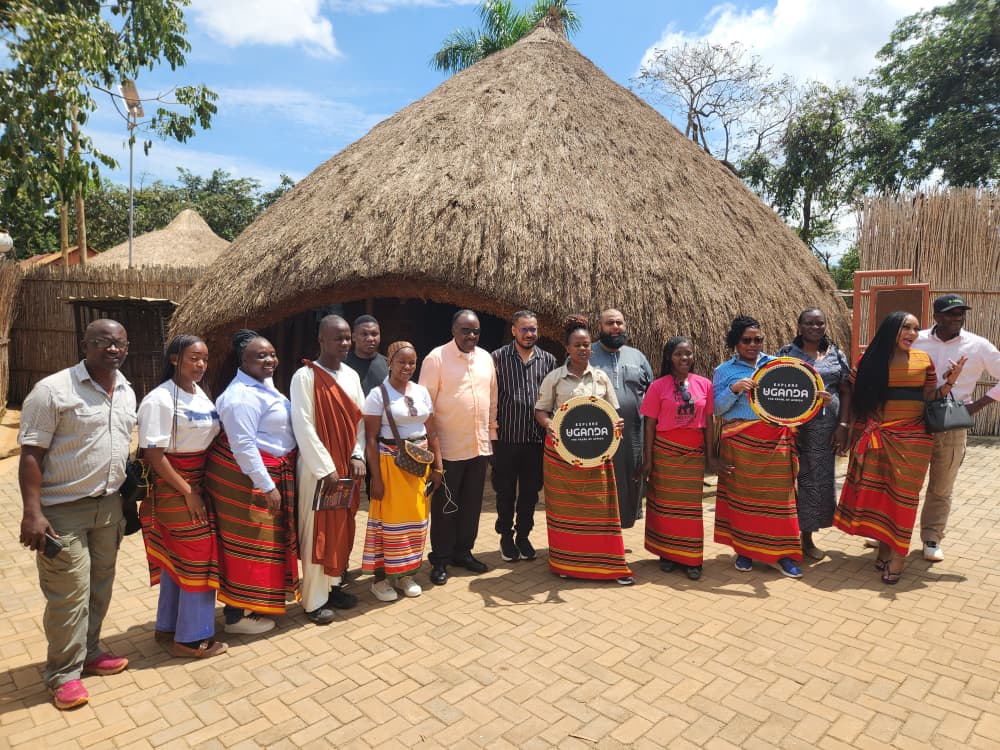
Uganda and Zambia are seeking to strengthen tourism cooperation through a joint marketing initiative that will see tour operators from the two countries promote each other’s attractions in a bid to increase cross-border travel and boost tourism revenue.
The initiative brings together more than 10 Zambian tour operators, travel agents and tourism influencers who have spent approximately 14 days exploring Uganda’s tourism attractions, with the aim of incorporating the destinations into their travel packages and marketing them to potential visitors in Zambia and beyond.
The delegation visited several attractions, including the white rhinos at Ziwa Rhino Sanctuary, the Kasubi Tombs, Murchison Falls National Park, Kibale National Park and Queen Elizabeth National Park, where they experienced Uganda’s wildlife, landscapes and mountain gorillas.
Speaking during the engagement, Uganda’s High Commissioner to Zambia, Col. Fred Mwesigye, said the initiative was part of the government’s Economic and Commercial Diplomacy programme, which seeks to promote Uganda as a tourism destination and attract more international visitors.
“We are mandated to market Uganda and protect the Ugandans, but in this particular case, Uganda has identified about four sectors that will grow our economy ten times. The first is agriculture or processing, but the second pillar is tourism,” Mwesigye said.
He said the government was working with tour operators and tourism authorities in both countries to establish partnerships that would translate into increased tourist arrivals and revenue.
“At the end of the trip, we hold discussions and sign agreements. Tour operators from Uganda and tour operators from Zambia sign an MoU. From today, we want to market Uganda as we market Zambia,” he said.
Mwesigye noted that Uganda had unique tourism attractions that could complement Zambia’s tourism products, particularly mountain gorillas, chimpanzees and the Source of the Nile.
“Most of those countries where I am designated have the Big Five, but we have got the Big Two, which they don’t have. We have the mountain gorillas, we have the chimpanzees, but we also have the source of the Nile, which they don’t have,” he said.
He added that improved air connectivity through Uganda Airlines would make it easier for tourists to combine visits to the two countries.
Mwesigye also expressed optimism that the Africa Cup of Nations (AFCON) would provide another opportunity to attract sports tourists and generate revenue for the country.
“Spectators, supporters, fans, all these are going to bring in revenue to the country. So I have no doubt in my mind that during that time, and after that time, we shall see an increase in revenue from that sector,” he said.
Nchimunya Chikambe, a representative of a Zambian government travel agency, described her experience in Uganda as exceptional, particularly the mountain gorilla encounter, which she said demonstrated the country’s tourism potential.
“The most beautiful experience was the gorillas. The gorillas were just amazing. We had a close view of the Gentle Giants, which is a big tourist attraction,” Chikambe said.
She said African countries needed to work together to promote their tourism products instead of marketing themselves in isolation.
“As tour operators, what we do is sell packages. I will not only sell Zambia. I will sell you a package where a tourist who comes into the country visits the Victoria Falls of Zambia, comes and has the gorilla experience here in Uganda and finishes off in Zanzibar,” she said.
Chikambe said such partnerships would enable tourists to experience several African destinations during a single trip, helping countries attract more visitors and achieve their tourism targets.
However, she identified gaps in Uganda’s hospitality sector, particularly inconsistencies in customer service standards across some tourism facilities.
“Probably in the hospitality industry, customer service is a priority, and there was a little bit of a gap there, where we saw in some places the standard was quite high, in some places customer service has been neglected. So in tourism, we believe customer service is number one,” she said.
Meanwhile, Zambian content creator Lulu Hangala-Wood said the visit had challenged some of her expectations about Uganda’s tourism potential, particularly the beauty of its landscapes, wildlife experiences and quality of accommodation facilities.
“I am surprised because I don’t think I expected the level of beauty your landscapes hold, the wildlife, the experiences that you offer, and the quality of lodging that you have in this country,” she said.
Hangala-Wood said she was excited to share Uganda’s tourism story with her audience in Zambia and across the African continent, arguing that African countries needed to do more to promote travel within the continent.
“I find this so exciting because you can tell that we are now looking from Africa to Africans to tell the story of our African countries,” she said.
She urged Africans to consider holiday destinations within the continent rather than looking exclusively to overseas destinations.
“When you think of going on holiday to Italy, I’m saying think of going on holiday to Africa. Think of coming to Zambia. Think of coming to Uganda. We have just an impeccable product that has been underutilised,” Hangala-Wood said.
She added that the experience had demonstrated that Uganda’s tourism destinations were accessible by road and air and offered competitive hospitality and wildlife experiences.
The initiative is expected to strengthen cooperation between tourism operators in Uganda and Zambia, encourage the development of joint travel packages and position the two countries as complementary destinations for African and international tourists.