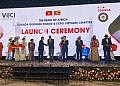











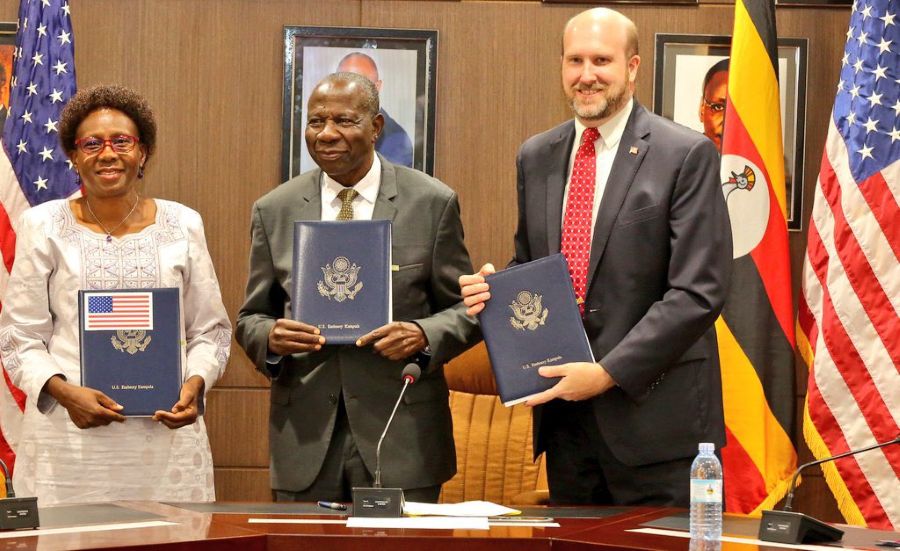
Uganda and the United States have signed a five-year health cooperation agreement worth shs 8.7 trillion (USD 2.3 billion) to strengthen the country’s health system and support key programs, including HIV/AIDS, TB, malaria, polio eradication, global health security, and disease surveillance.
Under the deal, the U.S. government will provide shs 6.46 trillion (USD 1.7 billion), while Uganda will increase its domestic health spending by shs 1.9 trillion (USD 500 million) between 2026 and 2030.
Finance Minister Matia Kasaija, who signed on behalf of Uganda, said the funding will support long-standing health priorities.
“I am pleased to sign this Memorandum of Understanding. We note the U.S. government’s commitment of $1.7 billion and commit to gradually increasing our own contribution,” he said.
U.S. Ambassador William Popp emphasized accountability and stronger local leadership.
“This clear and accountable arrangement outlines how our governments will support life-saving services, strengthen systems that protect both our countries, and ensure responsible use of American taxpayer dollars,” Popp said.
“We have just signed a five-year, $2.3 billion Memorandum of Understanding for health cooperation.”
Popp added that the agreement will help Uganda fully integrate community health workers into government systems.
“More than 1,100 community health extension workers have already been trained, and this MOU will continue supporting training and equipment as Uganda assumes responsibility for salaries,” he said.
Health Minister Dr. Jane Ruth Aceng welcomed the partnership, saying it aligns with Uganda’s long-term vision for a stronger, more independent health sector.
“This is a huge bilateral health investment, a vote of confidence in our national vision. Uganda’s sovereignty over its biological resources and health data is invaluable and non-negotiable,” she said.
The agreement will also support improvements in digital health systems, laboratories, supply chains, emergency response, and procurement of key medicines. Uganda will gradually take over the purchase of HIV, TB, and malaria supplies, while the U.S. continues to support faith-based health facilities.
Dr. Aceng said implementation begins immediately.
“Today marks the beginning of five years of intense, focused, and results-driven collaboration. Let’s move from commitment to delivery,” she said.