




• Home
  • National
    • Politics
    • Global
    • East Africa
    • Featured
    • Health
    • Investigations
    • Science
    • Security
    • Tech
  • News
  • Business
  • Entertainment
    • Lifestyle
  • Sports
    • Basketball
    • Football
    • Gaming
    • Golf
    • Netball
    • Volleyball
  • Exclusive
  • Travel
  • About us
Friday, September 18, 2026
  • Login
  • Register
UG Bulletin
Advertisement
  • Home
  • National
    • Politics
    • Global
    • East Africa
    • Featured
    • Health
    • Investigations
    • Science
    • Security
    • Tech
  • News
  • Business
  • Entertainment
    • All
    • Movie
    • Music
    Club Canvas On the Move turns on Mbarara

    Club Canvas On the Move turns on Mbarara

    Club Pilsener takes Club Canvas on the road to Mbarara

    Club Pilsener takes Club Canvas on the road to Mbarara

    Club Pilsener brings Kigali, Kampala together at Afro Urban music showcase

    Club Pilsener brings Kigali, Kampala together at Afro Urban music showcase

    Young designers showcase talent at second Inter-University Fashion Challenge

    Young designers showcase talent at second Inter-University Fashion Challenge

    DJ Dread Lazer: The Makerere graduate who turns up Kampala’s nightlife

    DJ Dread Lazer: The Makerere graduate who turns up Kampala’s nightlife

    Afro Urban brings Kigali and Kampala together at MoTIV

    Afro Urban brings Kigali and Kampala together at MoTIV

    Vinka and the making of Uganda’s very own star who refused to fade

    Vinka and the making of Uganda’s very own star who refused to fade

    Ray G delivers electrifying performance at his biggest concert ever

    Ray G delivers electrifying performance at his biggest concert ever

    Uganda Waragi makes way for Ray G

    Uganda Waragi makes way for Ray G

    • Lifestyle
  • Sports
    • Basketball
    • Football
    • Gaming
    • Golf
    • Netball
    • Volleyball
  • Exclusive
  • Travel
  • About us
No Result
View All Result
  • Home
  • National
    • Politics
    • Global
    • East Africa
    • Featured
    • Health
    • Investigations
    • Science
    • Security
    • Tech
  • News
  • Business
  • Entertainment
    • All
    • Movie
    • Music
    Club Canvas On the Move turns on Mbarara

    Club Canvas On the Move turns on Mbarara

    Club Pilsener takes Club Canvas on the road to Mbarara

    Club Pilsener takes Club Canvas on the road to Mbarara

    Club Pilsener brings Kigali, Kampala together at Afro Urban music showcase

    Club Pilsener brings Kigali, Kampala together at Afro Urban music showcase

    Young designers showcase talent at second Inter-University Fashion Challenge

    Young designers showcase talent at second Inter-University Fashion Challenge

    DJ Dread Lazer: The Makerere graduate who turns up Kampala’s nightlife

    DJ Dread Lazer: The Makerere graduate who turns up Kampala’s nightlife

    Afro Urban brings Kigali and Kampala together at MoTIV

    Afro Urban brings Kigali and Kampala together at MoTIV

    Vinka and the making of Uganda’s very own star who refused to fade

    Vinka and the making of Uganda’s very own star who refused to fade

    Ray G delivers electrifying performance at his biggest concert ever

    Ray G delivers electrifying performance at his biggest concert ever

    Uganda Waragi makes way for Ray G

    Uganda Waragi makes way for Ray G

    • Lifestyle
  • Sports
    • Basketball
    • Football
    • Gaming
    • Golf
    • Netball
    • Volleyball
  • Exclusive
  • Travel
  • About us
No Result
View All Result
UG Bulletin
No Result
View All Result
Home Opinions

Why Trump’s woes with South Africa evoke bitter memories of apartheid

by Editorial
in Opinions
Reading Time: 5 mins read
5
A A
0
Why Trump’s woes with South Africa evoke bitter memories of apartheid

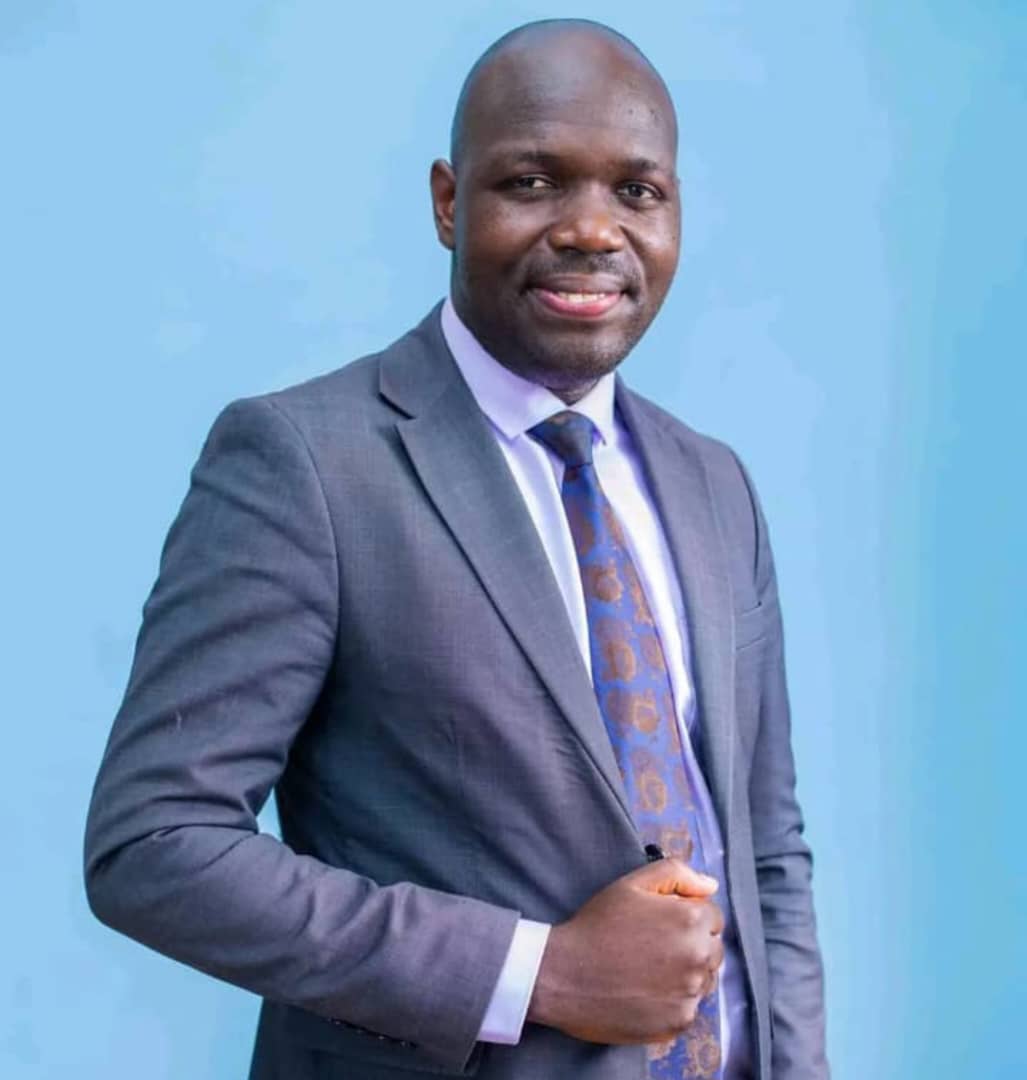
Kungu Al-mahadi Adam

5
SHARES
66
VIEWS
Share on FacebookShare on TwitterShare on LinkedinShare on WhatAappShare by Email

By Kungu Al-Mahadi Adam

Shortly after assuming the presidency, President Donald Trump signed an executive order that directed U.S. agencies to halt nearly $440 million in annual aid to South Africa.

More controversially, the order called for the prioritization of white Afrikaners—descendants of Dutch, French, and other European settlers—for resettlement in the U.S., alleging they are “victims of unjust racial discrimination” under South Africa’s new land reform policies.

South African President Cyril Ramaphosa swiftly rebuked the move, asserting that the U.S. has no right to meddle in South Africa’s internal affairs. For many, Trump’s actions—and the rhetoric surrounding them—stir haunting echoes of apartheid, the brutal system of racial segregation that scarred South Africa for decades.

Trump’s executive order, issued with the authority vested in him by the U.S. Constitution, outlined a dual-pronged policy shift.

First, it froze all foreign assistance to South Africa, including critical funding for programs like PEPFAR, which supports HIV/AIDS treatment for millions—a move that threatens severe humanitarian consequences.
Second, it directed the Departments of State and Homeland Security to prioritize humanitarian relief and resettlement for Afrikaners through the U.S. Refugee Admissions Program, framing them as refugees fleeing “government-sponsored race-based discrimination.”

The order pointed specifically to South Africa’s Expropriation Act of 2024, signed into law by Ramaphosa in January 2025, which allows land expropriation without compensation in limited circumstances deemed “just and equitable” and in the public interest—such as when land lies unused or poses a public risk.

The White House justified this stance by alleging that South Africa’s policies amount to human rights violations against white farmers, a narrative amplified by Trump allies like Elon Musk, a South African-born billionaire who has long criticized the country’s post-apartheid government.

The order also cited South Africa’s ICJ case accusing Israel of genocide as evidence of its “aggressive positions” toward U.S. allies, linking domestic land reform to broader geopolitical grievances.

However, South African officials and analysts have decried these claims as misinformation, arguing that the expropriation law is a measured attempt to redress the enduring inequalities of apartheid, not a racial vendetta.

Apartheid?

To understand why Trump’s actions evoke apartheid’s ghosts, one must first grasp the system’s profound impact. From 1948 to 1994, apartheid enshrined white minority rule over South Africa’s Black majority, stripping Black South Africans of land, rights, and dignity.

The 1913 Natives Land Act, a precursor to apartheid, forcibly removed Black families from their properties, confining African land ownership to just 7% of the country (later expanded to 13% in 1936). By the end of apartheid, white South Africans—comprising less than 10% of the population—owned roughly 70% of private farmland, while Black South Africans, over 80% of the populace, held a mere fraction.

This racialized dispossession, enforced through violence and legislation, left a legacy of poverty and inequality that persists today.

The transition to democracy in 1994, led by Nelson Mandela and the African National Congress (ANC), promised land reform as a cornerstone of reconciliation. Yet progress has been slow.

The government’s initial target to redistribute 30% of white-owned farmland by 1999 was repeatedly delayed—now set for 2030—hampered by legal complexities, funding shortages, and resistance from landowners.

The Expropriation Act of 2024 emerged from years of debate as a tool to accelerate this process, allowing the state to seize land under specific conditions to address historical injustices.

South African leaders, including Ramaphosa, insist it respects property rights while tackling apartheid’s structural inequities—a far cry from the arbitrary “land grabs” Trump alleges.

Some say Trump’s executive order hinges on a portrayal of white Afrikaners as persecuted victims, a framing that inverts South Africa’s historical reality in ways reminiscent of apartheid-era propaganda.

During apartheid, the Afrikaner-led National Party justified its policies by claiming white settlers were divinely ordained stewards of the land, under constant threat from a “savage” Black majority.

This narrative cast whites as embattled defenders of civilization, ignoring their role as oppressors in a system that displaced millions.

Trump’s depiction of Afrikaners as targets of “unjust racial discrimination” mirrors this rhetoric, recasting a privileged minority—still among South Africa’s most economically advantaged groups—as oppressed, while dismissing the broader context of racial redress.
This inversion has not gone unnoticed.

South Africa’s Foreign Ministry called the order “ironic,” noting that it offers refugee status to “a group that remains amongst the most economically privileged” while the U.S. deports vulnerable migrants from other regions.

Critics, including Afrikaner groups like Solidarity and AfriForum, have also questioned Trump’s motives.

While welcoming recognition of their concerns, they reject resettlement, with Solidarity’s Dirk Hermann declaring, “We are committed to build a future here.”

Even Agri South Africa, a mainstream farming organization, dismissed the offer, emphasizing their intent to stay and farm successfully.

The lukewarm response underscores a disconnect between Trump’s portrayal and the lived reality of white South Africans, many of whom see themselves as integral to the nation’s future, not as refugees.

Yet the order’s resonance with apartheid lies not just in its rhetoric but in its unilateral imposition. By halting aid and dictating terms, Trump echoes the paternalistic interference of Western powers during apartheid, when the U.S. and others often turned a blind eye to the regime’s atrocities—or, in the Cold War era, tacitly supported it as a bulwark against communism.

Ramaphosa’s retort that the U.S. should not interfere in South Africa’s sovereignty recalls the ANC’s decades-long struggle against foreign complicity in apartheid, a fight that culminated in global sanctions and Mandela’s release in 1990.

For many South Africans, Trump’s actions feel like a reversion to an era when their agency was subordinated to external agendas.

The fallout was swift and heated. Ramaphosa, addressing parliament on February 6, 2025, vowed that “forced removals” of any kind would never recur, framing the expropriation law as a safeguard against past abuses, not a repeat of them.

South Africa’s government has accused Trump of peddling “misinformation and propaganda,” a charge echoed by analysts who see his order as pandering to a U.S. conservative base long fixated on exaggerated tales of white farmer persecution.

On February 15, white South Africans protested outside the U.S. Embassy in Pretoria, wielding signs like “Thank God for President Trump” and decrying affirmative action policies—yet their grievances, rooted in post-apartheid adjustments, pale beside the systemic violence Black South Africans endured for centuries.

This clash also revives memories of apartheid’s racial binaries. Trump’s focus on Afrikaners—only part of South Africa’s 7% white minority—sidesteps the country’s multiracial complexity, reducing a nuanced debate over land and equity to a white-versus-Black caricature.

During apartheid, such oversimplifications justified segregation; today, they fuel a diplomatic rift that risks unravelling decades of reconciliation.

The halt in U.S. aid, particularly to health programs, further evokes apartheid’s neglect of Black welfare, threatening millions who rely on PEPFAR—a bitter irony given Trump’s stated concern for human rights.

By championing white Afrikaners as victims and punishing a Black-led government striving to heal apartheid’s wounds, Trump’s executive order reopens old scars. It recalls an era when racial hierarchies were codified, when foreign powers propped up injustice, and when South Africa’s majority was silenced.

For a nation that fought so hard for democracy, this feels like a step backward—a reminder that the specter of apartheid, though dismantled, still looms in the global imagination.

As South Africa navigates this crisis, the world watches, hoping its hard-won progress endures despite the shadows of its past.

The writer is a Ugandan Journalist with passion for current African affairs.

 

Tags: AfriForumAfrikanersAgri South AfricaApartheidBlack majorityCyril RamaphosaDiplomatic riftDonald TrumpEconomic inequalityExecutive OrderExpropriation Act 2024Historical injusticesHuman rights violationsICJ caseIsrael genocide accusationLand reformPEPFARPost-apartheid policiesRacial discriminationRacial redressRefugee statusSolidarity (Afrikaner group)South AfricaSouth Africa-U.S. relationsU.S. aid suspensionU.S. conservative baseU.S. foreign aidWestern interferenceWhite farmersWhite minority
Share2Tweet1ShareSendSend
Editorial

Editorial

Recommended

Private security company driver arrested with 13 rounds of ammunition in Kyebando

Private security company driver arrested with 13 rounds of ammunition in Kyebando

June 24, 2026
63
Kampala- Mukono passenger train resumes services tomorrow, Monday

Kampala- Mukono passenger train resumes services tomorrow, Monday

April 13, 2025
103

Popular News

  • Police hunt missing friend as unanswered calls, blood stains lead to discovery of body of dead waitress in Bukoto

    Police hunt missing friend as unanswered calls, blood stains lead to discovery of body of dead waitress in Bukoto

    14 shares
    Share 6 Tweet 4
  • How US linked Uganda’s Michael Katungi to plot to supply weapons worth shs207.5bn to Mexican drug cartel

    8 shares
    Share 3 Tweet 2

Connect with us

About us

Join us on this journey as we continue to be your trusted source for the bold, accurate, and authoritative news, information, and knowledge you need to stay informed, engaged, and inspired. Uganda's stories are worth telling, and UG Bulletin is here to bring them to you.

12 senior one students arrested after viral clip assaulting teenager
News

12 senior one students arrested after viral clip assaulting teenager

Police in Kabalagala have arrested 12 Senior One students following the circulation of a viral social media clip showing a ...

September 18, 2026
Minister Musenero gives UEDCL two weeks to connect Dei BioPharma Kamuli cassava plant to national grid
News

Minister Musenero gives UEDCL two weeks to connect Dei BioPharma Kamuli cassava plant to national grid

The Uganda Electricity Distribution Company Limited (UEDCL) has been given two weeks to connect the Dei BioPharma Ltd cassava processing ...

September 18, 2026
Uganda seeks direct flights to Paris as French tourism market more than doubles
Featured

Uganda seeks direct flights to Paris as French tourism market more than doubles

Uganda is seeking to establish a direct Paris–Entebbe air route by June 2027 as growing demand from the French tourism ...

September 18, 2026
Attorney General clears way for Kijanangoma’s coronation as new Tooro king
News

Attorney General clears way for Kijanangoma’s coronation as new Tooro king

Attorney General Sam Mayanja has said the Babiito Royal Clan can proceed with the planned coronation of Prince Edward Rukidi ...

September 18, 2026
NRM’s James Leku  Pilli wins Adjumani West Parliamentary by-election
News

NRM’s James Leku Pilli wins Adjumani West Parliamentary by-election

National Resistance Movement (NRM) candidate Leku James Pilli has been declared the duly elected Member of Parliament for Adjumani West ...

September 18, 2026

Category

  • Archives
  • Basketball
  • Business
  • East Africa
  • Entertainment
  • Exclusive
  • Fashion
  • Featured
  • Football
  • Gaming
  • General
  • Global
  • Golf
  • Health
  • Investigations
  • Lifestyle
  • Movie
  • Music
  • National
  • Netball
  • News
  • Opinions
  • Politics
  • Science
  • Security
  • Sports
  • Tech
  • Travel
  • Volleyball

Featured Articles

  • Trending
  • Comments
  • Latest
Mathew Bagonza charged, remanded over money laundering, abuse of office

Mathew Bagonza charged, remanded over money laundering, abuse of office

September 17, 2026
ActionAid calls for increased investment in locally led climate solutions

ActionAid calls for increased investment in locally led climate solutions

September 17, 2026
12 senior one students arrested after viral clip assaulting teenager

12 senior one students arrested after viral clip assaulting teenager

September 18, 2026
Minister Musenero gives UEDCL two weeks to connect Dei BioPharma Kamuli cassava plant to national grid

Minister Musenero gives UEDCL two weeks to connect Dei BioPharma Kamuli cassava plant to national grid

September 18, 2026
  • About
  • Activate
  • Activity
  • Blog
  • Cart
  • Checkout
  • Contact
  • Home
  • Home 2
  • Home 4
  • Home 5
  • Members
  • My account
  • Privacy Policy
  • Register
  • Sample Page
  • Shop
  • Terms of Use

© 2023 UG Bulletin - Bold, Accurate, Authoritative by Ultimate Multimedia Consult.

Welcome Back!

Login to your account below

Forgotten Password? Sign Up

Create New Account!

Fill the forms bellow to register

All fields are required. Log In

Retrieve your password

Please enter your username or email address to reset your password.

Log In
No Result
View All Result
  • Home
  • National
    • Politics
    • Global
    • East Africa
    • Featured
    • Health
    • Investigations
    • Science
    • Security
    • Tech
  • News
  • Business
  • Entertainment
    • Lifestyle
  • Sports
    • Basketball
    • Football
    • Gaming
    • Golf
    • Netball
    • Volleyball
  • Exclusive
  • Travel
  • About us

© 2023 UG Bulletin - Bold, Accurate, Authoritative by Ultimate Multimedia Consult.

This website uses cookies. By continuing to use this website you are giving consent to cookies being used. Visit our Privacy and Cookie Policy.