








As Uganda moves to adopt National Identification Numbers (NINs) as the primary tax identifier for individuals, 2.1 million taxpayers have so far had their Tax Identification Numbers (TINs) successfully mapped to their NINs.
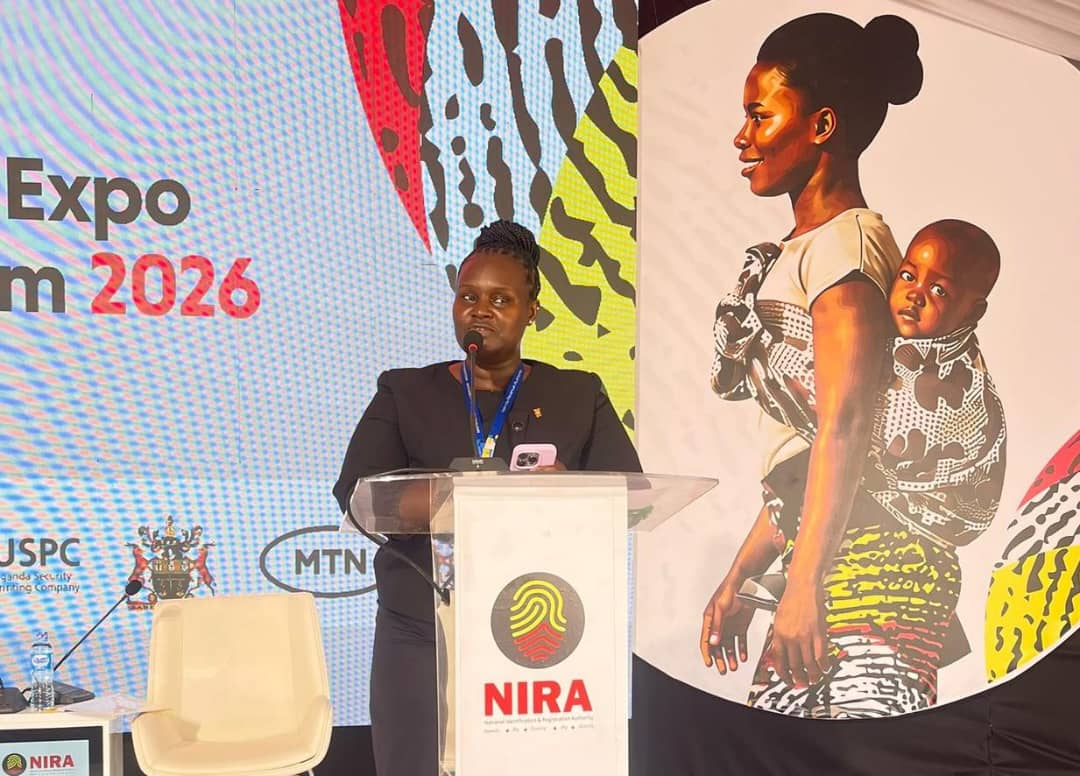
The development was revealed on the closing day of the NIRA My Identity Expo and Symposium 2026 at Kololo Independence Grounds, as the Uganda Revenue Authority (URA) advances its transition from TINs to NINs.
Ruth Anne Agwang, URA Manager of Tax Register, said the 2.1 million taxpayers were successfully mapped during the first phase of the exercise.
“So far, as of today, in phase one, the taxpayers whose TINs have been successfully mapped to their NINs are 2.1 million taxpayers,” Agwang said.
She said URA currently has 5.4 million individual taxpayers on its tax register, but the database contains duplicate, inconsistent and incorrect information that the NIN integration is expected to help clean up.
“Our tax register may have some duplicates and some inconsistent or wrong information. We are looking forward to this transition to be able to remove or erase everything that is false or incorrect, and every duplicate that is there to be removed from the register,” she said.
Agwang said URA’s broader target is to ensure that every person who qualifies as a taxpayer is captured in the register.
Osborn Mushabe, NIRA Public Relations Manager, said integrating the two systems would give the government a more reliable database for planning and make it easier for citizens to access various public services.
“We are in a transition to shift from using a TIN to a NIN. So, going forward, you will be required to use your NIN to pay taxes or to use it as a TIN,” Mushabe said.
He said the integration would eliminate the need for citizens to repeatedly provide the same personal information when accessing services such as passports, driving permits and tax registration.
“When you already registered with NIRA and gotten a NIN, it becomes so easy for you to go to the other side and get a passport, get a driving permit. So that’s how it is going to be easier for you again to be able to pay taxes,” Mushabe said.
URA Commissioner General John Musinguzi Rujoki said the transition is also intended to curb tax fraud and identity misuse by ensuring that taxpayers are uniquely identified through their national identification details.
He said some people have been using other individuals’ TINs to conduct transactions, including importing goods, leaving innocent taxpayers to face queries from URA.
“Most challenges have been faced because some clearing agents have been using people’s TINs to bring in their products without your notice, which makes URA follow you,” Musinguzi said.
He added that the new system would make it harder for individuals to create multiple tax identities using other people’s details.
“With the current system, someone can open up 10 TINs using other people’s numbers. This will launch us into a new phase that will help us collect taxes properly,” he said.
Musinguzi said taxpayers would be required to authenticate themselves biometrically before their NINs are linked to their tax profiles.
“We shall call you to put your thumb on the scanner to confirm you and your tax profile, and nobody will ever use your TIN again,” he said.
Musinguzi said NIRA’s database contains about 36 million people, compared with about 5 million taxpayers in URA’s register, making the integration an opportunity to strengthen the tax register.
“By combining, we shall be helping each other,” he said.
Ritah Elizabeth Akech, Acting Manager for Tax Education at URA, said linking NINs to TINs would help URA distinguish taxpayers with identical very well that we exist in an environment where there are people who share exact duplicate names and perhaps even date of birth, but we cannot share your biometric details,” Akech said names and other similar personal details.
“This transition is going to help us to be able to sieve out which exact taxpayer we are dealing with, knowing very well that we exist in an environment where there are people who share exact duplicate names and perhaps even date of birth, but we cannot share your biometric details,” Akech said.
She said cases where taxpayers receive notifications about transactions they did not conduct can sometimes arise when another person with a similar name uses their TIN.
“Some of you have received emails of a stamp duty transaction and you know nothing about it. That is coming from the fact that somebody with an identical name has picked up your TIN and is using it to do their land transactions,” she said.
Akech said taxpayers who already have TINs would not lose their existing tax information during the transition.
“If you already have an existing TIN, what we’re doing simply right now is to get your national identification number and map it to your TIN so that we do not lose that information,” she said.
She added that taxpayers must give consent before their NIN information is accessed and linked to their tax profiles.
“We cannot use your NIN without your permission, and that is where we require you to physically visit any URA service point to give us consent through your fingerprint authentication,” Akech said.
Once a taxpayer provides biometric consent, she said, URA devices can retrieve the person’s basic biodata from NIRA’s servers to facilitate the mapping process.