
















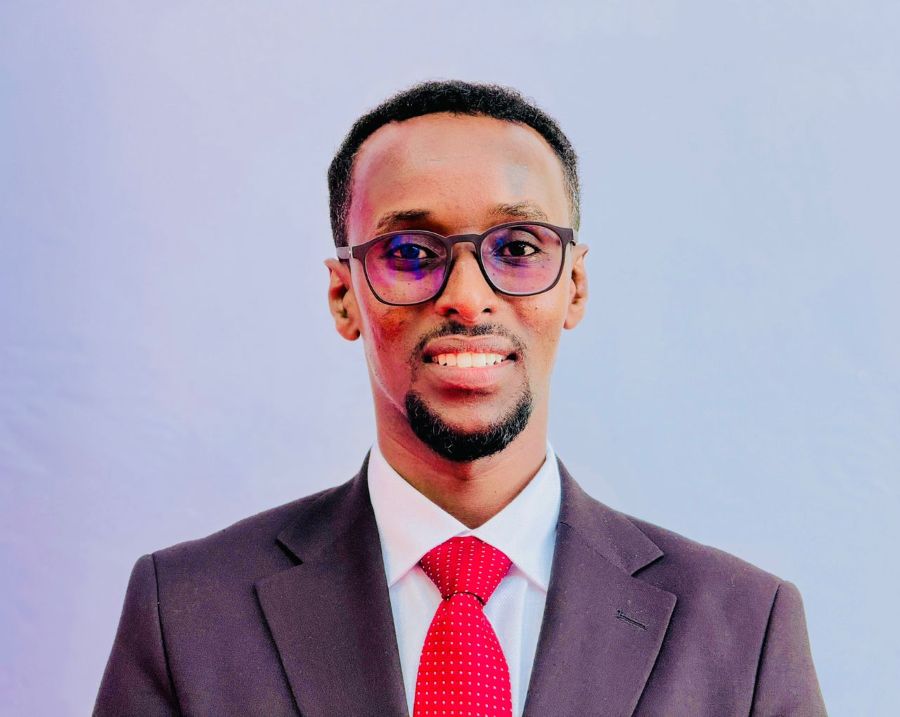
Yasin M. Ibar, the CEO leading one of Somalia’s boldest economic transformations, the establishment of the country’s first-ever securities exchange has spoken about building investor confidence and tapping diaspora capital.
According to Ibar, in a nation long defined by resilience and rebuilding, the National Securities Exchange of Somalia (NSES) represents a new kind of reform, one anchored not in aid, but in investment, trust, and regional integration.
Below are the excerpts of the interview on the sidelines of the East Africa Capital Markets Conference in Kampala.
1.You took a major step by establishing Somalis first securities What does this mean for the country’s broader economic reform agenda, and how do you envision the National Securities Exchange of Somalia fitting into the East African capital markets ecosystem?
The launch of the National Securities Exchange of Somalia is more than an institutional milestone — it marks a new chapter in Somalia’s economic transformation. Following debt relief, Somalia has set out an ambitious National Transformation Plan to attract capital, strengthen governance, and drive long-term growth. The Exchange is central to that vision: a formal market that channels savings, remittances, and private capital into productive investment.
Somali businesses will have access to a regulated platform to raise long-term finance, while investors will have a transparent market that reflects the country’s reform progress. From telecoms and renewable energy to infrastructure and real estate, the opportunities are immense.
Somalia’s potential is enormous. The country has one of Africa’s longest coastlines, vast renewable energy potential, a rapidly expanding telecoms and fintech sector, and fertile agricultural land that could power regional food security. These are the industries investors are already watching — and the Exchange will be the gateway for that capital.
Crucially, cross-listing is at the core of our strategy. We are already in active conversations with four Kenyan companies in logistics, financial services, and real estate that see Somalia as a growth market. We want to extend that pipeline across East Africa — making NSES a bridge for regional and diaspora capital.
Through our membership in the East African Securities Exchanges Association (EASEA), we are harmonising rules and technical systems with our peers in Nairobi, Kigali, Dar es Salaam, and Kampala. That ensures Somali securities can one day trade seamlessly across the region, positioning Somalia not as a newcomer, but as a connector of capital and opportunity in East Africa’s fast-growing financial landscape.
2.Investor trust is often the hardest part when opening a new market, especially in a country that’s still rebuilding its institutions. What measures are you putting in place to build confidence among local and international investors?
Trust is built through structure, not promises. NSES has been designed as a private self-regulatory organisation, operating independently but in close coordination with the Central Bank of Somalia and the Ministry of Finance.
We’re also developing a comprehensive Rule Book that governs listing, trading, membership, surveillance, and dispute resolution — ensuring fairness and transparency from the start. Every listed company will publish audited financial statements and comply with international reporting standards, while continuous-disclosure rules ensure investors always have reliable information.
To reinforce trust and values, we are establishing a Shariah Advisory Board, composed of respected scholars who review all investment products — from equities to Sukuk — to ensure compliance with Islamic finance principles. This isn’t just technical oversight; it’s about building cultural and ethical confidence in a new market.
Finally, we’re rolling out a nationwide investor education programme, working with chambers of commerce, universities, and diaspora groups. Step by step, we’re preparing the public to understand capital markets, and giving investors — local and international — confidence that Somalia’s exchange is being built on integrity and inclusivity.
- You’re in Kampala for the EASEA Exco and Capital Markets Conference. How does the Exchange’s participation in regional platforms like EASEA help Somalia fast-track integration, knowledge exchange, and possibly even cross-listing opportunities?
Being part of the East African Securities Exchanges Association (EASEA) gives Somalia immediate access to shared expertise and technical cooperation with established markets. It allows us to learn from proven systems in Nairobi, Kigali, and Dar es Salaam, and to adopt compatible standards on trading, settlement, and disclosure.
That regional alignment is already shaping our roadmap. It ensures that Somali companies can eventually cross-list across East Africa, and that regional investors can seamlessly trade Somali securities.
We’re not starting from zero — interest from Kenyan firms shows how regional issuers already view Somalia as an extension of East Africa’s investment landscape. For us, participation in EASEA is both practical and symbolic: it signals that Somalia is ready to be part of a connected, interoperable regional capital market, not a market operating in isolation.
4.Strong governance frameworks are the backbone of any successful exchange. Could you walk us through how the National Securities Exchange of Somalia is approaching regulation, investor protection, and transparency, especially in collaboration with the central bank and government agencies?
Our governance framework is built on independence, professionalism, and accountability. The National Securities Exchange of Somalia operates as a self-regulatory organisation (SRO) — enforcing its own rules on trading, membership, and disclosure — while coordinating closely with the Central Bank of Somalia and the Ministry of Finance.
This model mirrors global and regional best practice. The Nairobi Securities Exchange, for example, successfully operated as an SRO for over 40 years before Kenya’s Capital Markets Authority was formally established.
That experience shows how exchanges can build credibility and market discipline long before standalone regulators exist. We’re applying that same principle in Somalia: ensuring strong oversight through internal governance while collaborating with public institutions on broader financial reforms.
Our framework will include strict listing and disclosure requirements, continuous reporting obligations, and enforcement mechanisms to protect investors. We’re also embedding international standards — segregation of client funds, independent audits, ESG criteria, and whistle-blower protections — alongside compliance with Islamic finance standards (IFSB, AAOIFI) to ensure alignment with global benchmarks.
For Somalia, this is about more than compliance; it’s about building trust in institutions and signalling that our financial sector is ready for long-term, transparent growth.
5.Technology is critical for credibility and efficiency in modern exchanges. What trading and settlement systems are you adopting, and how will they ensure secure, transparent, and internationally aligned operations?
Somalia has one of Africa’s most advanced digital finance ecosystems — mobile money and online payments are part of daily life. We’re building on that by ensuring we adopt a fully digital trading, clearing, and settlement platform from day one.
Critically, a digital system allows participation by Somalia’s global diaspora, enabling investors in London, Nairobi, or Minneapolis to invest directly in Somali securities through a secure digital interface.
By starting digital, we’re avoiding the legacy challenges that older exchanges faced — building a modern, low-cost, and inclusive market that can evolve to support products like green Sukuk and PPP-linked bonds for infrastructure and renewable energy projects.
6.Beyond large corporates, how will the exchange create opportunities for SMEs and family-owned enterprises that dominate Somalia’s economy? Are there plans for special boards, incentives, or awareness programs to bring them on board?
SMEs are the backbone of Somalia’s economy, and the Exchange was built with them in mind. We are exploring a dedicated SME or secondary board with simplified listing requirements and lower costs, designed to make capital markets more accessible to smaller, family-owned businesses.
We’re already working with business associations and chambers of commerce to run awareness campaigns explaining how listing can help businesses grow, attract investment, and improve governance.
For many Somali enterprises, listing is about more than funding — it’s about transparency, and building generational value. Over time, this will help formalise Somalia’s entrepreneurial base, giving SMEs a pathway to long-term sustainability while expanding the pool of investment-ready companies.
7.What milestones should we watch for in the next 12 months, and how will the exchange measure its early success in terms of listings, participation, and impact on Somalia’s economic narrative?
The next year is about maintaining momentum. We’re focused on getting the market live — completing our digital trading system, finalising the Rule Book, and onboarding the first issuers. By early 2026, we expect to see our first listings: both equities and Sukuk from leading Somali companies in telecoms, banking, and energy.
The Sukuk programme will include sovereign issues for infrastructure, followed by corporate and public–private partnership Sukuk that bring Somali and regional capital together. Each will fund real, Shariah-compliant projects — from roads and energy plants to schools — with full transparency on where every dollar goes.
But the real story isn’t just listings; it’s what this means for Somalia. Savings and remittances will flow into productive investment through a regulated market. It shows a country rewriting its economic story — from aid-dependent to confident, connected, and investable.