








In a push to eliminate smoke-filled kitchens and reduce the soaring demand for firewood in schools, Vivo Energy Uganda has joined hands with the Church of Uganda (COU) to promote clean and modern cooking solutions across Church-founded institutions.
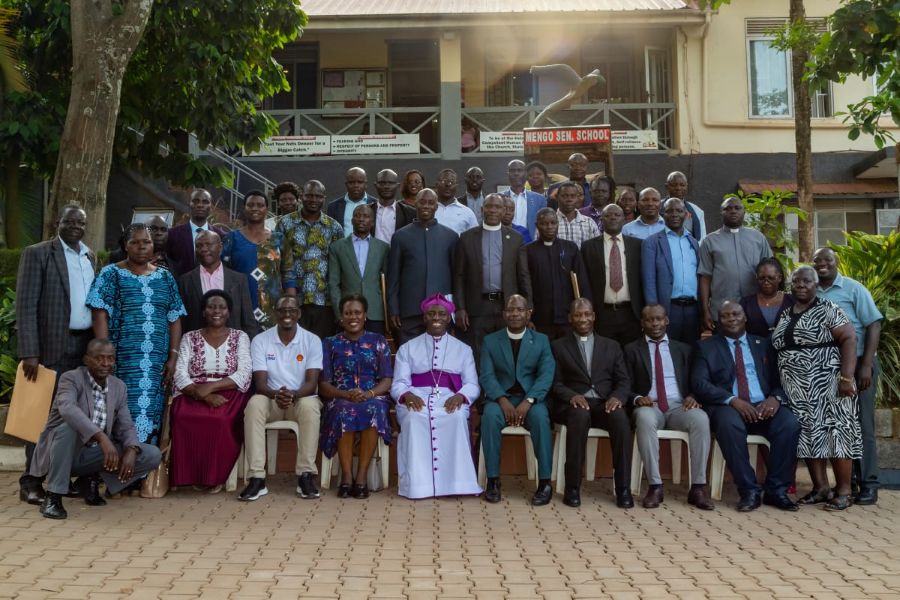
The Gas Cooking Workshop, held at Mengo Senior Secondary School, brought together headteachers from model Church of Uganda schools to learn how LPG can create safer, greener, and more cost-effective kitchens.
Vivo Energy Uganda Managing Director Joanita Mukasa Menya said the partnership reflects the company’s commitment to human welfare and environmental protection.
“Today we are partnering with the Church of Uganda to bring forward the dream of bringing clean energy into schools,” she said. “Our foundations as Vivo Energy are partnerships, people, and the planet.”
She noted that cooks remain the unseen victims of traditional kitchens, working in hazardous smoke for hours every day.
“We want to give a safe cooking solution to our schools because they handle very many people, and the cooks are exposed health-wise,” she added.
“Clean energy protects lives, saves the environment, reduces costs, and saves time. We invite everyone to embrace clean cooking energy because it’s the future.”
Rt. Rev. Moses Banja, Bishop of Namirembe and Vice Chairperson of the COU Board of Trustees, thanked Vivo Energy for “spearheading the clean-cooking agenda,” urging schools to lead their communities toward sustainable practices.
He warned against harmful farming and cooking habits that continue to degrade Uganda’s forests, saying it is a moral duty to protect the country’s natural heritage.
COU Director of Education Services, Rev. Canon Paul Kakooza, said the campaign is targeting schools because of their large populations and outsized impact on deforestation.
“Schools consume a lot of firewood, which means that we contribute significantly to cutting trees,” he said. “If schools embrace alternative energy, the positive impact on the environment will be immense.”
He added that the transition is beginning with model schools to inspire the over 5,000 primary and 600 secondary schools under the Church of Uganda.
“We are here to show headteachers that clean energy has already been applied elsewhere. King’s College Budo is a successful example—they prepare posho, beans, everything using LPG. It works.”
Eng. Herbert Abigaba, Principal Energy Officer at the Ministry of Energy, commended the effort, noting that it supports government plans to accelerate the shift to clean cooking.
“This aligns perfectly with the national clean-energy transition,” he said, praising Vivo Energy and COU for setting an example for institutions across the country.
Mengo SS headteacher and Chairperson of COU headteachers, Grace Nantajja, said schools must practice what they teach.
“We are supposed to educate, but when we become number one in using firewood, we lose the meaning of why education institutions exist,” he said.
With 7,000 learners and 14,000 parents linked to Mengo SS, he noted that a school’s choices ripple far beyond its gates.
“When we adopt clean cooking, the ripple effect is huge. We influence families and communities.”
Vivo Energy’s LPG Manager, Alvin Bamutire, said the transition to LPG delivers sweeping environmental, economic, and health benefits.
“The use of firewood is taking down the environment,” he said. “Uganda’s forest cover fell from 24% in the 1990s to about 9% two years ago.”
He added that LPG installations—which normally cost over $20,000—are being offered free of charge to selected COU model schools.
“All the schools have to do is buy the gas.”
Bamutire said the results from King’s College Budo clearly demonstrate the transformation: the time required to cook posho has dropped from seven hours to just one, and beans now take two and a half hours instead of five. He added that the kitchens are cleaner, safer, and cooks are no longer exposed to chronic respiratory risks.
He also noted that LPG will become even cheaper once Uganda begins extracting gas from the Albertine region.
“Gas prices may drop by more than 30% in the next two years,” he said.
After demonstrating the LPG system, Laura Karungi, Vivo Energy’s B2B Sales Lead for LPG, called on headteachers to become ambassadors of clean cooking.
“We want a stronger national shift toward cleaner, safer cooking practices,” she said. “Schools must lead the way in shaping a generation that values clean-energy solutions.”
The showcased LPG systems—complete with large-capacity tanks and professional piping—offer a reliable and consistent energy supply for high-volume institutional kitchens.
By replacing firewood and charcoal, COU schools can drastically cut tree loss, reduce smoke-related illnesses among cooks, and lower operational costs.