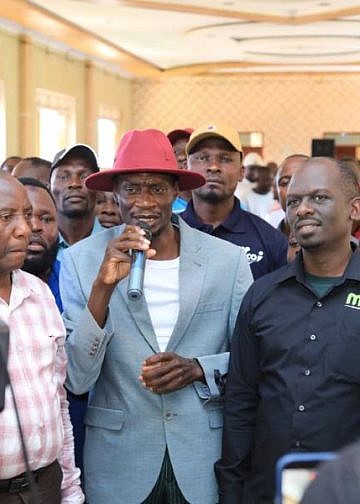








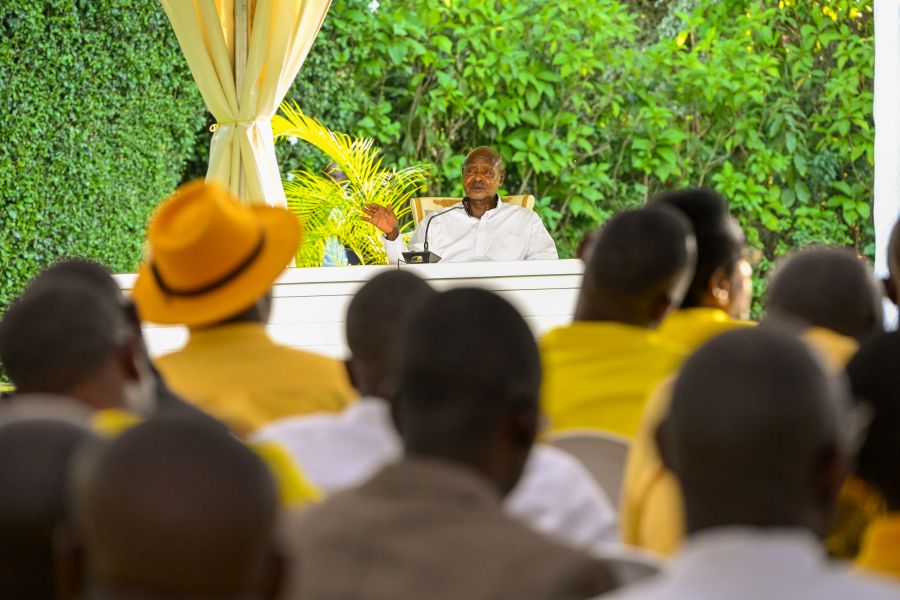
President Museveni has met with chairpersons of the National Resistance Movement (NRM) from districts, cities, municipalities and divisions at State House Entebbe, urging them to prioritise wealth creation, accountability and effective service delivery.
During the meeting, Museveni, who also serves as the NRM National Chairman, congratulated the party leaders on their victory in the recently concluded elections.
He said the latest electoral cycle reflected greater national cohesion compared to previous years, likening it to the 1996 elections when, he noted, Ugandans overwhelmingly supported the NRM due to what he described as its problem-solving approach.
Museveni attributed that cohesion to “okukyenura” — leadership that responds to people’s needs — citing the restoration of national security and the stabilisation of essential commodities in the early years of NRM governance.
The President said that after 1996, household poverty became more apparent, prompting the introduction of revolving funds at sub-county level in 1997 to promote wealth creation.
He added that subsequent initiatives, including NAADS, were introduced to distribute seedlings and boost agricultural productivity, although many Ugandans remained outside the money economy.
He said this informed the introduction of the Parish Development Model (PDM), which channels funds directly to beneficiaries and empowers parish committees to oversee transparent allocation. Museveni noted that the PDM is performing well in some districts and pledged additional funding to enhance its impact, urging party leaders to closely monitor its implementation.
On education, Museveni said the NRM introduced free education to widen access after foreseeing a potential crisis in the sector. However, he expressed concern over what he termed as sabotage by some teachers and insufficient supervision by local leaders.
The President also raised concerns about corruption, particularly allegations of job sales within some District Service Commissions, land grabbing and theft of medicines from government health facilities. He called on NRM leaders to strengthen oversight and ensure accountability.
He further criticised poor road maintenance and substandard works, attributing the challenges partly to weak budgeting priorities, including the creation of new administrative units at the expense of essential public services.
On employment, Museveni emphasised agriculture as the backbone of job creation, with manufacturing and services providing higher-value opportunities. He said he intends to publish more literature in the coming term focusing on socio-economic transformation and addressing citizens’ needs.
He stressed the importance of strengthening the private sector through affordable financing, particularly through the Uganda Development Bank (UDB), to enable business expansion.
Museveni added that once production bottlenecks are resolved, attention must shift to market access, noting that domestic consumers are the primary drivers of demand. Rising household incomes, he said, would boost consumption of products such as milk, cement and steel, paving the way for expansion into regional markets.
NRM Deputy Secretary General Rose Namayanja congratulated the President on what she described as a landslide victory, saying it demonstrated the party’s commitment to visionary leadership and service delivery.
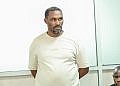
Gulu District NRM Chairperson Christopher Ochen thanked Museveni for strengthening party structures during the campaign period and requested that district chairpersons be integrated into District Executive Committees to enhance supervision of government programmes.
Meanwhile, Mukono Municipality NRM Chairperson JB Wamala Ssalongo appealed for representation of municipality and city chairpersons on the party’s National Executive Committee to ensure inclusive participation in decision-making.