










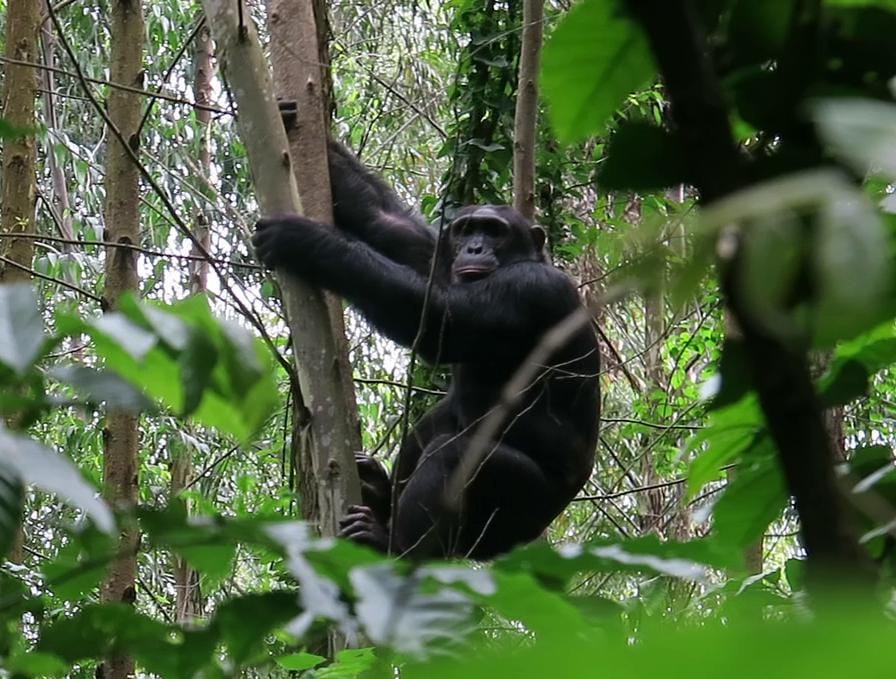
Fresh concerns are emerging across parts of the Bunyoro sub-region, as communities warn that expanding oil activities could worsen human-wildlife conflict—particularly deadly encounters between people and chimpanzees.
In Muhorro, Kagadi District—one of Uganda’s most affected hotspots—conservationists and residents say the fragile coexistence between humans and chimpanzees is under renewed threat amid environmental degradation and rapid development linked to the oil project in nearby Hoima.
Swaleh Kadoma, founder of Friends of Chimpanzee Family, a community-based conservation group, says the area has already recorded some of the country’s most tragic incidents involving chimpanzees.
“This small area here—Muhorro alone—we have seen babies being grabbed and injured. Six of them have died. It is the highest number in the whole sub-region, even in the entire country,” Kadoma said.
Kadoma traces the violence to the destruction of Katiwana Forest, once a vast 3,000-hectare natural corridor linking Bugoma Forest, Kagombe Central Forest Reserve, and Toro-Semuliki National Park.
As the forest was cleared for settlement and agriculture, chimpanzees were pushed into human communities.
“All this place was forest before. But due to population increase, the chimpanzees found themselves living within the town council,” he explained.

According to Kadoma, many of the attacks are retaliatory. When chimpanzees are injured or chased away, they often return more aggressively.
“On their way, they are attacked. When they come back, that’s when they grab babies in revenge,” he said.
With Uganda’s oil production expected to take off in the Hoima region, Kadoma fears increased pressure on forests and wetlands could escalate the crisis.
“Bunyoro sub-region—soon they are going to begin oil production. But what will happen then? The forests are already degraded; we need to prepare for the worst,” he warned.
He added that wetlands—critical natural corridors for wildlife movement—are being encroached upon and converted into farmland, further restricting chimpanzee habitats.
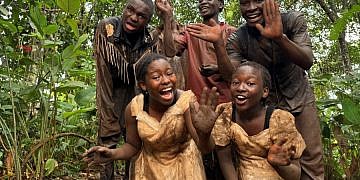
In response to years of violence, Kadoma and local families formed Friends of Chimpanzee Family to promote peaceful coexistence.
“We decided to come in and befriend chimpanzees because everyone was harsh on them. If you are harsh to them, they retaliate,” he said.
With support from the Cross-Cultural Foundation of Uganda (CCFU), the group has carried out community sensitization, conservation training, and alternative livelihood projects such as beekeeping, pottery, and tree planting.
These efforts have begun to shift community attitudes away from attacking chimpanzees, easing coexistence between people and wildlife.
“People’s mindset has changed. Even when chimpanzees attack, communities no longer pick up spears and pangas to kill them,” Kadoma noted.
As part of efforts to protect both the Muhorro community and chimpanzees, the Cross-Cultural Foundation of Uganda (CCFU) provided more than 50 locally made beehives and a machine to produce them.
This initiative offers an alternative source of income through honey production, benefiting both residents and chimpanzees, as the hives are placed within forested areas.
The project has helped reduce attacks on both humans and chimpanzees by promoting peaceful coexistence.
Deep-rooted cultural beliefs
Chimpanzees also hold deep cultural significance in the Bunyoro region, where some communities view them as spiritual beings.
“A chimpanzee, to us, is like a spirit—it must have someone to speak for it,” Kadoma said, explaining the group’s motivation to protect the species.
Despite the progress made, Kadoma says lasting peace will require stronger government action and sustainable land-use strategies.
He is calling for urgent protection of remaining natural forests, restoration of degraded areas using indigenous tree species, and clear demarcation of wetland buffer zones to prevent further encroachment.
He also emphasizes the need to provide alternative livelihoods for communities and former poachers—such as livestock rearing and other sustainable income-generating activities—to reduce dependence on forest resources.
“Let us first preserve the existing forests and give people alternatives like goats, pigs, or fish farming so they don’t destroy the forest,” he urged.
Kadoma also highlighted the need to support private forest owners, who often face pressure to clear their land.
A fragile balance
While conservation efforts have reduced revenge killings of chimpanzees, the situation remains delicate.
Kadoma warns that without urgent intervention—especially as oil activities intensify—the region could see a resurgence in deadly encounters.
“Conservation is forever… but first is the human, and secondly is wildlife. We must protect both,” he said.
As Uganda prepares for oil production, Muhorro stands as a stark reminder that development without environmental safeguards could deepen conflicts between people and nature—with devastating consequences.