








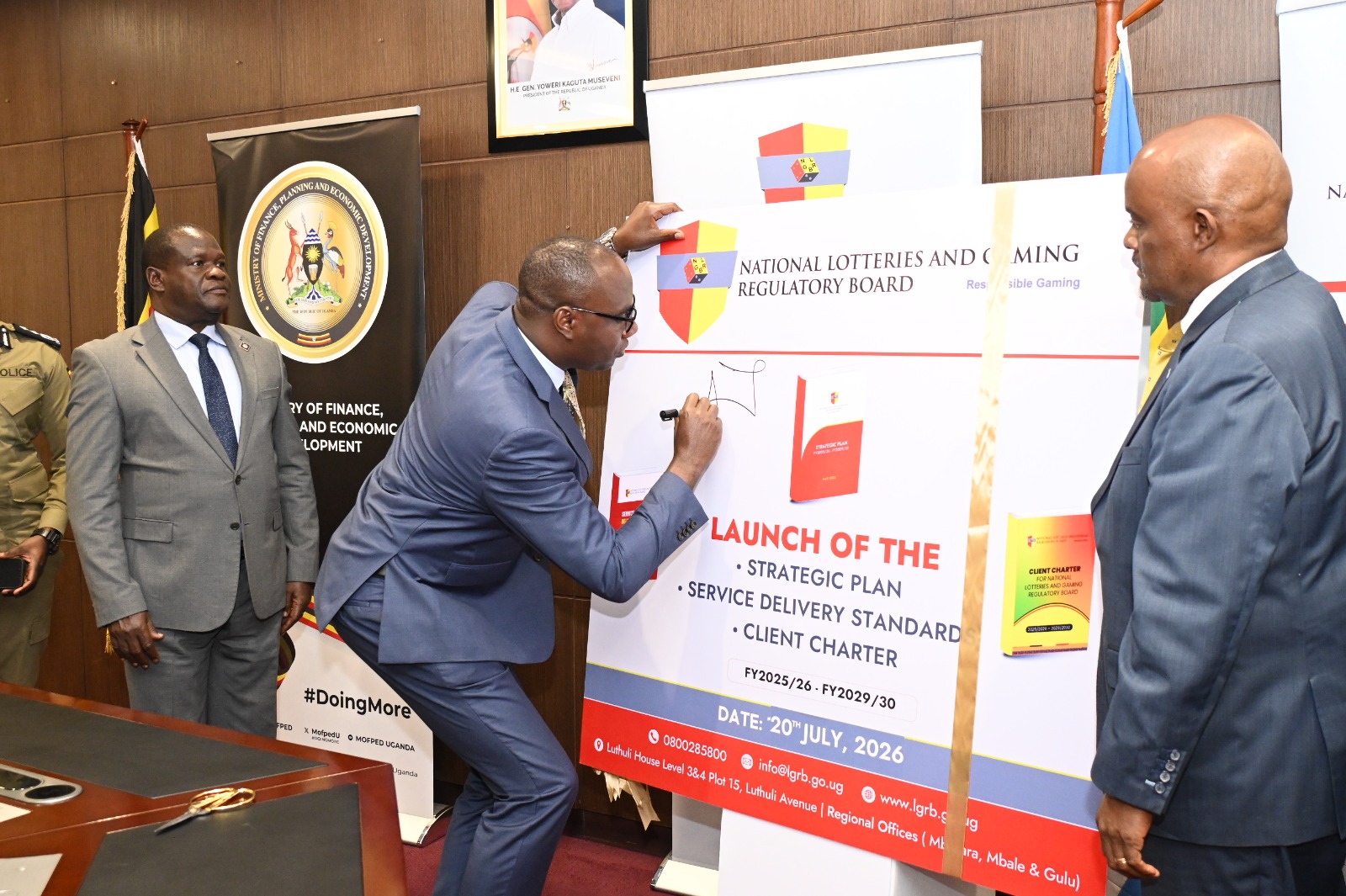
The National Lotteries and Gaming Regulatory Board (NLGRB) has unveiled a five-year strategic plan aimed at strengthening regulation of Uganda’s gaming sector, tackling illegal gambling, promoting responsible gaming and increasing the industry’s contribution to domestic revenue.
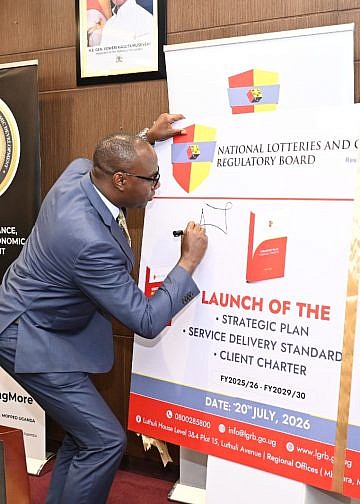
The Strategic Plan for FY2025/26–FY2029/30 was launched alongside the Board’s Service Delivery Standards and Client Charter, which seek to improve accountability, streamline service delivery and enhance engagement with licensed operators and the public.
Speaking at the launch, Minister of Finance, Planning and Economic Development Henry Musasizi said the new framework supports the government’s broader agenda of increasing domestic revenue, advancing digital transformation and improving public service delivery.
“The Strategic Plan, Client Charter and Service Delivery Standards represent more than policy documents. They represent a commitment to accountability, innovation, responsible gaming and national development. They provide a clear framework for enhancing revenue mobilisation, strengthening regulation, protecting consumers and improving service delivery over the next five years,” Musasizi said.
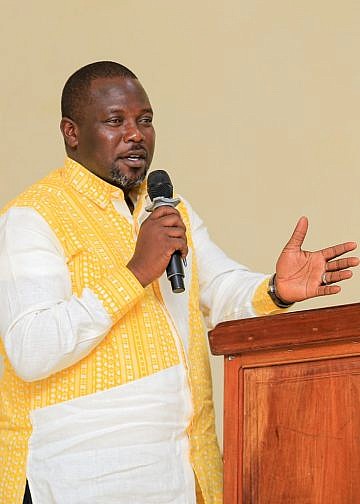
NLGRB Chief Executive Officer Denis Mudene Ngabirano said the strategy marks a new phase in the Board’s efforts to modernise regulation through technology while intensifying the fight against illegal gambling.
“Illegal gaming undermines legitimate businesses, deprives government of revenue and exposes vulnerable Ugandans to unnecessary risk. This Strategic Plan marks the beginning of the next phase in the Board’s evolution as a modern, technology-driven regulator,” Ngabirano said.
He said the Board would strengthen enforcement against illegal gaming, expand digital oversight, promote responsible gaming and improve service delivery over the next five years.
Ngabirano added that the Board’s recent ISO/IEC 27001 certification would strengthen the security of its digital regulatory systems, safeguard operator and player data, and enhance public confidence in the sector.
The Strategic Plan is aligned with Uganda Vision 2040, the Fourth National Development Plan (NDP IV) and the government’s Ten-Fold Growth Strategy. It focuses on increasing tax and non-tax revenue from the gaming industry, promoting responsible gaming, leveraging technology and innovation to improve operations, and strengthening institutional governance.
Permanent Secretary and Secretary to the Treasury Ramathan Ggoobi urged the Board to ensure the strategy translates into measurable results rather than remaining a policy document.
“A Strategic Plan without implementation remains a statement of intent. Service Delivery Standards without compliance remain aspirations. A Client Charter without accountability becomes only a public relations document. The challenge before NLGRB is therefore to convert these instruments into daily institutional practice and measurable public value,” Ggoobi said.
Board Chairman Kenneth Robert Kitariko said the new strategy builds on reforms implemented over the past year to improve compliance, expand nationwide oversight and enhance transparency through technology.
“We reaffirm the Board’s readiness to work closely with the Ministry to advance sound governance, fiscal accountability, effective regulation and public protection in the lotteries and gaming sector. We look forward to your guidance and support as we strengthen the sector’s contribution to Uganda’s development agenda,” Kitariko said.
According to the Board, enforcement operations have intensified over the past year, with authorities confiscating 4,400 illegal gaming machines during the 2025/26 financial year. Compliance among gaming operators also improved from 68 percent to 79 percent.
The Board said technology will remain central to its regulatory approach. Through the National Central Electronic Monitoring System (NCEMS), it has enhanced oversight of gaming transactions, improved tax reconciliation and strengthened the monitoring of suspicious activities.
More than 16,600 players have also voluntarily enrolled in digital self-exclusion programmes designed to help individuals limit their participation in gambling.
In June 2026, the Board attained ISO/IEC 27001 certification, an internationally recognised standard for Information Security Management Systems, which it says strengthens cybersecurity governance and protects operator and player data as regulation increasingly shifts to digital platforms.
Government revenue from the gaming sector has continued to grow under the current regulatory framework. Collections increased from Shs194 billion in the 2023/24 financial year to Shs323 billion in 2024/25 before rising to Shs368.02 billion in 2025/26.
The Board projects that revenue will reach Shs450 billion in the 2026/27 financial year, supported by improved compliance, expanded digital monitoring and continued formalisation of the gaming industry.