









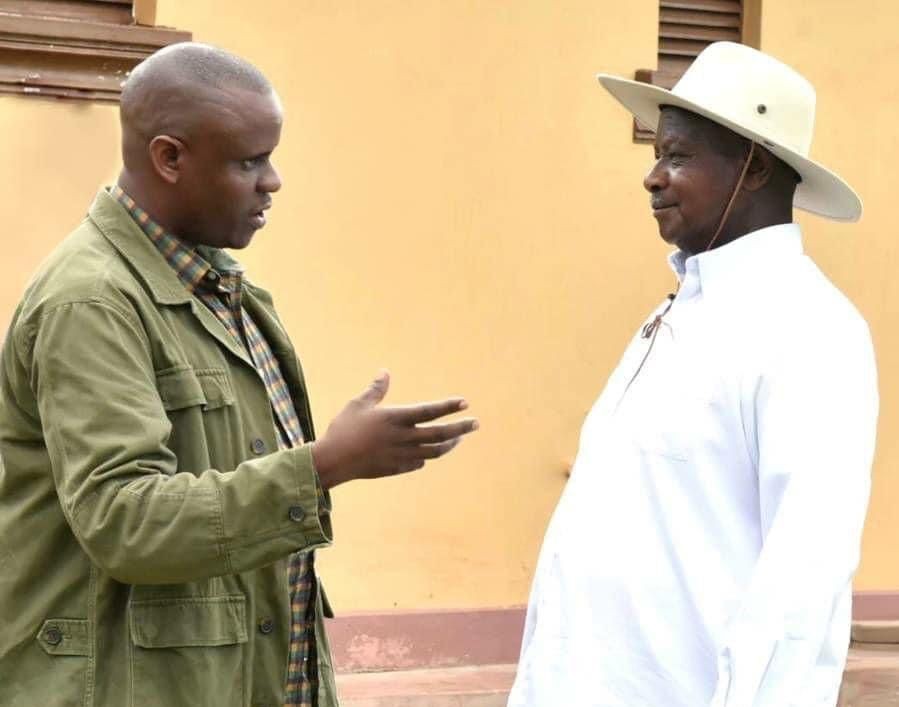
President Museveni has backed the approach adopted by Ministers Balaam Barugahara and Nameere in the fight against corruption, saying taking investigations directly to the people can help expose wrongdoing that is often shielded by officials.
Museveni said the field inspection tours and public barazas conducted by the ministers should not be dismissed as blindly searching for problems, arguing that the high number of corruption complaints across the country justifies the approach.
“I am writing to comment on the field inspection tours of Hons. Barugahara and Nameere and possibly others in future. Some of the commentators were worried that this may be Kutomera (bumping into issues blindly). This is most unlikely,” Museveni said.
He said he had personally received numerous complaints about corruption, including during the recent campaigns, when citizens raised concerns about alleged corruption in the Parish Development Model (PDM).
“I have told you before, that during the campaigns, my campaigns had to be interrupted to deal with the information from the angry citizens about corruption in PDM, etc.,” he said.
Museveni also cited allegations involving the sale of local government jobs and the existence of ghost learners and teachers in government schools and health centres.
He said the next step should be to ensure that evidence collected through the ministers’ engagements is promptly acted upon by the justice system.
“The challenge now is for the DPP to have a dedicated officer that can quickly assess the abundant evidence against these criminals so that they are prosecuted,” he said.
According to Museveni, corruption has persisted partly because some officials responsible for protecting national interests cover up wrongdoing, while members of the elite who have access to decision-making centres fail to report it.
“The main problems on the issue of corruption have been two: the cover up by the responsible officials that should be protecting national interests and the failure to report by the elite that have access to the decision-making centres,” he said.
Museveni commended Barugahara and Nameere for bypassing what he described as this “blockade” by taking their engagements directly to ordinary citizens through public barazas.
“That is why Barugahara and Nameere, by going to the People directly in the form of Barazas (Public gatherings), have by-passed the blockade of the thieves manned by the responsible elements of the elite,” Museveni said.
The President also highlighted Minister Fred Byamukama as an example of a government official who reported corruption. He said Byamukama had exposed an alleged racket of extortionists operating at State House, leading to their arrest.
“This corruption in Uganda is stoppable,” Museveni said.
He urged government officials to stop covering up corruption and called on citizens to report cases to the authorities.
“Do not cover-up if you are a Government officer and report if you are a citizen,” he said.
Museveni further praised the public response to Barugahara and Nameere’s activities, saying their meetings had attracted large crowds reminiscent of the early days of the National Resistance Movement (NRM).
“You can see the enthusiasm of the People in response to Barugahara and Nameere’s decisive actions,” he said.
“We are back to the earlier NRM days when huge crowds would flock voluntarily to our public meetings without being given water to drink, food, hiring tents for the local elite while the masses stay in the rain or the sun,” he added.