








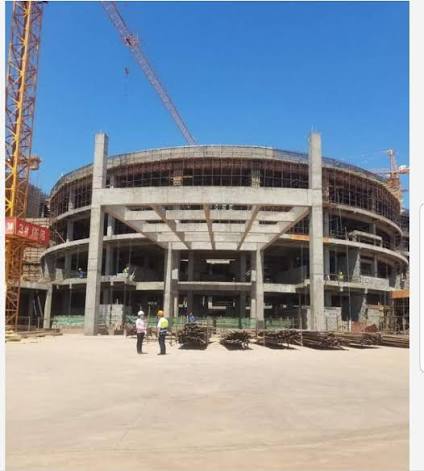
Construction of Uganda’s new Parliamentary Chamber has reached 63%, with the project team now pushing for the 600-seat Plenary Chamber to be ready by August 2027, four months ahead of the overall project completion deadline.
The accelerated programme comes as major structural works take shape, with heavy structural steel installation reaching the apex of the roof and key specialised materials arriving on site.
Although the contractual completion date for the entire project remains December 30, 2027, the acceleration plan is prioritising the Plenary Chamber and facilities required for Parliament to start using the new facility by August 31, 2027.
The latest project status report prepared by the project team and supervising consultants, Ssentoogo and Partners, attributes the improved progress to increased structural steel works, availability of imported materials and measures introduced to ease financial and supply-chain constraints affecting the project.
The 63% overall progress includes physical works, materials already on site and procurements undertaken by the main contractor, ROKO Construction Ltd.
Roof takes shape
One of the key milestones is the installation of the building’s heavy structural steel, which has now reached the roof apex.
Roof installation is already underway, with the roof covering expected to be completed by October 11, 2026. Once the building becomes substantially weather-tight, internal finishes and specialised services are expected to accelerate.
Roofing and skylight materials are already on site, alongside aluminium and glazing materials for the laminated curtain walls, materials for the blast-resistant glazing façade and all nine lifts.
The report says the improved pace of construction is partly a result of mitigation measures, including additional secured advance funding and direct payments to critical subcontractors and suppliers.
“This is evidence that the mitigation measures involving provision of additiona advance and direct payments to sub-contractors and suppliers is yielding positive results for progressive implementation of the works,” the report states.
Major reinforced concrete works forming the structural frame are also largely complete, while installation of aluminium profiles for the laminated glazing curtain walls is ongoing.
Security features add complexity
The project has, however, faced delays arising from design changes, security requirements, infrastructure relocation and supply-chain disruptions.
Materials for the blast-resistant curtain wall façade arrived in Kampala in July and were inspected at ROKO Construction’s Kawempe yard.
The first batch of blast-resistant glazing materials was delayed by shipping challenges linked to the conflict in the Middle East. The materials are now in transit and are expected to reach Mombasa in September.
The blast-resistant systems were custom-designed and manufactured specifically for the new Chamber following a 2022 joint assessment by Government security agencies.
The security review also resulted in the requirement for a heavy concrete security wall, adding to the complexity and time required to complete the project.
Other challenges included the acquisition of additional land and the subsequent three-metre expansion of the building, which increased the planned Chamber capacity from 500 to 600 MPs.
Construction was also disrupted by the discovery of essential utilities crossing the site, including high-pressure water mains, storm-water infrastructure and NBI infrastructure, which had to be relocated.
Further design modifications were made to accommodate additional facilities and changes to the offices of the Speaker and Deputy Speaker.
The report also cites ROKO’s cash-flow constraints, the COVID-19 pandemic, international shipping and logistical challenges, as well as the highly specialised structural and technological systems, among factors that affected progress.
South Wing works complete
Meanwhile, rehabilitation works on the South Wing of the existing Parliamentary Building have been completed.
The project report describes the quality and workmanship by ROKO as satisfactory and in line with the project’s technical specifications and design documentation.
Parliament targets 71% progress by December
Under the new acceleration strategy, physical progress is expected to reach about 71% by December 2026.
The plan will prioritise facilities necessary for the operation of the new Plenary Chamber, including Members’ access routes, lobbies, sanitation, fire and life-safety systems, electricity, air conditioning and ventilation, lighting, audio-visual and broadcasting systems, interpretation facilities and secure emergency exits.
ROKO is expected to meet a series of intermediate milestones covering roofing, façades and glazing before moving into specialised services, internal finishes, testing and commissioning.
Other measures include early procurement of long-lead specialised equipment and materials, controlled advance funding backed by guarantees, direct payments to critical suppliers and subcontractors, additional specialist personnel, parallel work fronts and extended or weekend shifts where necessary.
Subject to implementation of the acceleration measures and associated funding arrangements, the Plenary Chamber is targeted for substantial completion by August 31, 2027, while completion, commissioning and handover of the entire project remain scheduled for December 30, 2027.
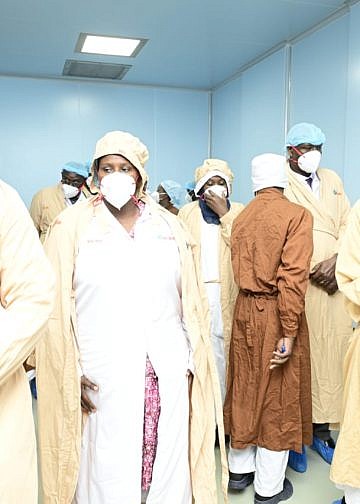
Members of the Parliamentary Commission visited the project on August 26, 2026, to assess progress, outstanding works and the proposed acceleration plan.
The new Chamber was conceived to address Parliament’s growing accommodation needs. The original Parliamentary Chamber, constructed in 1959, was designed for only 82 Members.
The new development will provide a 600-seat Plenary Chamber, additional committee rooms and office accommodation, alongside modern security, broadcasting and building-management systems.
ROKO Construction Ltd is the main contractor, with the revised contract value standing at approximately Shs220 billion.