










The East African Crude Oil Pipeline (EACOP) project has reaffirmed its commitment to developing Uganda’s human capital with a $15 million training investment at the Uganda Petroleum Institute in Kigumba (UPIK), marking one of the most significant capacity-building initiatives in the region’s oil and gas sector.
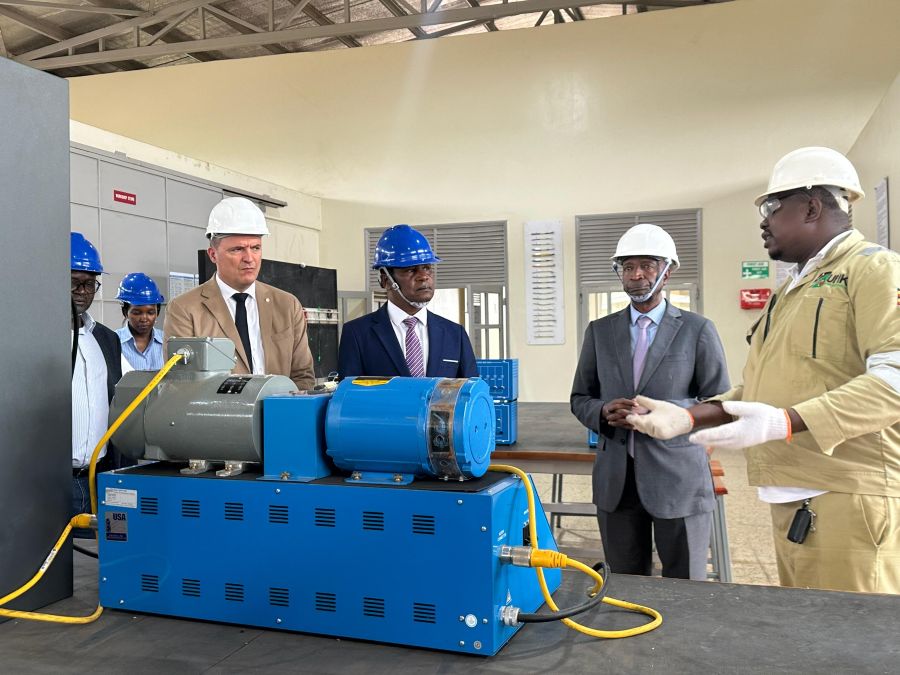
A high-level delegation including Tanzania’s High Commissioner to Uganda Maj. Gen. Paul Kisesa Simuli, Petroleum Authority of Uganda Executive Director Ernest Rubondo, and EACOP Managing Director Guillaume Pierart visited UPIK to engage with the first cohort of EACOP trainees—141 students currently undergoing specialized training to operate and manage the pipeline.
Speaking during the visit, Pierart emphasized the transformative nature of the initiative.
“With a $15 million investment over 30 months, this is one of the largest capacity-building programs in the region,” he said.
“But even more impressive than the numbers is the return we see today—not in figures, but in the potential of these dedicated trainees.”
The training program, implemented through the Tilenga & EACOP Academy, began with over 13,000 applicants. Following a rigorous selection process, 141 were chosen—and remarkably, none have dropped out.
“This level of retention shows not only the commitment of our trainees but the strength of the program,” noted Laurent Stephane, Academy Manager.
“Trainees are undergoing rotations at globally renowned institutions like Takatouf Petroleum Oman and INSTEP in Malaysia, gaining world-class skills in preparation for the pipeline’s commissioning phases.”
Stephane added that the hands-on training will equip the trainees with the technical know-how to build, operate, and maintain the pipeline safely and sustainably.
The project’s focus on local capacity building was applauded by the Petroleum Authority of Uganda.
“Many associate oil wealth only with revenue,” Rubondo remarked. “But the true value lies in skilling young people, creating jobs, and enabling technology transfer. UPIK now rivals some of the top global oil and gas institutes.”
Among the standout stories is that of Sekera Jacob, a former history teacher turned pipeline trainee.
“I never imagined myself in this field,” she shared. “But EACOP looked beyond my background and saw potential. I’ve gone from chalkboards to control rooms—and I’m only getting started.”
Tanzania’s envoy to Uganda, Maj. Gen. Simuli, commended the project’s regional impact.
“This kind of initiative will inspire investor confidence and open new doors for our youth across East Africa,” he said. “It reflects the deepening cooperation between our nations.”
EACOP’s construction progress currently stands at 33%, with 62% overall project progress reported. As of today, 400km of pipeline—equivalent to 25%—has been welded. Above Ground Installations (AGIs) are 54% complete, the jetty is at 60%, tanks at 73%, and the terminal at 26%.
The training program underscores EACOP’s long-term vision to ensure that Uganda’s natural resources benefit its people—not just in profits, but in potential.