










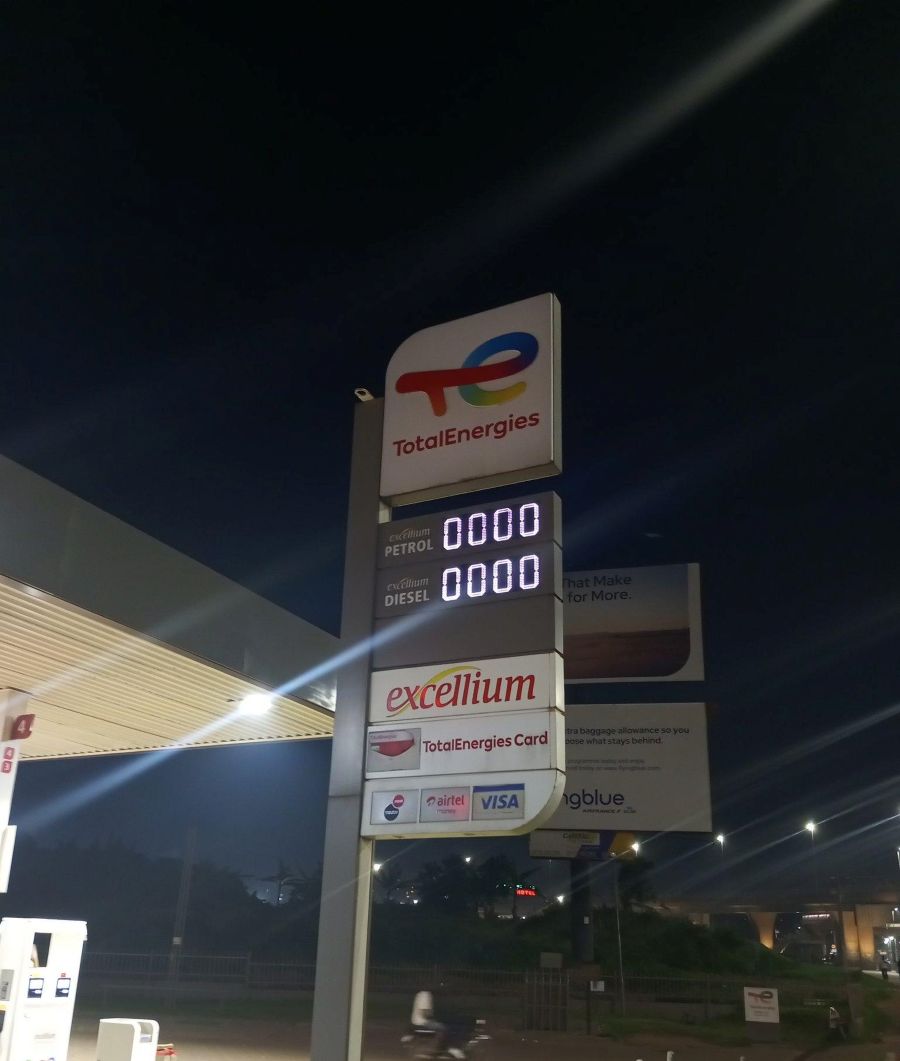
Many Ugandans have taken to social media to express frustration over fuel shortages at several petrol stations and rising pump prices, particularly in Kampala and border districts, raising concerns about a possible fuel crisis.
In areas such as Kira, motorists reported moving from one fuel station to another without finding petrol. In districts including Mubende, Kabaale, Tororo, Arua, and parts of Karamoja, pump prices have surged from about Shs5,000 to Shs6,000 per litre within a week.
“I have made stopovers at about five major fuel stations in Kira, and they all don’t have petrol. I don’t know where this leaves the people who assured us that we are safe!” a social media user, identified as Kifra, posted on X.
Another user, Joy Turamuhawe, also shared her frustration.
“Is it just me, or has the fuel crisis finally reached us? I’ve gone to four fuel stations this morning and none had fuel. I ended up buying V-Power at Shs5,700 from the only station that had it, because that’s all they had,” she posted.
Last week, outgoing Theodore Ssekikubo raised concerns over increasing fuel challenges affecting motorists and travelers across the country.
Ssekikubo noted that some petrol stations along the Masaka–Kampala highway were running out of fuel, while rising pump prices were making it harder for people to purchase their usual quantities.
He warned that, as a landlocked country, Uganda cannot afford prolonged fuel supply disruptions and called on the government to urgently address both shortages and underlying infrastructure challenges driving price increases.
However, the Ministry of Energy and Mineral Development dismissed fears of a nationwide shortage, assuring the public that fuel stocks remain sufficient and additional shipments are on the way.
In a press statement issued on April 21, 2026, the ministry emphasized that Uganda’s fuel supply is stable, sufficient, and well managed.
According to the ministry, as of April 20, the country had 70.5 million litres of petrol—enough for 19 days—43.2 million litres of diesel covering 12 days, and 32 million litres of jet fuel sufficient for 53 days.
The ministry added that more shipments are expected between May and June, including 183 million litres of petrol and 258 million litres of diesel, which are expected to further strengthen supply.
Officials explained that empty filling stations are largely due to logistical challenges affecting individual oil marketing companies, rather than a nationwide shortage.
On rising pump prices, especially in border towns like Arua and Tororo, the ministry attributed the increases to high cross-border demand and broader external market factors.
The government has urged the public to remain calm and avoid panic buying.
Meanwhile, Parliament recently passed a series of tax bills aimed at raising Shs1.8 trillion to finance the 2026/27 national budget. Among them is a Shs200 increase in the fuel levy, pushing existing rates of Shs1,600 and Shs1,500 even higher.
Joel Ssenyonyi opposed the increment, warning that it would raise the cost of living and place additional strain on ordinary Ugandans.
He argued that even a small increase in fuel prices has a ripple effect across the economy, driving up the cost of goods and services.
“Fuel affects everything. Even a slight increment leads to higher transport costs, which in turn raises the prices of food, clothing, and other essential goods,” he said.
Ssenyonyi also warned that higher fuel taxes could ultimately reduce government revenue by weakening consumers’ purchasing power.
He urged the government to focus instead on tackling corruption and improving the management of public funds, citing reports that significant resources are lost annually.
Uganda last experienced a similar fuel crisis between 2021 and 2022, during the COVID-19 pandemic. At the time, cross-border transport disruptions, movement restrictions, and delays at border points slowed fuel deliveries, leading to long queues, sharp price increases, and widespread economic disruption.