








Government has renewed its commitment to supporting the Dei Biopharma manufacturing facility in Matugga, Wakiso District, describing the project as a strategic investment that could strengthen Uganda’s pharmaceutical industry, reduce dependence on imported medicines and create thousands of jobs.
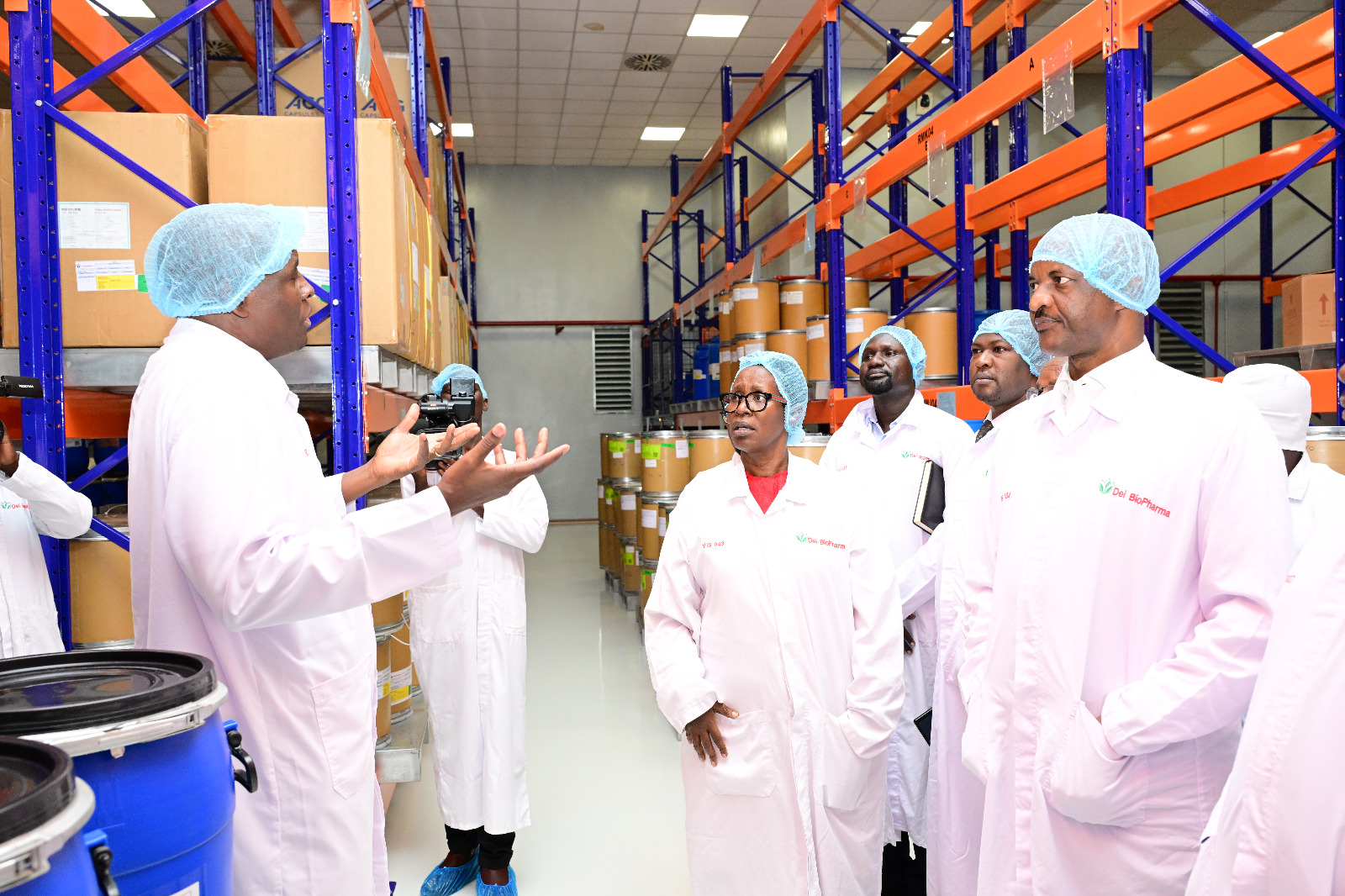
A delegation from the Ministry of Finance, Ministry of Health, National Drug Authority (NDA) and National Medical Stores (NMS) toured the facility on Monday to assess its progress and evaluate the impact of government’s investment in the project.
Secretary to the Treasury at the Ministry of Finance, Dr. Ramathan Ggoobi, said the facility represents the type of emerging industry Uganda needs to drive economic transformation through science, technology and innovation.
The government has invested more than Shs700 billion in the facility, with additional resources allocated under the Science and Technology budget in the current financial year.
Dr. Ggoobi described the plant as one of the largest pharmaceutical manufacturing facilities he had visited, saying the inspection was intended to assess the scale of the investment and ensure accountability.
“People ask if Dr. Matthias Magoola is serious, if he can actually produce the medicine and medical supplies he talks about,” Dr. Ggoobi said. “So far, it is always a good surprise when you come here. We are on the right track as far as emerging sectors in our economy, especially manufacturing and the knowledge economy, are concerned.”
He said Uganda continues to spend significant amounts of foreign exchange importing medicines that could potentially be produced locally.
Dei Biopharma currently manufactures several generic medicines, including paracetamol and cancer treatment-related capsules, and plans to expand into vaccines, insulin and cardiovascular medicines.
Dr. Ggoobi said the facility has the potential to replace a substantial portion of Uganda’s medicine imports, helping retain money within the economy while expanding employment opportunities.
“Science, technology and innovation is an accelerator industry, and this campus is by far the leader in taking Uganda to another level,” he said.
He, however, emphasised that government support would continue to be accompanied by strict accountability measures.
“The Auditor General audits the project regularly because the government holds a stake in it as a co-investor,” Dr. Ggoobi said.
He added that a panel comprising bankers and scientists had been established to review future funding requirements before additional government resources are committed.
Meanwhile, Ministry of Health Permanent Secretary Dr. Diana Atwine pledged government support through local procurement under the Buy Uganda, Build Uganda (BUBU) policy.
She said the ministry would prioritise locally manufactured medicines from Dei Biopharma and other approved local producers as part of efforts to promote domestic pharmaceutical production.
Dr. Atwine said the company’s long-term ambition should extend beyond Uganda, with products eventually meeting international standards required to access regional and global markets.
She noted that securing approval from the National Drug Authority was only the first step, with the company expected to pursue World Health Organization (WHO) prequalification and approvals from other international regulators.
“Dei Biopharma needs to be given the opportunity to grow,” Dr. Atwine said. “It must be supported to ensure it achieves its goals.”
Company founder Dr. Matthias Magoola said Dei Biopharma has submitted more than 100 patent applications covering research areas including cancer, HIV, malaria, tuberculosis, sickle cell disease, diabetes and Alzheimer’s disease.
The company has also received approval to manufacture biological medicines, including filgrastim, erythropoietin and trastuzumab.
However, Dr. Magoola said the facility’s ability to operate at full capacity remains constrained by inadequate electricity and water supply.
He said the plant currently runs only three or four of its eight completed production blocks due to power limitations, adding that full operations would require up to 80 megawatts of electricity.
The facility also consumes up to two million litres of water daily and is not yet connected to the National Water and Sewerage Corporation network.
“We are requesting that the government provide us with stable and sufficient power to run this facility,” Dr. Magoola said, calling for expansion of water infrastructure to support future growth.