










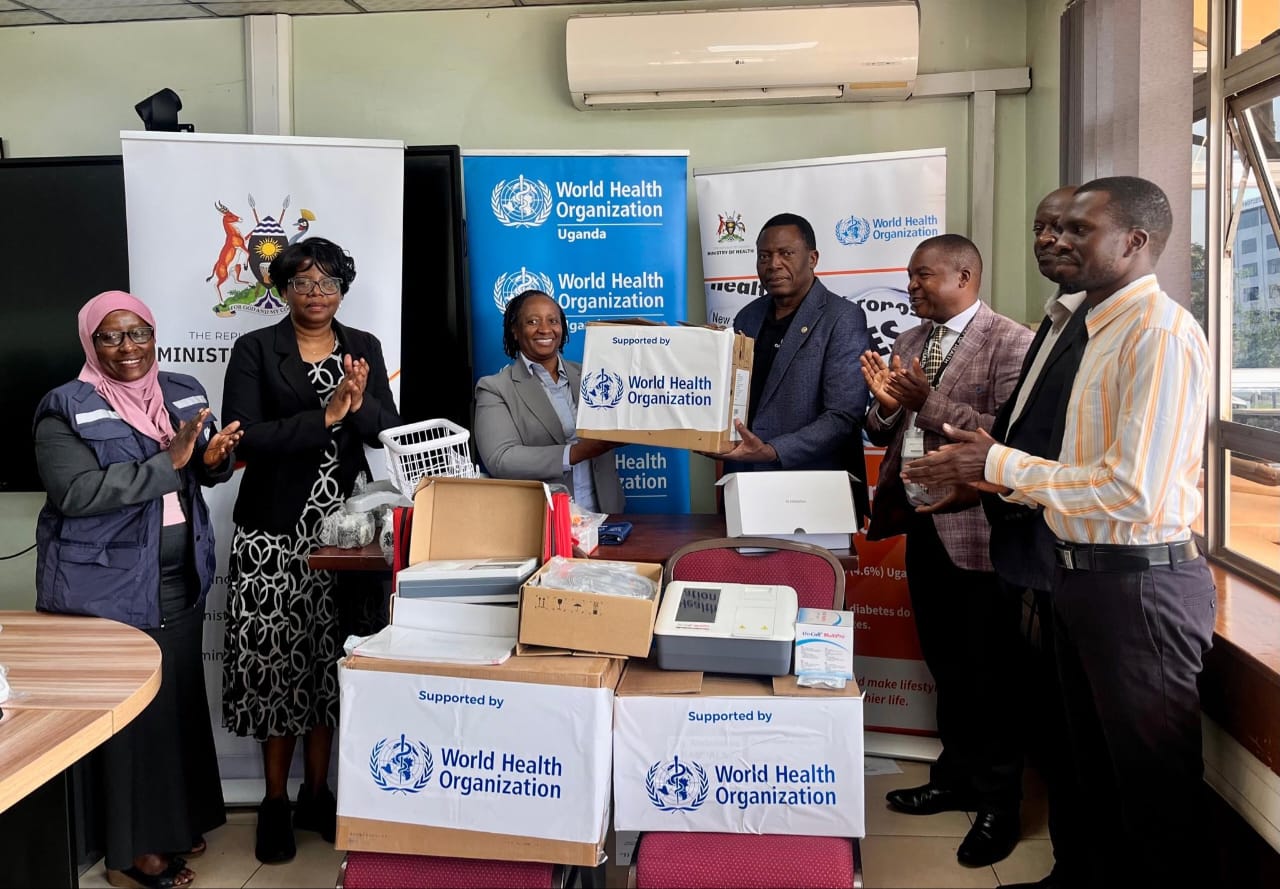
The Ministry of Health, in partnership with WHO Uganda, has handed over diagnostic equipment to 40 health facilities across Sembabule, Kabale, Koboko, and Lira City in a bid to combat the rising burden of non-communicable diseases (NCDs) such as hypertension and diabetes.
The move comes amid alarming trends showing that cases of these diseases have doubled over the past five years, posing a growing threat to public health.
The initiative emphasizes integrating NCD screening into existing health services, including HIV, tuberculosis, and malnutrition programs.
“These districts were selected because of their high disease burden; however, that should not be the only criteria,” said Dr. Olaro Charles, Director General of Health Services.
“We should not wait for a district to experience a high burden before providing support. Access to these tools should be part of our standard health system operations to strengthen prevention and early detection across all areas. This equipment should also be accompanied by messaging that emphasizes prevention, as our goal is to make it part of primary prevention for early screening and ensure we have all that is needed to achieve this.”
Dr. Charles added that early detection and community awareness are key to reducing complications associated with NCDs, which often go unnoticed until advanced stages.
Meanwhile, Dr. Kasonde Mwinga, WHO Uganda Country Representative, cautioned that equipment alone cannot solve the problem.
“We know that the handover of equipment is one thing, but equipment alone is not enough. It must be supported by other elements, such as robust health systems and skilled personnel. The World Health Organization remains committed to working with the Government of Uganda to strengthen non-communicable disease surveillance.”
The Ministry of Health plans to complement the equipment with training for health workers and community outreach programs to ensure early diagnosis, treatment, and continuous monitoring of NCDs across the country