









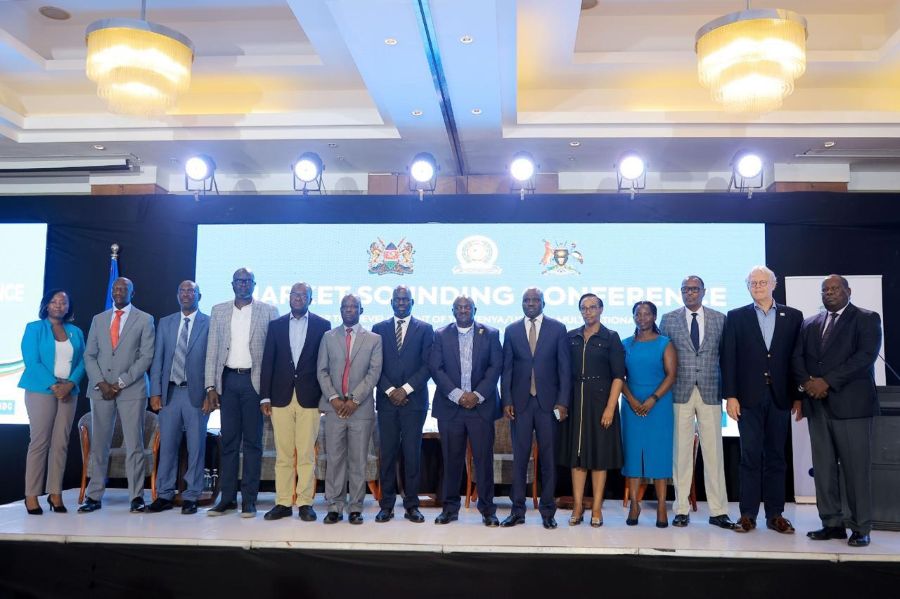
Trade and travel between Kenya and Uganda are set for a major boost following the confirmation of the Kisumu–Busia/Kakira–Malaba Multinational Expressway as a viable, investment-ready infrastructure project.
The announcement was made during a market sounding conference held at the Sheraton Hotel in Kampala, organized by the East African Community (EAC) in partnership with the African Development Bank (AfDB).
The event drew participation from regional government officials, private investors, and development partners, all expressing strong support for the nearly 200-kilometre expressway, hailed as a cornerstone for economic integration and trade facilitation in East Africa.
Financed through the NEPAD Infrastructure Project Preparation Facility (NEPAD-IPPF), the expressway will connect Kisumu in Kenya to Malaba and Kakira in Uganda, forming part of the broader Trans-African Highway and the EAC Regional Trunk Road Network.
Once operational, it is expected to ease congestion, cut travel time, and improve the flow of goods and people across one of the region’s busiest trade corridors.
Speaking at the event, Gen. Katumba Wamala, Uganda’s Minister for Works and Transport, said the project aligns with the country’s long-term development goals and regional aspirations for economic transformation.
“It directly supports Uganda’s Vision 2040 and our Fourth National Development Plan to modernize transport systems, promote trade, and connect our cities, border posts, and economic zones through efficient, safe, and sustainable infrastructure,” he stated.
Gen. Katumba emphasized that the expressway represents more than just road construction—it is a driver of regional integration and prosperity.
“Kenya is our biggest trade partner and our gateway to the East African market. This infrastructure will benefit not only Uganda and Kenya but the entire East African region because the faster goods move, the better,” he added.
He noted that the project will be implemented through Public-Private Partnerships (PPPs), with Uganda finalizing negotiations with a potential contractor.
Representing the EAC Secretariat, Andrea Aguer Ariik Malueth, the Deputy Secretary General for Infrastructure, Productive, Social, and Political Sectors, said the expressway will help decongest the Northern Corridor and streamline regional trade routes.
“The expressway will run from Kisumu to Jinja, with the goal of easing congestion along the Northern Corridor and enhancing the flow of goods through Uganda to Rwanda and South Sudan,” Malueth said.
“It will reduce transport costs, lower commodity prices, and shorten delivery times across borders.”
He further proposed the creation of a smart corridor incorporating digital monitoring, road safety, and inclusive mobility features.
“80 percent of projects fail at the preparation stage. The support from EAC Development Partners has enabled us to prepare high-quality, bankable projects that attract both public and private financing,” he remarked.
Eng. Charles Wani, Commissioner for National Roads at Uganda’s Ministry of Works and Transport, noted that the project will also include upgrades to one-stop border posts (OSBPs) to facilitate customs and immigration operations.
“The project will improve the Luakaka one-stop border post and, in the future, extend to the Lumino–Busia connection to ease congestion and create shorter routes between Kampala and Kenya,” he explained.
“Large-scale infrastructure investment cannot be achieved in isolation. We must embrace PPPs and blended financing models to deliver transformative projects.”
Meanwhile, Eng. Charles Obuon, Director of Public-Private Partnerships at the Kenya National Highways Authority (KeNHA), said the expressway will close longstanding gaps in regional transport infrastructure.
“Many regional corridors remain poorly connected due to missing links. This expressway will catalyze economic growth and strengthen the EAC’s competitiveness,” he noted.
The Kisumu–Busia/Kakira–Malaba Multinational Expressway stands as one of the flagship regional projects under the EAC’s infrastructure agenda—signifying a major stride toward seamless regional connectivity, trade efficiency, and inclusive development.