







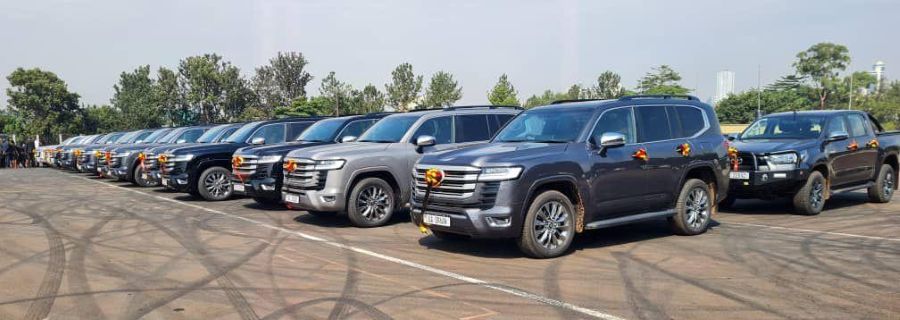
The Minister of Gender, Labour and Social Development, Betty Amongi, has clarified the absence of a representative from Buganda Kingdom during the government handover of vehicles to 15 cultural leaders at Kololo Independence Grounds on Wednesday.
The Kingdom’s no-show sparked speculation, with some alleging that Buganda had declined the government’s offer. However, Minister Amongi told journalists that there was mutual understanding between the government and Buganda’s leadership.
“I visited the Katikkiro, and we agreed because they indicated that Buganda has its methods and cultural norms. Their traditions require that certain provisions be fulfilled by the subjects,” Amongi said.
She explained that both sides resolved to provide Buganda with a lump sum that includes money for the vehicle and the Shs 60 million monthly allowance accumulated over several years.
“They indicated that neither the government nor any other institution can facilitate their king with a vehicle. So we gave them a cheque to cover both the vehicle and the accumulated allowances. They will handle the rest based on their cultural protocols,” she added.
At the same event, Vice President Jessica Alupo hailed the contribution of cultural institutions to Uganda’s unity and development, especially at the grassroots level.
“Cultural leaders are custodians of peace, unity, and identity. We urge you to continue being agents of transformation in your communities and to support government initiatives, particularly as we head toward the 2026 elections,” she said.
Delivering a message from President Yoweri Museveni, Alupo said the restoration of traditional institutions was a deliberate move to preserve ancestral wisdom and national cohesion.
“Our ancestors united clans into great kingdoms like Buganda, Bunyoro, and Ankole, reducing conflict and laying the foundation for stability. Their foresight remains critical to the peace we enjoy today,” the message read.
President Museveni also emphasized the role of cultural institutions in preserving languages, customs, and heritage, noting their importance to national identity and the country’s cultural tourism agenda.