











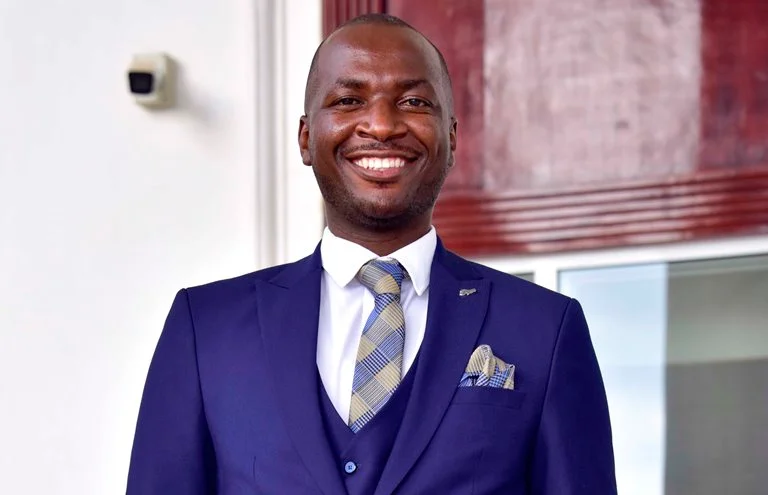
Newly appointed Presidential Special Assistant on the Informal Sector, Ian Gumisiriza, has pledged to justify President Museveni’s confidence in him by strengthening oversight of government programmes aimed at uplifting Uganda’s urban poor and accelerating the formalisation of informal businesses.
Speaking after his appointment, Gumisiriza expressed gratitude to President Museveni for entrusting him with the new responsibility, saying the role presents an opportunity to directly influence the implementation of policies targeting the country’s informal sector.
“I thank the President for entrusting me with that responsibility. I have, over the last 10 years, been involved in proposing solutions to him on how to transform informal sector players such as market vendors, street vendors, boda boda riders and many others,” Gumisiriza said.
He noted that, in his previous engagements with the President, he had largely been limited to proposing policy interventions, many of which were not fully implemented by the relevant Ministries, Departments and Agencies (MDAs).
According to Gumisiriza, his appointment is a vote of confidence that will enable him to address challenges affecting the informal sector directly across different levels of government.
“This appointment is a vote of confidence that I can now directly address these matters at different levels of government rather than just giving him proposals which, in most cases, are not implemented by the different MDAs. I will not betray his confidence in me,” he said.
Gumisiriza said his immediate priority will be overseeing the performance of Presidential Revolving Funds targeted at the informal sector to ensure they effectively deliver on their objective of lifting the urban poor out of poverty.
He added that the broader goal is to reduce the size of Uganda’s informal economy by coordinating the efforts of various government agencies to support the formalisation of informal businesses.
“The core assignment is to oversee the performance of Presidential Revolving Funds in the informal sector to make sure they deliver the purpose of uplifting the urban poor from poverty. Ultimately, it is to reduce the size of the informal sector by coordinating efforts by different agencies to formalise informal businesses,” he explained.
Uganda’s informal sector employs a significant share of the country’s workforce, with many operators facing challenges including limited access to affordable financing, business registration, social protection and formal markets.
The new appointment is expected to strengthen coordination of government interventions aimed at improving livelihoods and expanding economic opportunities for workers and entrepreneurs in the sector.