



President Yoweri Kaguta Museveni has called on world leaders to pursue global justice and economic prosperity, warning that conflicts fueled by identity politics continue to undermine stability and development across many regions.
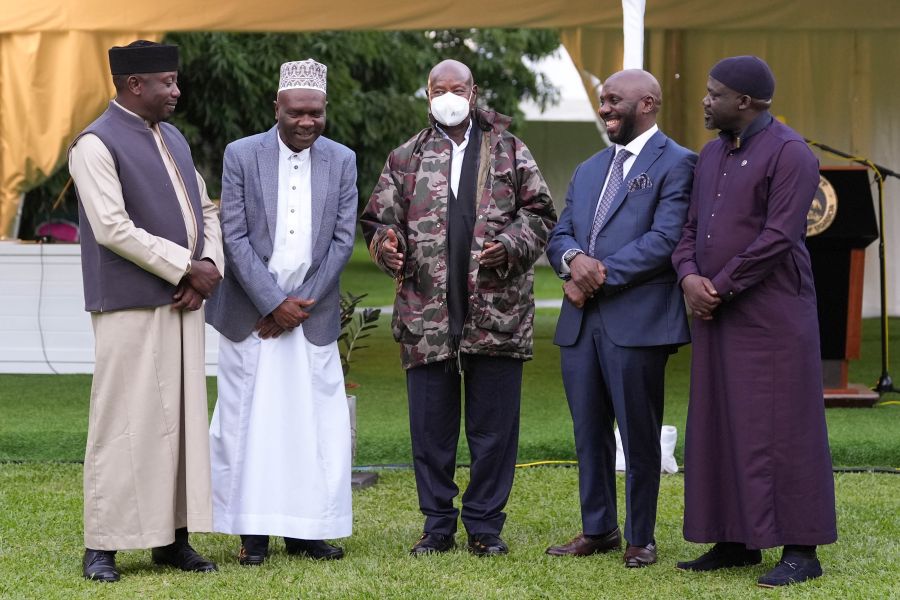
The President made the remarks during an Iftar dinner hosted for the Muslim community at State House Entebbe as Muslims observe the holy month of Ramadan.
Speaking at the gathering held under the theme “Peace, Unity and Reconciliation: Our Divine Mandate for National Building,” Museveni said the international community must promote fairness, dialogue and economic cooperation to address growing tensions in different parts of the world.
He noted that Uganda maintains diplomatic relations with several countries involved in the Middle East tensions, including Israel, Iran, United Arab Emirates, Saudi Arabia and the United States.
Museveni said he has engaged some leaders privately to encourage dialogue and peaceful solutions.
The President reiterated his support for a two-state solution to the Israeli–Palestinian conflict, saying mutual recognition between Israel and Palestine could help stabilize the region.
“I have always advised the leaders involved that both sides should recognize each other so that the two-state solution can work,” he said.
Museveni also warned against political mobilization based on religion, ethnicity or other identity markers, arguing that such divisions often prolong conflict and undermine national progress.
Drawing from Uganda’s experience, he said sustainable prosperity depends on cooperation and integration rather than division.
“As a cattle keeper, I produce milk, beef and bananas. Whoever buys from me contributes to my prosperity, whether they are from my tribe or not. That is why unity is important,” he said.
The President further called on developed countries to support economic transformation in poorer regions, saying global prosperity benefits all nations through increased trade and economic opportunities.
“If people have income and wealth, they will buy your products. That is why the world should work towards global affluence,” Museveni said.
He also congratulated the Muslim community for observing Ramadan and commended Ugandans for maintaining unity and rejecting sectarian politics.
Vice President Jessica Alupo thanked the President and First Lady Janet Kataaha Museveni for maintaining the tradition of hosting the Muslim community for the annual Iftar dinner.
Alupo said the values of prayer, fasting and gratitude emphasized during Ramadan promote moral discipline and unity in society.
“Without peace, development is not possible,” she said, adding that Uganda has made notable progress in maintaining stability.
Speaker of Parliament Anita Annet Among also commended the Muslim community for its contribution to national development and reaffirmed Parliament’s commitment to addressing issues affecting the community.
Among noted that discussions regarding the establishment of Kadhi courts are currently before Parliament.
The Mufti of Uganda, Sheikh Shaban Ramadhan Mubajje, congratulated Museveni on his re-election and praised the government for supporting religious freedom and the participation of Muslims in national development.
Mubajje said the Uganda Muslim Supreme Council has registered imams across the country and established SACCO initiatives to improve their livelihoods and support wealth creation.
He added that Uganda currently has about 16,300 mosques, which serve as centers for spiritual guidance and community development.
The Mufti also expressed concern about ongoing global conflicts, particularly in the Middle East, and called for renewed efforts toward peace and mutual understanding.
Sheikh Ashraf Mutagubya of the Islamic University in Uganda said Ramadan provides an opportunity for Muslims to deepen their faith through reflection, prayer and study of the Quran.
He encouraged Muslims to remain active participants in national development and to promote peace and reconciliation in their communities.
The Iftar dinner brought together Muslim leaders, government officials, members of Parliament and other invited guests.