







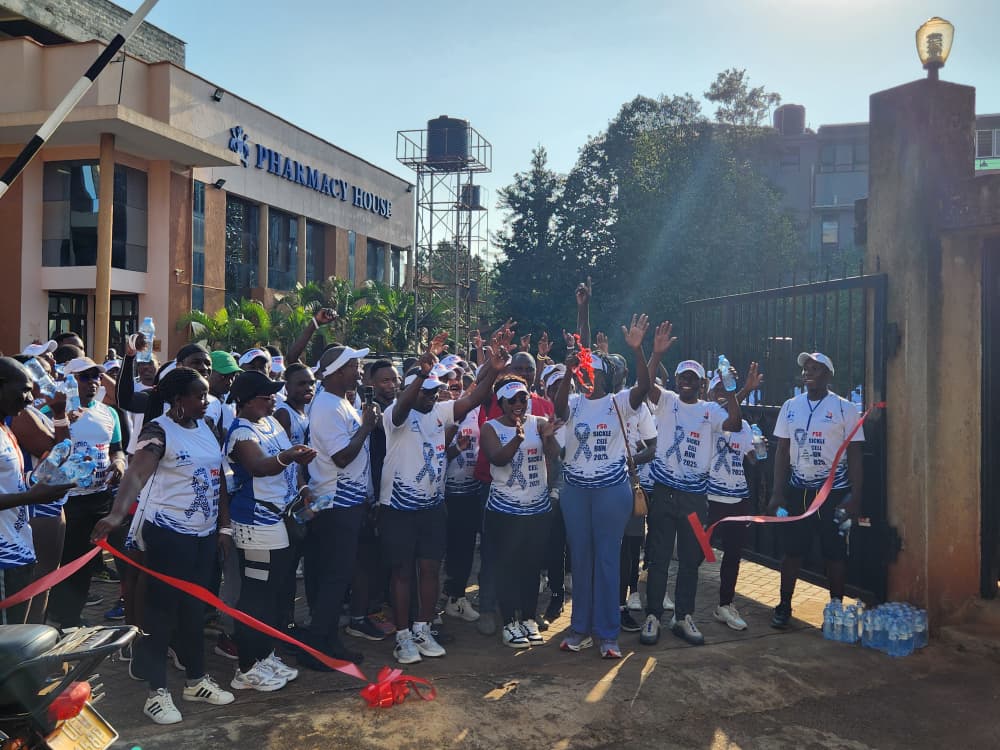
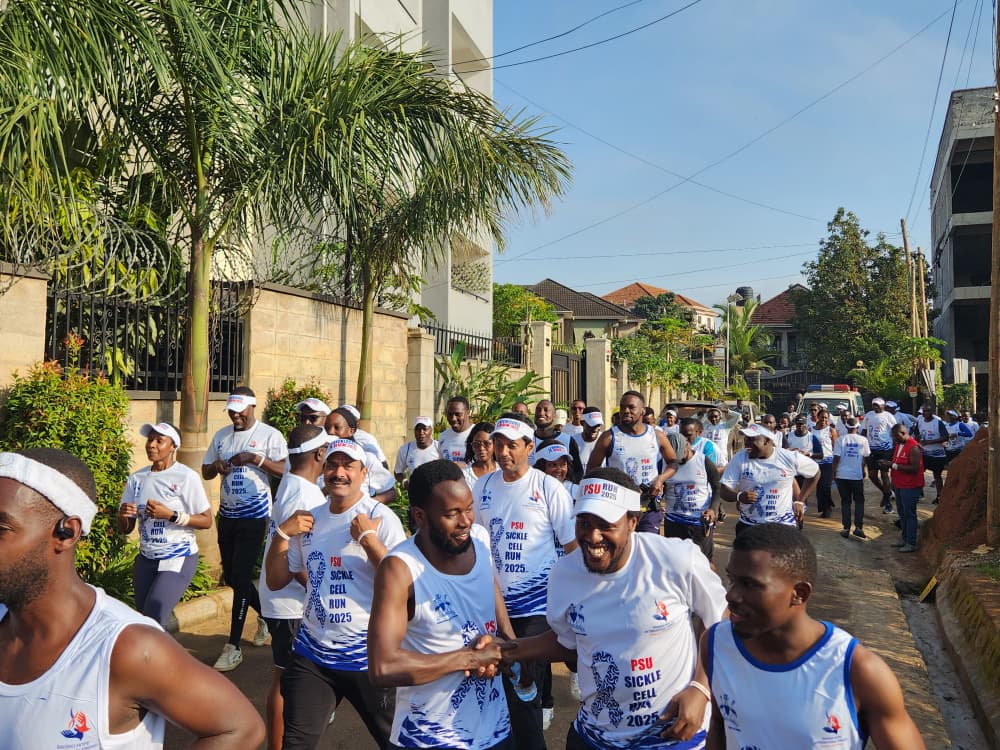
About 700 runners took part in the Sickle Cell Run organised by the Pharmaceutical Society of Uganda (PSU) in partnership with Rising Hope International on Sunday morning at PSU headquarters in Kyambogo.
The run, held under the theme “Amplifying Community Voices Against Sickle Cell Disease in Uganda,” was part of activities to mark Pharmacy Awareness Week, ahead of the global commemoration on September 25, 2025.
While flagging off runners, Pharmacist Hope Fortunate Aciro, who lost her two daughters to sickle cell, delivered an emotional rallying call.
“In this fight against sickle cell that we have joined today, we have become family. And for me, I have known that very intimately in this past year, as I fought for the girls,” she said.
Aciro revealed that her daughters, Moriah and Gloria, both died of sickle cell but left her determined to keep fighting.
“They have not lost the fight because their mother is here today, still fighting against this disease. They have not lost the fight because you are here today joining alongside them to make sure that we win this battle against sickle cell,” she told participants.
She stressed that sickle cell can be eradicated through awareness and testing.
“We can make sure that no single child is born with sickle cell. It’s entirely possible. It’s not an impossible fight that we have picked up,” Aciro said.
She urged Ugandans to test for sickle cell before falling in love, noting that once emotions are involved, it may become difficult to trust the results or even to find the will to undergo testing.
“Test before you love. Do not start when you are ready to get married, or when you have already fallen in love. Once you know your status, you can make an informed decision,” she emphasized.
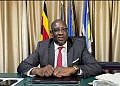
Stephen Lutoti, Secretary of the Pharmaceutical Society of Uganda, reminded runners that the event was more than just physical exercise.
“The run is not just a sport. We are here to ensure there is awareness about these big problems, silently killing people.”
He urged pharmacists and the wider community to act.
“It is a call to action for each one of us to raise a voice in the way that we conduct ourselves in all our spheres, to bring everyone on board and say we need to fight this problem.”
Lutoti noted that by engaging in activities such as the Sickle Cell Run, communities are being placed at the forefront of the fight against the disease.
“We are here to engage communities that have been left behind. We need to work together and support those who are affected so that they can live a productive life.”
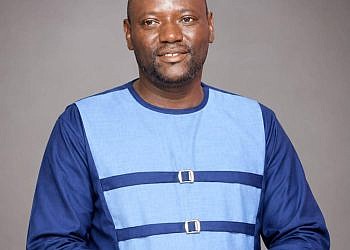
Isaac Okello, Team Leader at Rising Hope International, said the partnership with PSU was vital for amplifying awareness.
“We are very grateful for this partnership with the Pharmaceutical Society of Uganda to amplify voices and also support people living with sickle cell,” he said.
Okello announced that part of the proceeds from the run would fund free screening.
“For the money that you actually used to purchase the kit, part of it is going to help you access free screening for sickle cell. Screening takes only eight to ten minutes, and you get your results.”
He thanked supporters, including Microhelm Diagnostics, Rotary Club of Kira, and individual partners.
“Microhelm has supported us with over 150 testing kits worth 1.5 million. We are also very happy to have Rotary and other partners join this cause.”
Okello also underlined the urgency of the fight calling for togetherness in the fight against it.
“Sickle cell is the deadliest genetically inherited disease globally. Every year, over 500,000 children are born with it, and more than 80 percent die before the age of five. Uganda ranks third globally in prevalence. This is a monster we must fight together.”
At the PSU offices, runners got a chance of testing for sickle cell for free.
According to the Ministry of Health, about 25,000 babies are born with sickle cell disease annually in Uganda, with most dying before their fifth birthday due to low awareness, late diagnosis, and inadequate access to care.
The Kyambogo run was therefore both a sporting event and a national call to action: raising awareness, mobilising communities, and urging Ugandans to “test before they love.”