







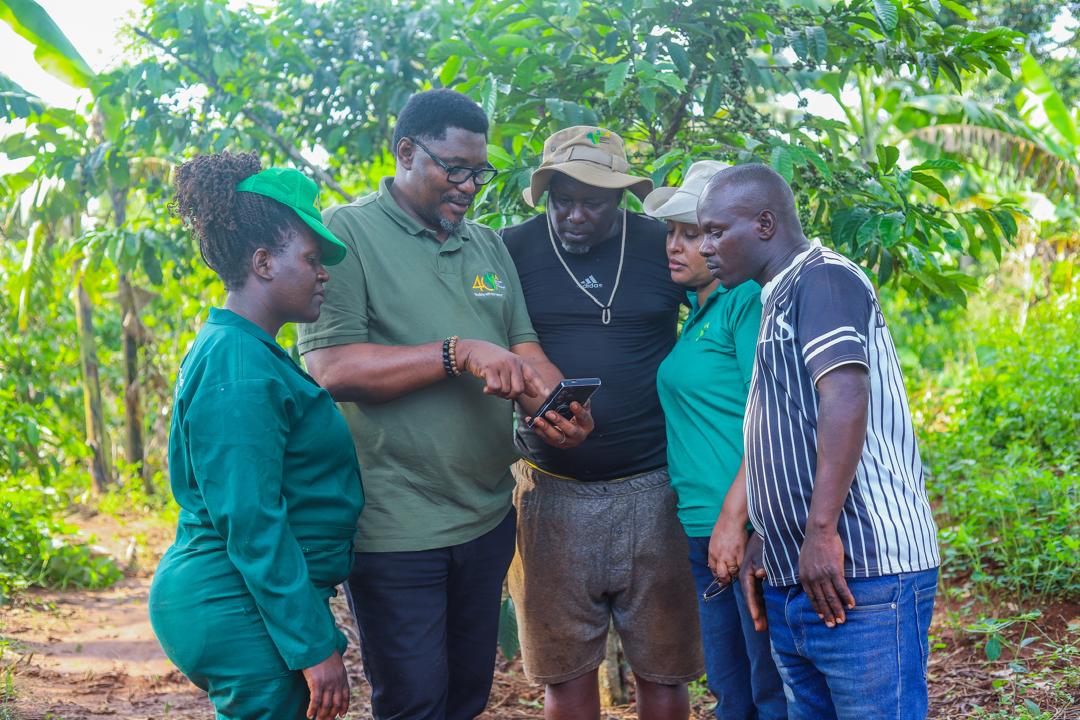
In Nakaseke District, where farmers can spend hours travelling between scattered gardens and agricultural extension workers are too few to serve everyone, a new model is bringing agricultural advice closer to the communities that need it.
At the centre of this approach is Jamirah Nankya, a 30-year-old mother of five from Bugara Village, Kigege Parish, who has become a community-based agricultural service provider using digital technology to advise farmers.
Nankya is among the farmers and community members trained by the Sasakawa Africa Association (SAA) under its Commercial Community-Based Business Facilitator (CCBF) model.
Rather than employing her as a conventional extension worker, Sasakawa trained Nankya to provide agricultural services as a business, using the Virtual Agronomist App to support services such as farm mapping, soil assessment and agronomic advice.
The approach seeks to address one of Uganda’s persistent agricultural challenges: ensuring that farmers in remote and scattered communities can access timely extension services.
Robert Anyang, country director of the Sasakawa Africa Association, says the conventional extension system is struggling to reach the growing number of farmers.
“In some areas, the ratio of extension workers to farmers in Uganda is one to 8,000,” Anyang says.
He says the CCBF model was developed to bring public and private agricultural extension services closer together.
“We started building the concept. How do we sustain extension? How do we bring what we call public-private extension into action?” he asks.
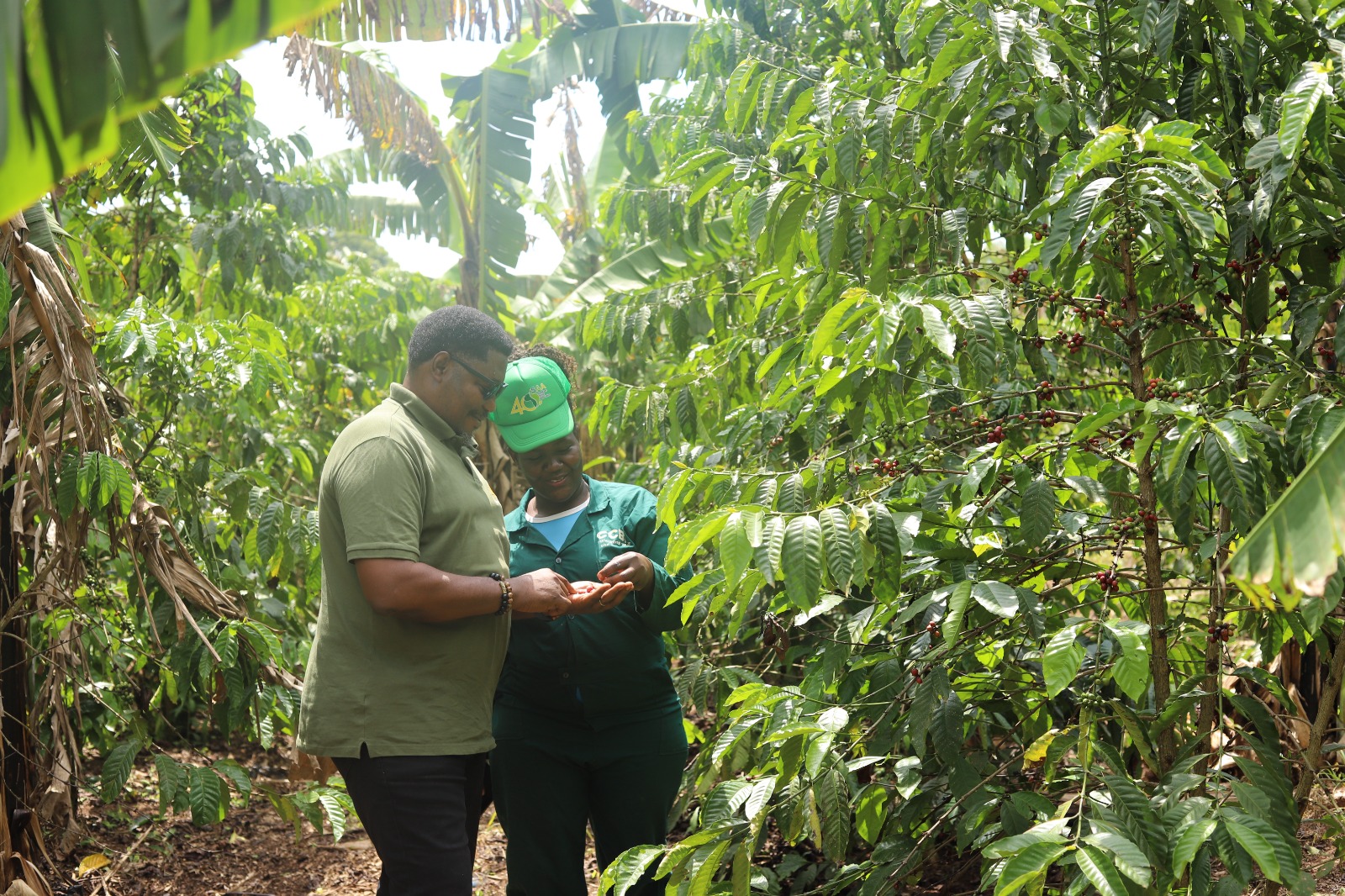
Under the model, communities identify people who are trusted locally, can move around easily and are capable of working with farmers. Sasakawa then trains them in agricultural production, marketing and service delivery.
Nankya was among those selected after being identified through community structures linked to the Parish Development Model.
She says the training introduced her to digital tools that have transformed how she works with farmers.
“What worked me best was using the app,” she says.
The Virtual Agronomist App has become one of the key tools in Nankya’s work.
Instead of relying entirely on physical soil sampling and estimates of farm size, she can use the application to map fields and obtain information that helps guide farmers’ production decisions.
Christine Kyomugisha Kamubona, programmes officer for climate resilience and agrifoods at Sasakawa, says the application is designed to help farmers understand their land before deciding what to plant and which inputs to use.
“It helps the farmer to map out his field, know how big his area is, and when the farmer knows how big his planting area is, he’s able to plan for how much seed they need,” Kamubona says.
According to Kamubona, the app also provides information on soil characteristics, estimated moisture levels and nutrient status.
“It gives you a nutrient plan based on the findings at that moment. So it guides you on what fertilizer combinations you should be able to use,” she says.
The technology is also designed to support farmers throughout the growing season, rather than limiting assistance to the initial assessment.
It can send reminders through SMS or WhatsApp about activities such as weeding, fertiliser application, pest management and harvesting.
“It works with the farmer the journey throughout the season,” Kamubona says.
For Nankya, the technology has enabled her to provide services to farmers across a wide area.
“You may find somebody telling their friend or a neighbour, ‘I’m having like five acres,’ yet you are having two. But when you use this app, we make the difference,” she says.
What distinguishes Sasakawa’s approach is that Nankya is not simply a volunteer providing free agricultural advice.
The CCBF model is designed to enable community-based facilitators to earn income from agricultural services and products.
Anyang says the approach is intended to make agricultural extension more sustainable beyond individual projects.
“They are not being paid to go and deliver services. So what do we do? We create what we call incentives,” he says.
The facilitators can earn commissions from services and agricultural products supplied to farmers. These may include farm mapping, spraying, planting services, agricultural inputs and other farm-related services.
Nankya says the model has given her an opportunity to earn an income while remaining connected to farming communities.
“I don’t regret being under Sasakawa,” she says. “I don’t regret because I’m earning.”
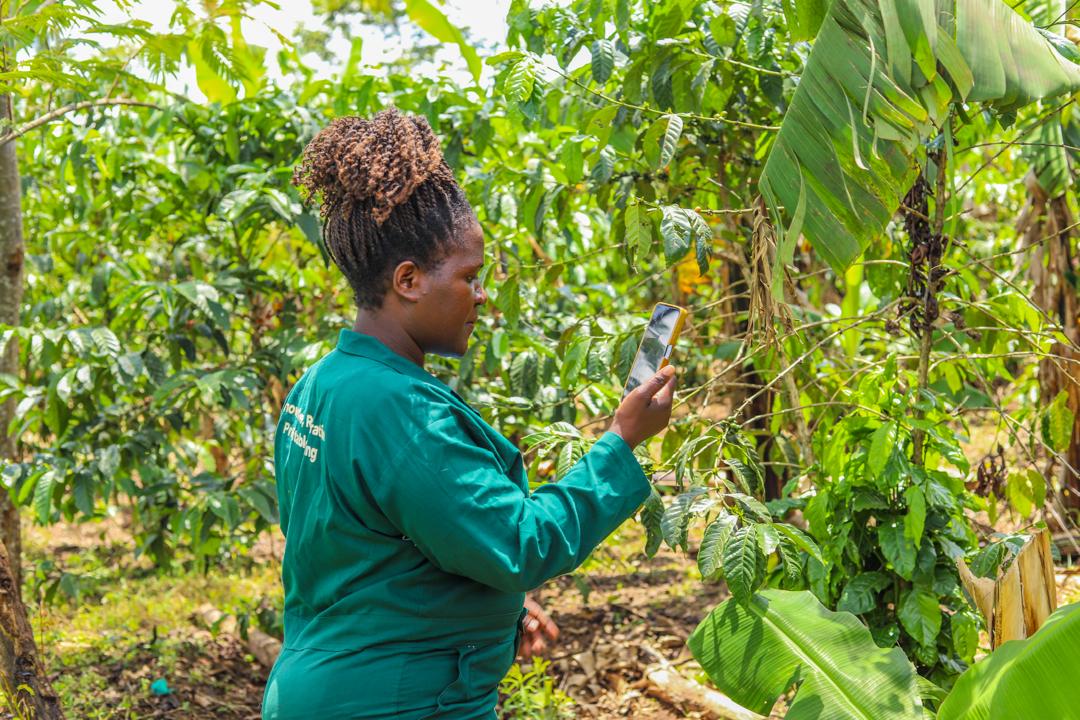
Her customer base has grown to more than 200 farmers, some of whom are outside Nakaseke District, including in Mityana and Nakasongola.
As her customer base expanded, Nankya discovered that reaching farmers was just as important as having the right technology.
Farmers in her area cultivate large plots that are sometimes widely separated, making transport a major challenge.
“It needs you to take two hours to reach another garden. I found it hard,” she says.
To address the challenge, Nankya and her husband secured a motorcycle on loan from a lending company in Luwero.
The motorcycle has since become an important part of her work, allowing her to travel between farms and provide services across different communities.
Her experience illustrates one of the challenges of community-based extension: technology can improve access to information, but service providers must still be able to reach farmers physically.
For Sasakawa, community-based facilitators such as Nankya are intended to complement, rather than replace, government extension workers.
Anyang says the facilitators work with sub-county extension officers, who provide technical guidance, mentorship and coaching.
He says the model can also speed up the detection and reporting of agricultural problems.
During an armyworm outbreak, for example, community-based agents were able to identify affected crops and send photographs through digital platforms.
“The agents saw it in farmers’ fields and started sending photos through their Virtual Agronomist saying, ‘We are seeing this worm. How do we tackle this?’” Anyang says.
The information could then be escalated through the agricultural extension system, allowing the relevant personnel to respond more quickly.
According to Anyang, this creates a faster link between farmers, community facilitators and formal extension services.
“Farming is time. It doesn’t wait for you,” he says.
The CCBF model is also designed to keep facilitators close to the farmers they serve.
Sasakawa recommends that facilitators work within a manageable geographical radius to ensure that transport costs do not make their services too expensive.
The idea is for facilitators to live within the communities they serve, understand local challenges and reach farmers more easily.
However, the model still faces challenges.
Nankya says some farmers expect agricultural services to be offered at very low prices, despite the costs of travelling to distant farms, buying fuel and spending time in the field.
“The farmers need services, but they want it at a low price,” she says.
Despite these difficulties, her growing customer base points to demand for services that combine agricultural knowledge, digital technology and physical access to farmers.
Nankya’s story is about more than one farmer gaining access to a smartphone application. It illustrates an alternative approach to delivering agricultural extension services by placing trained service providers within farming communities.
The former housewife now works with a small team she has trained to assist with farm services when she is away.
She also plans to acquire a larger piece of land where she can establish a demonstration farm to provide farmers with practical training.
“I want to buy a land, the big one. I want to set a demonstration for my farmers,” she says.
For Sasakawa, such expansion is part of the broader purpose of the CCBF model: creating local agricultural service providers who can earn a living while extending technical support to farmers.
For Nankya, the initiative has transformed agricultural extension from a service that farmers may struggle to access into one they can obtain closer to home.
For the farmers she serves, a smartphone in the hands of a trained community member is becoming another tool in the effort to make farming more productive and profitable.