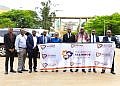











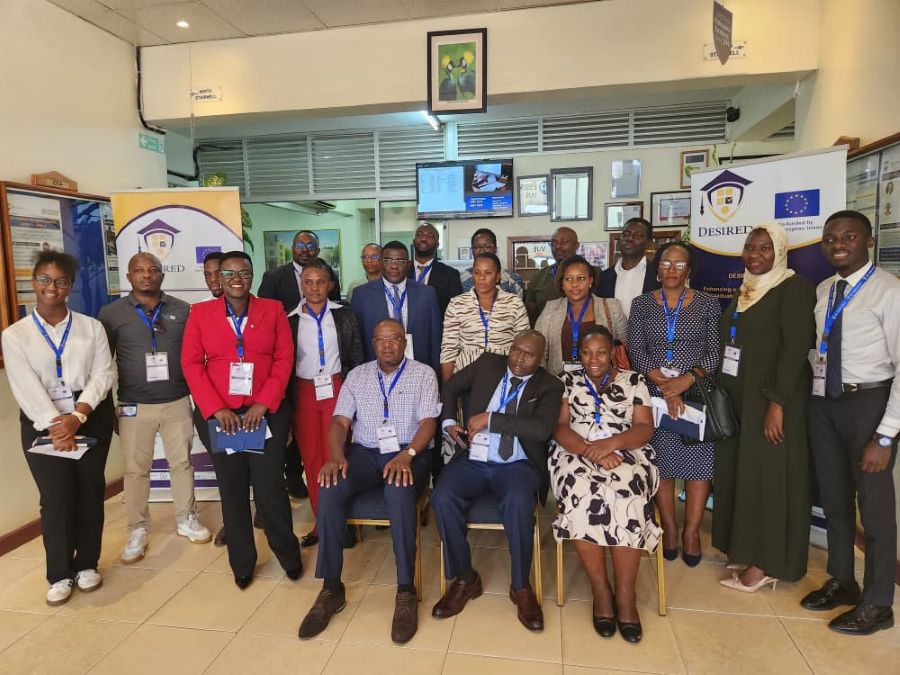
Accounting education in Uganda and Nigeria is poised for a transformative shift, as the Developing Employability Skills in Accounting Education (DESIRED) Project officially launches with a focus on practical skills, workplace readiness, and curriculum innovation.
Backed by the European Union under the Erasmus+ programme, the two-year initiative aims to close the persistent gap between academic training and real-world job demands by integrating Work-Integrated Learning (WIL) into accounting education across participating institutions.
The €400,000 (shs1.64 billion) project was unveiled this week at MAT-Abacus Business School in Kampala and is expected to benefit more than 3,000 students and academic staff across Uganda and Nigeria.
“It’s no longer enough to train accountants to pass exams. They must be prepared to solve real problems,” said Prof. Samuel Ssejjaaka, the project chair, during the launch event.
Ssejjaaka noted that employers frequently cite a lack of workplace confidence and adaptability among graduates, particularly in modern financial environments that demand a blend of technical, digital, and soft skills.
To address this, the DESIRED Project will implement a comprehensive approach combining internships, case-based learning, and workplace simulation modules, enabling students to acquire hands-on experience before graduation.
“The workplace is not a classroom,” Ssejjaaka added. “You don’t just balance books; you communicate, make decisions, and navigate expectations. That is what we are preparing them for.”
The DESIRED Project represents a rare and strategic multi-continental academic alliance—with participating universities and professional bodies from Uganda, Nigeria, the Netherlands, and Portugal collaborating to redesign how accounting is taught and applied.
Twaha Kawaase, a certified accountant and project partner, said the project’s timing is crucial given the growing influence of automation and AI in the workplace.
“Machines can process numbers faster than any human. But they cannot replace judgment, ethics, or emotional intelligence. That is where the future accountant must stand out,” he said.
For students like Ayeza Mutegeki, currently enrolled at MAT-Abacus, the DESIRED Project is a lifeline for career advancement in a tough labor market.
“We study and graduate, but we lack exposure. That’s why many of us remain jobless,” she said. “If this programme gives us real workplace experience, it will change our lives and how employers view us.”
Led by MAT-Abacus Business School, the project consortium includes Makerere University Business School (Uganda), Nnamdi Azikiwe University and Chukwuemeka Odumegwu Ojukwu University (Nigeria), along with Vrije Universiteit Amsterdam (Netherlands) and the University of Lisbon (Portugal).
Key industry partners include the Uganda Chapter for Corporate Social Responsibility Initiatives (UCCSRI) and Sejjaaka, Kaawaase & Co., Certified Public Accountants.
The long-term goal, according to stakeholders, is not just improved graduate employability, but a reimagining of accounting education that aligns with Africa’s economic realities and the future of work.