










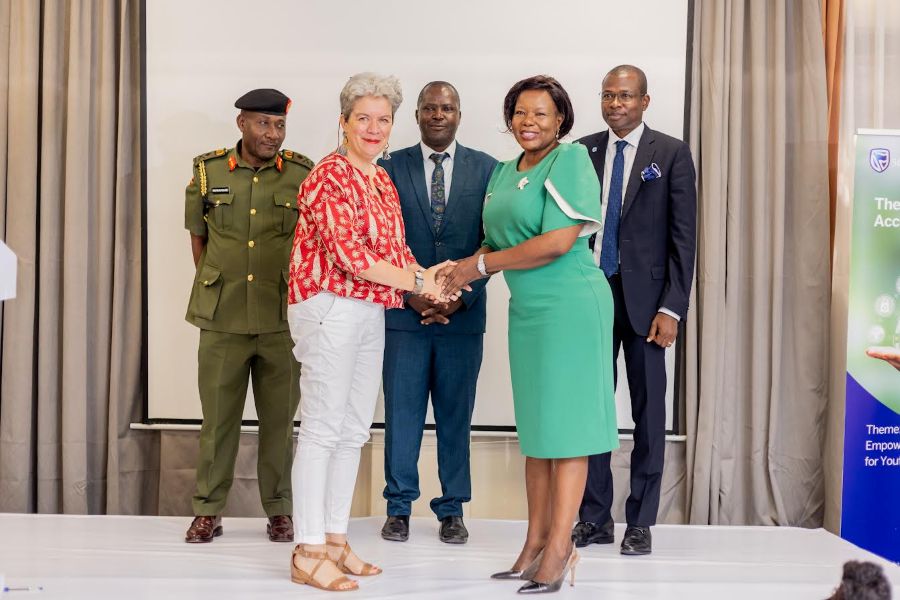
The Stanbic Business Incubator Limited (SBIL), in partnership with the French Embassy in Uganda, has unveiled the Stanbic GreenTech Accelerator, a shs 1.8 billion initiative aimed at empowering youth and women entrepreneurs in Uganda’s growing green technology sector.
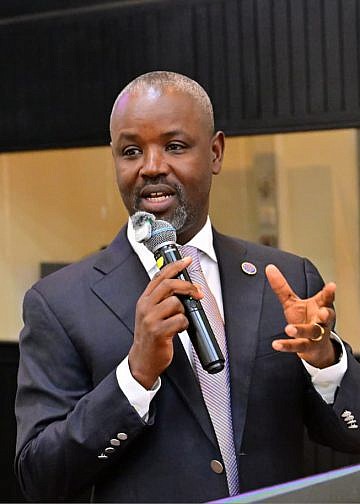
Speaking at the launch held at Protea Hotel in Kampala, Catherine Poran, the Chief Executive Officer of SBIL, said the program represents another milestone in the collaboration between Stanbic and the French government, reinforcing Stanbic’s commitment to driving Uganda’s sustainable growth.
“It is an initiative being supported by the Embassy of France in Uganda, and not only marks another chapter of our partnership, but also Stanbic’s commitment to driving Uganda’s growth,” Poran said.
She emphasized that integrating green business models into Uganda’s economic strategy is key to promoting sustainable development, protecting the environment, fostering inclusive growth, and building resilience to climate change.
“Green business models prioritize sustainability in all aspects of enterprise operations—reducing environmental footprints while creating both economic and social value,” she explained.
The Stanbic GreenTech Accelerator is a two-year program designed to support 200 youth and women-owned micro-enterprises in sectors including sustainable agriculture, green mobility, circular economy, waste management, renewable energy, water and health, and natural resource management.
Implementation will cover the Kampala Metropolitan Area and the Albertine Region, with the goal of fostering a green, resilient, and innovative economy through capacity building, access to finance and markets, and a conducive environment for growth.
SBIL, a subsidiary of Stanbic Uganda Holdings Limited (SUHL), has supported over 5,700 small and medium enterprises (SMEs) since its inception through training focused on access to finance, access to markets, and business operations.
“After seven years, the Stanbic Business Incubator has become a leading resource centre for SME growth. In 2024 alone, shs 76 billion in loans and credit were extended to SMEs by Stanbic Bank,” Poran noted.
“This new program will benefit 120 SMEs from the Kampala Metropolitan Area and 80 from the Albertine Region.”
She added that despite Uganda’s high entrepreneurship rate, as highlighted in the National Development Plan IV, the survival rate of micro, small, and medium enterprises remains low — something the new program seeks to change.
French Ambassador to Uganda, Mrs. Virginie Leroy, lauded the initiative as a practical step toward sustainable development, job creation, and innovation.
“We are very happy to join Uganda in contributing to the solution,” she said. “It’s about grasping opportunities—not only talking about risks but creating jobs and driving development.”
Leroy said the program builds on an earlier partnership between the embassy and SBIL under the Network for Innovation and Sustainability in Agriculture and Tourism (NISAT), which supported 110 MSMEs in agroecology and eco-tourism through training, mentorship, and micro-grants.
“This new initiative is bigger and more ambitious, with a goal to support even more young people in the green economy,” she added.
The Stanbic GreenTech Accelerator is valued at €687,833, including a French Embassy grant of €450,000 (approximately shs 1.8 billion). Of this, €131,351 will be released in the first installment, while Stanbic Bank will co-finance €237,833, or 34.5% of the total budget.
James Karama, Stanbic Bank’s Head of Client Coverage, Corporate & Investment Banking, said the program reflects Stanbic’s mission to drive Africa’s sustainable growth.
“Stanbic Uganda Holdings Limited is part of Standard Bank Group—Africa’s largest bank by assets. Our purpose, ‘Africa is our home; we drive her growth,’ guides everything we do,” Karama said.
He noted that the bank’s Women, Youth, and Farmers (WYF) Agenda focuses on empowering key groups that form the backbone of Uganda’s economy.
“We are investing in innovation in green enterprises and, most importantly, in people,” he said. “Through this program, we are creating opportunities for those who hold the promise of Uganda’s future.”
Karama added that Stanbic is directing both financial and non-financial resources toward financial inclusion, enterprise development, job creation, infrastructure investment, and climate resilience.
Johnson Abitekaniza, Assistant Commissioner for Micro, Small, and Medium Enterprises at the Ministry of Trade, Industry, and Cooperatives (MTIC), commended the partnership as a model for sustainable growth.
“The government has developed a green strategy and set up a Green Finance Unit at the Ministry of Finance to champion these efforts,” Abitekaniza said.
“This partnership between Stanbic and the French Embassy perfectly aligns with our national agenda for sustainable development.”