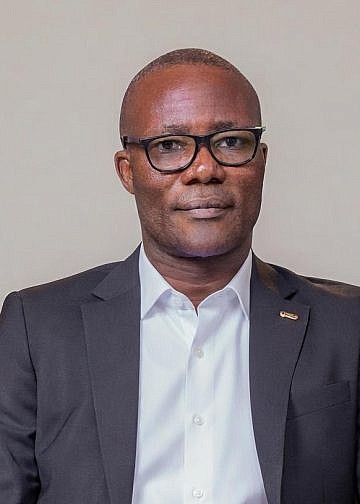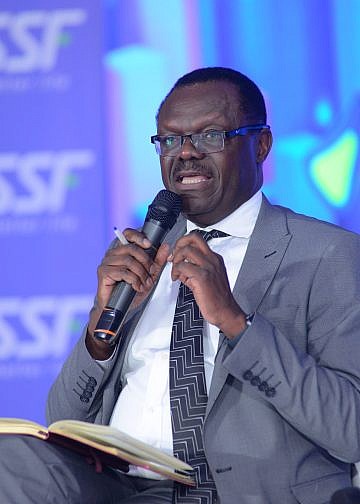











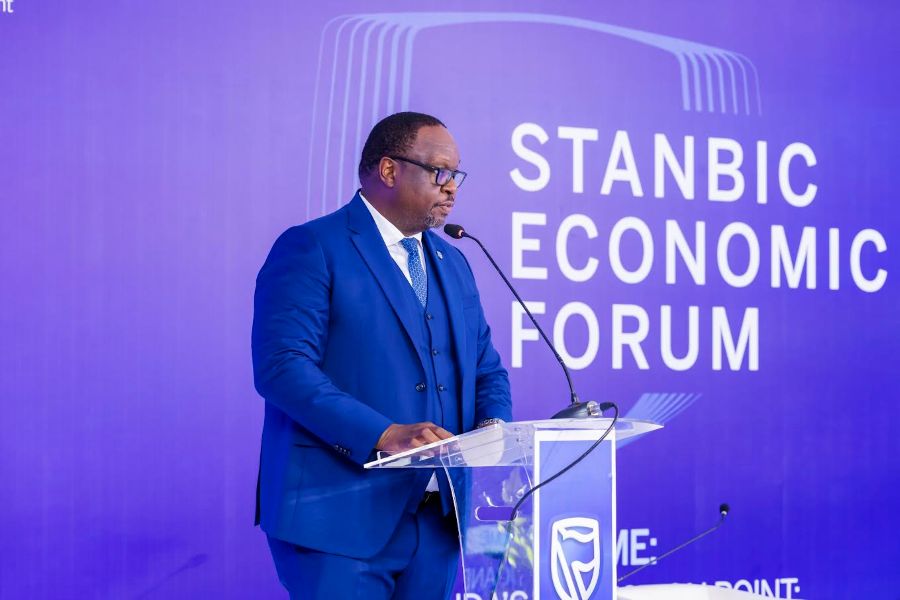
The Chief Executive of Stanbic Bank Uganda, Mumba Kalifungwa, has called for deliberate efforts to ensure Uganda’s anticipated oil revenues translate into inclusive and sustainable economic growth.
Speaking at the fifth Stanbic Economic Forum under the theme “Uganda’s Inflection Point: Competing in a Rewired Global Economy,” Kalifungwa said the country stands at a pivotal moment as it prepares for first oil production.
He described the East African Crude Oil Pipeline (EACOP), now reported to be 97 percent complete, as one of the most consequential infrastructure investments in Uganda’s history.
Uganda is estimated to hold 1.6 billion barrels of recoverable oil reserves, with projected peak production of 230,000 barrels per day. First oil is expected later this year, a development analysts say could significantly reshape the country’s fiscal outlook and industrial capacity.
Kalifungwa said the long-term value of the oil and gas sector will depend on its broader economic impact, including job creation, local content participation, skills development and strengthening domestic enterprises along the value chain.
He also pointed to global shifts affecting Uganda’s competitiveness, including evolving trade regimes, supply chain realignments, uncertainty surrounding the African Growth and Opportunity Act (AGOA), and rapid advances in artificial intelligence (AI).
“AI is no longer a distant frontier. The question is not whether Uganda participates, but how inclusively and competitively it does so,” Kalifungwa said.
Growth Outlook
The forum’s keynote speaker, Jibran Qureishi, Head of Africa Regions Economic Research at Standard Bank Group, projected continued economic expansion in the coming years.
Following growth of approximately 6.3 percent in the 2024/25 financial year, Uganda’s economy is expected to expand by between 6.5 and 6.7 percent in 2025/26, with growth likely approaching seven percent or higher in 2026/27. Oil-sector investments and sustained public infrastructure spending are expected to drive much of this expansion.
However, Qureishi cautioned that while first oil — anticipated from late 2026 — represents a historic milestone, the most significant macroeconomic benefits in terms of fiscal revenues, foreign exchange earnings and balance of payments improvements are likely to materialise closer to 2030 as production ramps up.
He commended the government’s fiscal discipline over the past decade, particularly its decision not to prematurely monetise anticipated oil revenues, which he said has helped maintain macroeconomic stability and investor confidence.
Bridging the Welfare Gap
Despite positive growth projections, Qureishi warned that strong macroeconomic performance does not automatically translate into improved household welfare. Capital-intensive investments, a large informal sector, post-COVID inflationary pressures and fiscal adjustments supported by the International Monetary Fund have contributed to widening disparities.
“The challenge increasingly is between asset holders and non-asset holders,” he said, cautioning that unresolved economic grievances could heighten social and political pressures.
He noted that Uganda’s external position has strengthened, with gross foreign exchange reserves rising from about USD 3 billion at the end of 2024 to nearly USD 6 billion by December 2025, improving import cover and reflecting gains in the balance of payments.
The Stanbic Economic Forum, now in its fifth year, brings together policymakers, private sector leaders and analysts to assess Uganda’s economic trajectory and competitiveness in a rapidly changing global environment.